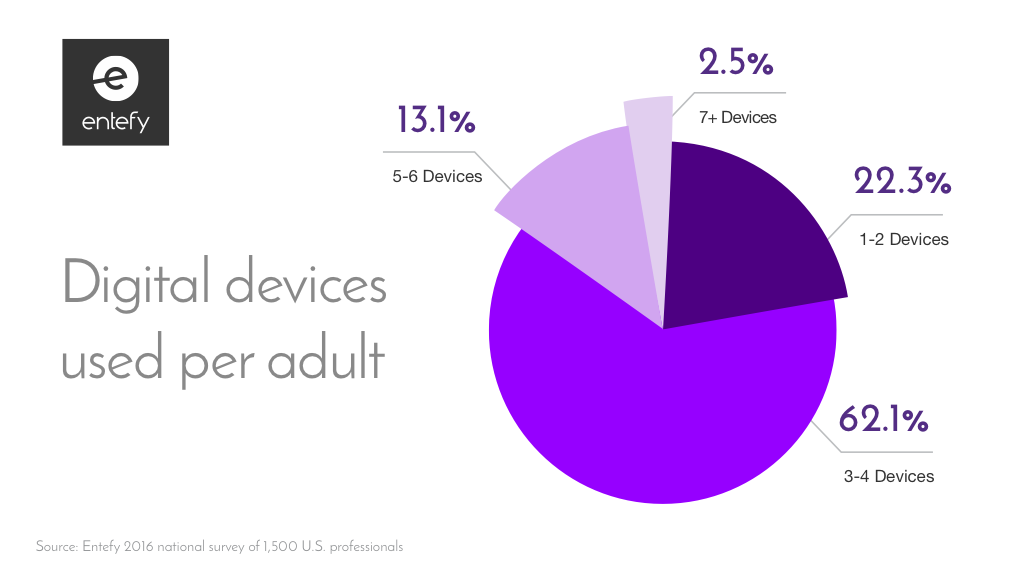
One of the questions that drove our research in Entefy’s Digital Interaction & Modern Communication report was straightforward: Just how many different digital devices do professionals use to communicate and collaborate? The answer was interesting because of what it tells us about how professionals are finding their edge these days. The survey queried a representative sample of 1,500 U.S. professionals evenly distributed in age from 18 to 65 and geographically distributed across the country in small and large cities alike. Survey respondents were from dynamic professional environments like the Healthcare, Technology, Financial Services, and Legal industries where technology use can lead to personal and organizational advantages.
The survey results were indeed telling. On average, respondents make use of 3.4 different devices (computers, laptops, tablets, smartphones, etc.) with 62% of those who completed the survey using between 3 and 4 technology devices. Just 2.7% of respondents get by with only 1 device.
The data suggests that digital technology is in many ways stuck in an awkward middle school stage—so much potential, yet so much more development still to go. Our research uncovered evidence that professionals are using many different devices in their work, suggesting that the tools we’re all using (hardware and software both) aren’t quite “there” yet. After all, professionals create and manage highly individualized digital ecosystems of devices, apps, and services to meet the demands of their work. Necessity is, apparently, the mother of device use.
You can read more about Entefy’s survey on modern communication in the complete research report.
Privacy and data security are becoming more and more personal. Quite literally. Because safeguarding your private digital data is increasingly your own responsibility.
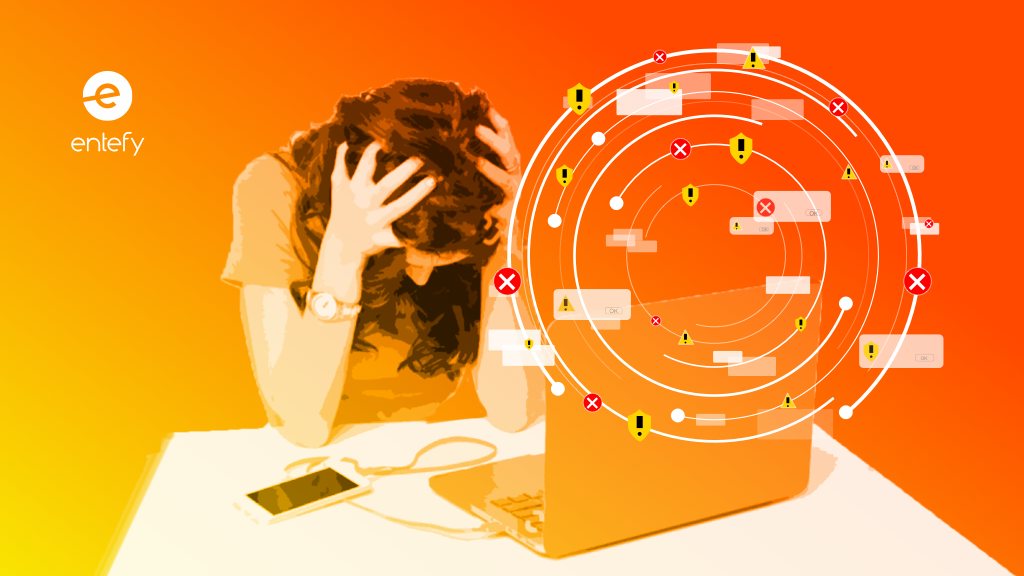
The challenge is that recent data suggests people are taking fewer precautions, not more, to protect their digital identities—a trend called “security fatigue.” And this is a trend that we all need to resist. Researchers at the National Institute of Standards and Technology (NIST) published an informative cyber privacy study late last year. Interestingly, its findings around “security fatigue” were accidental, not an intended goal of the original study.
Here’s what happened: NIST is the U.S. government’s measurement standards laboratory, responsible for setting standards in areas like quality control benchmarking, information technology guidelines, and even time itself through its atomic clock. NIST researchers wanted to investigate computer security behaviors, so they conducted a qualitative study focused on understanding a broad range of views on cyber security and online privacy. The study’s 40 test subjects ranged in age from their 20’s to 60’s and represented multiple professions and geographies. Questions covered topics like e-commerce, online banking, and familiarity with cyber security terms.
While analyzing the interview data, a surprising pattern emerged: “We weren’t looking for fatigue in our interviews, but we got this overwhelming feeling of weariness throughout all of the data,” said one of the study’s co-authors. That weariness is what the researchers called “security fatigue,” describing it as:
“…weariness [with online security] leads to feelings of resignation and loss of control. These reactions can lead to avoiding decisions, choosing the easiest option among alternatives, making decisions influenced by immediate motivations, behaving impulsively, and failing to follow security rules.”
You may be tempted to ask: If major corporations can’t protect themselves from hackers, how can I? It’s a reasonable question. Especially when we read again and again about trackers collecting your sensitive private data without permission and countless other assaults on your privacy. But it’s the wrong question to ask. After all, doing nothing about your data security can jeopardize your personal finances, health data, and social shares—the many areas of your life that create digital data.
To help you combat feelings of hopelessness and recklessness when it comes to online privacy, we’ve collected a roundup of guides that describe practical steps to protect the digital you. Here it goes:
2. The consumer privacy nonprofit Fight for the Future created an interactive guide to protecting smartphones, laptops, and desktops. This resource is designed to be accessible to computer users of any knowledge level.
3. Following the revelations about C.I.A. hacking, the New York Times produced a guide to protecting iPhone and Android smartphones as well as smart TVs, routers, and personal computers.
And, because a little levity is a good thing, here’s an article about how the founder of Cards Against Humanity intends to buy and publish Congress’ browser history.
Reading through these guides and articles, 3 suggestions appear again and again:
Use a unique, strong password for every account. Because that becomes difficult fast, help yourself by using password management software and two-step verification, where available.
Update software frequently. Be vigilant about updating and patching the operating system software on all of your devices as well as all of your apps. Turn on auto-update options wherever possible.
Evaluate whether cloud services protect your data sufficiently. Not all cloud services are created equal. Evaluate the security of the cloud services you use on a one-by-one basis, in terms of policies and technical capabilities. Understand the risks of storing important personal data in the cloud, and consider local, encrypted storage options as alternatives to cloud services.
Given all that’s happening with online privacy these days, now is not the time for anyone to be nodding off in their digital security blanket.
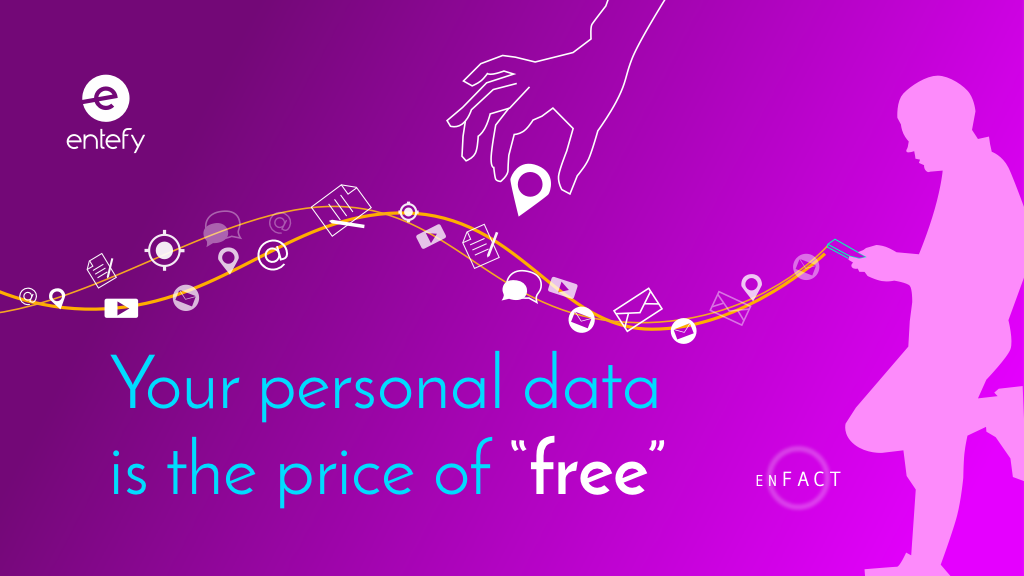
As consumers, we’re often asked to accept the fact that most popular digital services provide the app or service for free in exchange for collecting and selling data on everything we do throughout the day. But time and again, these same services expose us to data breaches and security vulnerabilities.
So it’s not surprising that 91% of adults in America believe they have lost control over their personal information. “Half of Internet users said they worry about the amount of information available about them online, and most said they knew about key pieces of their personal information that could be found on the Internet.” These findings are pretty remarkable, until you consider how often we read about more and more and more cases of our data being tracked, hacked, and sold.Entefy’s enFacts are illuminating nuggets of information about the intersection of communications, artificial intelligence, security and cyber privacy, and the Internet of Things. Have an idea for an enFact? We would love to hear from you
How many ways do you know to say hello? Probably not 6,909 ways. That’s the total number of languages spoken by the Earth’s 7 billion people. If you’ve ever traveled to a country where you didn’t speak the language, you know how much complexity arises out of just 2 people trying to communicate in different tongues. So when 6,909 languages cross paths, there’s a lot of complexity happening everywhere all the time.
This video enFact details some of the amazing facts about the world’s thousands of languages.
Entefy’s enFacts are illuminating nuggets of information about the intersection of communications, artificial intelligence, security and cyber privacy, and the Internet of Things. Have an idea for an enFact? We would love to hear from you.
The Internet didn’t create the idea of “work-life balance.” Professionals have long sought to balance their career and personal life. But there is a link. Because many of the technologies that emerged in the Internet era have blurred the lines between being “at work” and “at home.” Before then, no one worried about whether or not to check their email during Little League practice because there simply wasn’t email to check or devices to check email.
Once those lines started blurring, however, the idea that “work” and “life” needed to be kept in balance really took off. Serious books were written. Academic papers were published. Companies began promoting work-life-focused initiatives. The problem was—and still is—that the aspiration for balance has been flawed from the start. Balance, after all, suggests equal weight: just as much “work” as “life.” A state that doesn’t allow for highly personal dynamics of work and life, which for most people evolve and transform over time.
Then there’s the false choice implied by the artificial separation of “work” and “life.” That career stands separate and distinct from life itself, with just a hint that work is something to be endured in contrast to life’s all-around wonderfulness. This conception simply doesn’t suit the many professionals who find as much fulfillment in their work as in their personal lives. Or professionals who go through periods when they are focused on their career, electing to forgo leisure time. Yet that sort of intentional trade-off is an imbalance in the work-life-balance formulation.
We can’t ignore, however, that new technologies did in fact blur the distinction between time spent working and the times when we’re not. Long before smartphones, professionals were “logging on” to check email in the evening. Or browsing airfare websites for an upcoming vacation before walking into a meeting.
Fast forward to today. The dividing line between work and leisure has been effectively erased, yet many of us still expend a lot of mental energy wishing for a “balance” that’s probably impossible to actually pull off. So if we want to find fulfillment in all areas of our lives, what’s to be done?
We first need a better understanding of what people want from work, which we’ll explore by examining the state of remote work (telecommuting) among professionals today. Remote workers are a good test case because it’s an area where work and life tend to blend and overlap continually. Trends in this area help us plot a path towards leaving the impossible work-life balancing act behind. And, instead, achieving a work-life harmony that allows us to find fulfillment in all parts of our lives.
Workspaces without walls
Remote work takes place right at the intersection of “work” and “life.” It includes alternative work arrangements like telecommuting as well as outside consultants, freelancers, and solopreneurs. The explosive growth in remote work—today four times more professionals regularly work remotely than in 1995—is another workplace transformation driven by computing, mobility, and Internet technologies. So it’s worth taking a look at the ways remote workers harmonize work and life to achieve fulfillment.
Gallup analyzed the perceived benefits of working remotely and found “that flexible scheduling and work-from-home opportunities play a major role in an employee’s decision to take or leave a job.” Interestingly, the study found that employee engagement rose along with hours spent working remotely—higher levels of remote work, higher levels of engagement with their employer.
Another survey asked whether you’re more likely to love your job if you work from home. And in fact, the data showed that telecommuters are nearly twice as likely to love their jobs as their in-office colleagues. The survey author interpreted the data as follows: “Working remotely isn’t always easy; there’s isolation, a fear of missing out, miscommunication and more. So it seems that to overcome those pitfalls, a successful remote worker has to be driven and hard working. There’s often less support (emotional, administrative, managerial, etc.) for telecommuting and mobile workers. So the only way for them to survive and still achieve their desired career success is to push themselves to be the best and be willing to work all night to hit every deadline.”
Bringing this back to work-life issues, these findings demonstrate that greater flexibility in where, when, and how we work leads to greater happiness. But is this sense of fulfillment driven by being better able to incorporate more “life” elements into our work day?
Towards work-life fulfillment
Disconnecting from the mental workplace has become more difficult the more we use devices that notify us in real-time about emails or messages. After all, the average American now spends around 5 hours a day on their mobile device. Gallup found in 2013 that remote workers log more hours, averaging 4 extra hours per week. Another study found that working longer hours posed no extra threat of burnout for freelancers; though professionals who were unable to take their mind off work reported more physical aches and pains.
As our time on devices increases, so do stress levels. On a ten-point scale, people who check their mobile devices “regularly, but not constantly” average a score of 4.4; while those who were “constantly checking their work e-mail even during days off” averaged 6.0. That’s 36% more stress. Notably, 65% of the more than 3,500 respondents thought that a digital “detox” might help, yet only 28% of them had ever actually tried it.
Aware that employees perform better when refreshed and focused, many employers are taking it upon themselves to help reduce the burden by scheduling “no email” rules, or paying people to take required vacations. However, when it comes to finding harmony between work and life, decisions regarding priorities and time management fall primarily to us.
The problem is the solution
Technology has inadvertently made it more difficult to maintain boundaries between work and everything-else. Perhaps it is time to dispose of this work-life balance notion altogether and, instead, use these same technologies to help us prioritize and manage our time in all areas of life. To abandon work-life balance in favor of work-life fulfillment.
Digital technology continues to transform our notion of work. And it’s also the best way to support our efforts to find harmony between our career goals and lifestyle needs. Think of work-life fulfillment as having all the benefits of balance without requiring the impossible task of keeping everything equal at all times.
Why do professionals adopt newly released technologies? As part of Entefy’s Digital Interaction & Modern Communication research report, we wanted to understand what drives professionals to try out and adopt new technologies like apps, services, and digital devices. So we asked. Our survey included 1,500 U.S. professionals, evenly distributed in age range from 18 to 65, and geographically distributed across the country in small and large cities alike. Survey respondents worked primarily in some of the most dynamic professional environments including the Healthcare, Technology, Financial Services, and Legal industries.
What we found were surprising insights into the digital complexity that so many professionals struggle with every day. Professionals create and manage highly individualized digital ecosystems of devices, apps, and services to meet the demands of their work.
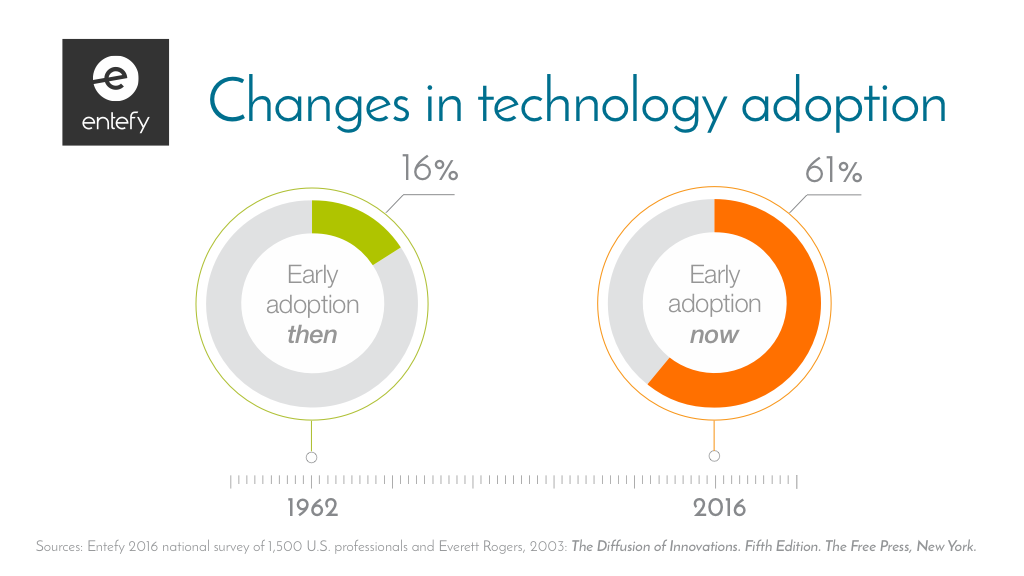
Which brings us to technology adoption. In 1962, a seminal work on the subject of how technological innovation spreads through societies, Diffusion of Innovations by Everett Rogers, concluded that only 16% of the U.S. population were first or early adopters. Since publishing those findings, however, behaviors have changed significantly.
In our survey in 2016, we found that 61% of professionals self-identified as either first or early adopters of new technology. Given today’s state of innovation, it’s relatively easy for just about anyone to test, adopt, or reject new technologies (especially digital products), practically in real-time. Early adoption can also help professionals find a competitive edge and create opportunities for improved efficiency and effectiveness at work. We no longer have the luxury of time to wait for technologies to mature; we need newer and better capabilities yesterday.
You can read more about Entefy’s findings on modern communication in the complete research report.
Will an AI system ever create art that can equal a work created by a human? Researchers and artists are already making attempts to find out by translating creativity into algorithms. To answer whether these attempts are likely to generate artwork—music, poetry, fiction, visual art—that can pass for human-created work starts with understanding how human creativity functions.
While the potential for rational thinking and mathematical ability in humans are present at birth, we still require education to fully realize these capabilities. So we study the laws of nature, logic puzzles, ethical dilemmas, and so on. Yet even the best of us make the odd irrational decision and give in to one of our many biases.
On the other hand, human emotion, intuition, and creativity needs little formal training. Every child will laugh, cry, draw, create, destroy, question, and explore without any prompting, let alone education. Education is used to shape these urges, teaching children to take control of their emotions, direct their creativity, and destroy or create with more precision and consideration.
Computer systems are something quite different. They excel at algorithmic tasks yet lack most capabilities that we consider innately human. They can certainly calculate in milliseconds tasks too complex for a roomful of mathematicians, but just try telling a computer a joke or playing it a love song.
Even at the rapid rate at which advances are happening in artificial intelligence, it’s an open question whether an AI system can learn to create something that a human would consider art. Yet advances in areas not directly related to creativity suggest it might happen. Algorithms are already completing some of the most difficult logic puzzles humans have devised. AI systems are taking on the challenge of understanding language, others have beaten the best human players in games like Go and chess, and now they are taking to the streets to prove how much safer they are as drivers.
Many of these skills are only a short distance away from creativity itself. Language, in particular, follows prescribed organizational rules while also allowing space for artistic pursuits like storytelling and poetry. Yet while we might call music “organized sound,” and visual art to be “organized color,” any old organization won’t do for an AI-generated artwork to achieve that most timeless of standards: Art with a capital “A.”
The mechanics of human creativity
It is fascinating that the human brain is wired for both logic and creativity, given how fundamentally different those mental processes are. Logic runs on a set of rules and procedures in an orderly fashion. Creativity and intuition, on the other hand, can be messy, anything but straightforward.
First, we should acknowledge that there are at least two forms of creativity. We might call the inspirational thought that arrives in the shower an example of “a-ha” creativity. Then there’s creativity that flows while we’re “in the zone,” letting our mind stretch and test rules and norms, like a pianist does when improvising a solo. In both of these circumstances, focus and cognition stand aside to let emotional expression and subconscious freedom take charge.
Mind wandering, that mental state of relinquishing conscious thought to let the mind go where it so chooses, has been linked to creative processes on more than one occasion. Insights emerge from mind wandering as the images and ideas flowing through it strike upon something rich and unexpected. Unlike a mathematical formula or logical construction, these processes are not easily recreated in computer form.
Long before formal psychological research into creativity, artists had caught on to the power of mind-wandering. The Surrealist painter Salvador Dali used to hold keys in his hand above a plate as he sat in his chair, aware that in those blissful moments just before sleep, when strange thoughts would creep in, the keys would drop, wake him, and leave him with those ideas of which he could then use.
Not every shower thought is worthy of being called creative. Some ideas seem ridiculous the next day, some musical transitions are just plain jarring. For creativity to attain Art status takes something far subtler. Creators must know the rules before they can break them effectively, they must have a sense of what will work to create the feeling, sensation, or effect that they seek. In this way, they are, to an extent, introducing old ideas to new ideas. Artists combine things in new ways, look at them from a fresh perspective, but do so using materials (colors, phrases, melodies) we are already familiar with.
This supports the common notion, so succinctly put into words by Steve Jobs, that “creativity is just connecting things.” Though the “just” makes it seem far easier than it actually is. We cannot connect just anything haphazardly and label it creative. It needs a purpose, a point, whether that is to solve a problem or portray an idea. We can teach AI systems to mix things together (imagery, tones, words), but can we get them to do so in a meaningful, artful way?
Attempts at artificial creativity
The extreme challenge of not only figuring out how creativity works but teaching it to an intelligent machine has not stopped researchers from trying. There are numerous examples of AI systems that can compose music, write articles, and create visual art. And some of it is difficult to distinguish from human-made art.
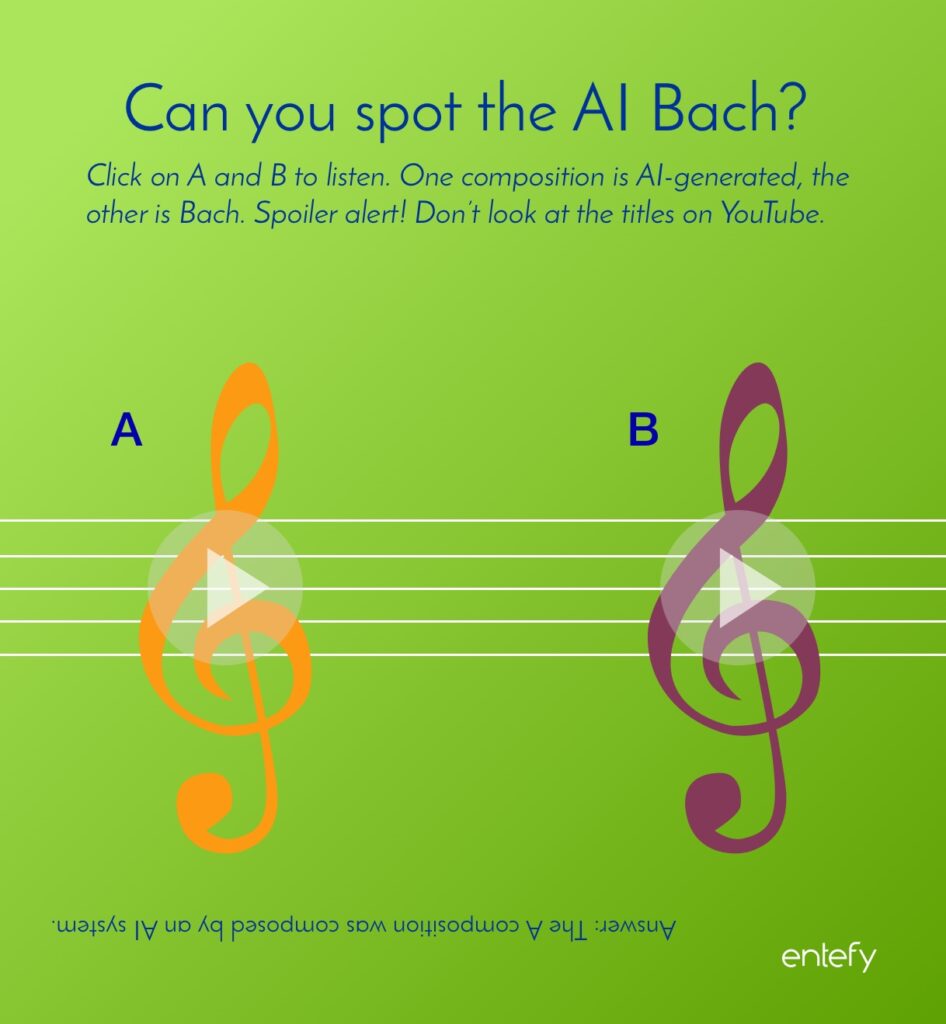
Gaetan Hadjeres and Francois Pachet, from the Sony Computer Science Laboratories in Paris, trained their AI system on the chorale cantata music of Johann Sebastian Bach. These compositions were chosen, as MIT Tech Review notes, “because the process of producing them is step-like and algorithmic.” The AI system was trained using 352 of Bach’s chorales, which were transposed into different keys, for a total of 2,503 compositions. When it came to producing its own Bach-infused chorale, the AI system managed to convince more than half of 1,600 listeners—including professional musicians and music students—that the harmonies were from Bach himself.
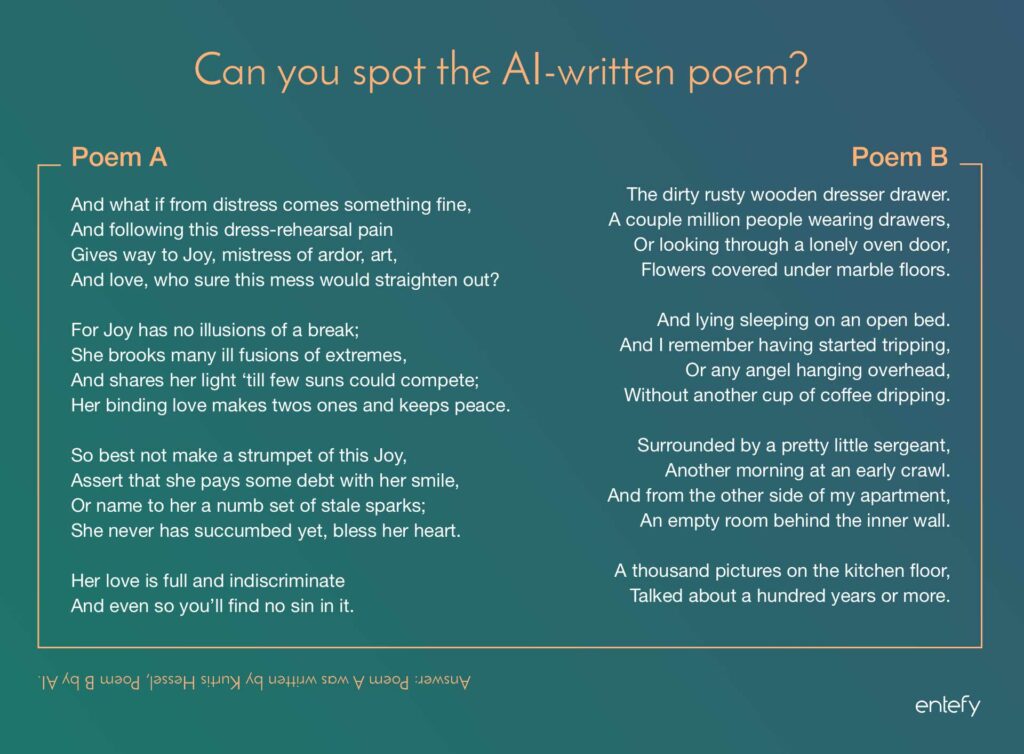
Bach doesn’t appear to challenge AI as much as poetry does. In a competition run by Dartmouth, judges were tasked with reading 10 sonnets, fourteen line poems with prescribed rhyming schemes. Some were written by a human, others by a machine. In this case, all of the judges were able to recognize the artificial compositions.
What about attempts at AI-generated fiction? One machine learning enthusiast shared an introduction to setting up a deep writing neural network in a post on Medium. He used the methodology to train a deep learning algorithm on the first four books of the Harry Potter series and shared the results. While the AI-generated fiction is an entertaining read, J.K. Rowling hardly needs to worry:
“The Malfoys!” said Hermione.
Harry was watching him. He looked like Madame Maxime. When she strode up the wrong staircase to visit himself.
“I’m afraid I’ve definitely been suspended from power, no chance — indeed?” said Snape. He put his head back behind them and read groups as they crossed a corner and fluttered down onto their ink lamp, and picked up his spoon. The doorbell rang. It was a lot cleaner down in London.
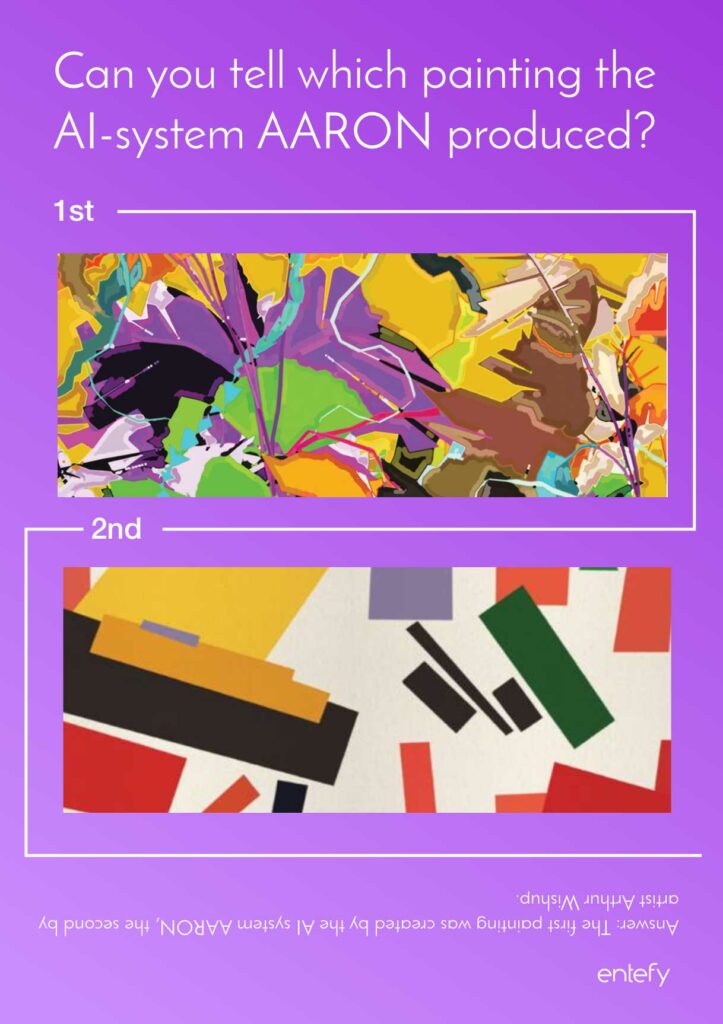
In the visual arts, AARON has been around for some time. The child of artist Harold Cohen, AARON was born in 1973 as Cohen became increasingly interested in computers and the potential they had to paint for themselves.
In a BBC interview about intelligent machines, Cohen stated that AARON had “become autonomous enough to disturb the guy who wrote the program.” Yet Cohen denied that AARON was truly creative, believing that the system’s true creativity was many years away: “I don’t deny the possibility that, at some point in the future, a machine can make something approaching art – but it is going to be a lot more complex than teaching a car to drive around a city without a driver, and it isn’t going to happen next Wednesday or even in what is left of this century.” In the years since AARON’s creation, the system has produced many vibrant-colored abstract paintings.
Appreciating machine-made art
One important question remains. How are we going to feel about Art produced by intelligent machines? Will we appreciate the creativity and design? Or will it seem cold and distant, denying us an emotional connection to it?
One school of thought says that the value and meaning of art exist independent of its creator. On the other hand, many believe that the story behind a piece of art and information about the artist can influence our perception of the artwork. You can test your own view with a thought experiment: Imagine standing in front of a painting by a noteworthy artist. Now imagine learning that the painting was a forgery, a copy of the original. Would you still find enjoyment in it? If every brush stroke, hue, and detail were precisely the same, would you value it the same?
Psychologist Paul Bloom notes in an interview on what people value most that when we’re shown an object or a person’s face, “people’s assessment of it…is deeply affected by what you tell them about it.” This idea was demonstrated in an experiment in which a violinist plays a piece of music in a D.C. Metro station and collects $32 in donations. What passersby were not told was that the violinist was Joshua Bell, who has recorded more than 30 albums and performed at the White House. Bell was playing a Bach composition considered one of the most challenging ever written. Just days earlier, Bell had played the piece in Boston’s Symphony Hall, where ticket prices eclipsed $100. Would more people have stopped to listen to him play if they had known all of this? Almost certainly. Yet the music would have been the same.
Creativity will remain a human domain for some time to come
As it stands today, creativity remains a human affair. While these AI attempts are noble in their artistic pursuits, each still falls short of the benchmark set by artists of our own kind. The musical compositions were the most convincing artifacts, yet were chosen specifically for their algorithmic style. In most other domains, the algorithms displayed an inability to break the rules in a purposeful fashion, often sticking to the norms or composing something incoherent. No one knows when a digital Picasso might emerge to wow an audience of Art-world cognoscenti. But one thing is for certain, as machines become smarter and more capable, they get closer and closer to achieving true creativity.
Can you guess what adults do 14 times per waking hour on average? You might guess laugh, yawn, sit, stare at the wall, or take sips of water. Entefy conducted a national survey of 1,500 professionals working in different industries all around the U.S., which revealed some eye-opening data about what many of us do every 4 minutes.
This video enFact delves into the how’s and why’s behind this common habit that takes up a surprising amount of time each and every day.
Entefy’s enFacts are illuminating nuggets of information about the intersection of communications, artificial intelligence, security and cyber privacy, and the Internet of Things. Have an idea for an enFact? We would love to hear from you.
These days we take instant communication for granted. So it’s easy to forget that for most of human history, sending a message took time. And sometimes, lots and lots of time.
This video enFact talks about how a communication delay impacted Andrew Jackson’s most famous victory. It’s an example of an historic event that could have gone in an entirely different direction. Or not have happened at all.
Entefy’s enFacts are illuminating nuggets of information about the intersection of communications, artificial intelligence, security and cyber privacy, and the Internet of Things. Have an idea for an enFact? We would love to hear from you.
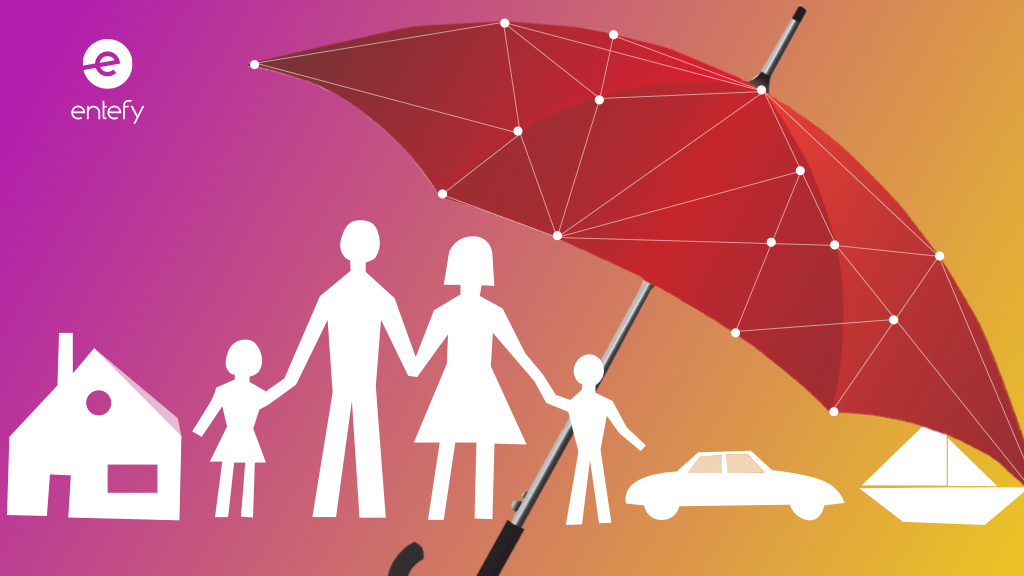
Do you have car insurance? Health insurance? Homeowners insurance? Chances are you are a customer of at least one insurance company and a policyholder on one or more types of insurance. If so, you should pay particular attention to the fact that the global insurance industry is seeking to harness artificial intelligence solutions. While the use of AI technologies in insurance has the potential to streamline company operations and reduce consumer prices, it also raises unprecedented new issues about personal privacy.
As with many discussions of artificial intelligence, understanding its impact starts with understanding data. AI systems used by businesses analyze data (the more the better) to discover trends and insights in that data. Those insights can then be used to improve a company’s operational efficiency, for instance. This is true of everything from online dating systems to healthcare platforms.
What’s distinctive about the insurance industry’s adoption of AI is how these companies intend to collect their data. Insurers are turning to sensors to collect data directly from individuals, including technologies like in-home monitors and wearables. And whenever data collection intersects with a real person, privacy questions emerge. Do you want your healthcare provider receiving a real-time notification of your late-night snacking? Do you want your auto insurer to know every time you roll through a stop sign? These are no longer hypotheticals.
Consumers should pay attention because the more data insurance companies collect about their lives, the less control they are likely to have over how that information is used. The question is, how much of this data about your personal life will you be asked to volunteer? And more importantly, will you have a choice?
Privacy issues raised by smart auto insurance
Auto insurers have already made strides in exploring how AI can lower costs for themselves and their customers. Several companies are developing smart photo analysis systems capable of assessing vehicle damage immediately following an accident. Telematics—computing devices that transmit data over long distances—may lead to advancements like detecting crashes, assessing damage, and starting claims. In-vehicle or smartphone-enabled telematics devices could trigger 911 calls and instruct company representatives to call policyholders and help them through their post-crash recovery.
While a supportive presence might be welcome during such circumstances, instant notification comes with drawbacks. Right now, policyholders have the option of calling their providers right away or holding off until they’ve taken their cars to a mechanic. Some opt out of reporting accidents altogether if the damage is minimal. An instant alert system means insurance companies gain control over the situation. For example, they could insist policyholders take their cars to a preferred auto body shop instead of letting customers make the decision.
Insurance companies also use telematics to track policyholders’ activities, offering a chance at reduced premiums in exchange for providing real-time data about their driving behavior. However, decreased premiums aren’t guaranteed. Some companies even calculate rates based on factors unrelated to performance. Drivers could have pristine records but still pay high fees if insurers think they visit dangerous neighborhoods too often.
Policyholders can in many cases opt out of tracking programs and forgo rate discounts. But your choices become more complex if insurers decide to track your every move and make that tracking mandatory, denying coverage to those who refuse to participate.
Insurance companies in every home, and on every wrist
AI-based initiatives in the health and homeowners insurance industries raise a unique set of privacy challenges.
Wearable devices are being used in health insurance, where they transmit data about how often a person exercises and what preventive measures they take to avoid disease. AI algorithms could use that data to adjust premiums on an individualized basis, rewarding proactive policyholders with favorable rates or raising premiums for the unhealthy.
Some tech companies are working on trackers that can perform real-time measurement of glucose levels based on what people eat. That would be valuable information for insurers who want to predict which policyholders are at risk for diseases such as diabetes. But do people want their employers or insurance companies knowing about the bacon donut they ate for breakfast or the ice cream they splurged on late one night? These are the types of choices consumers could soon have to make.
To get even more personal, let’s look at smart homes. Some insurance companies are creating policies that use data generated by your smart home to determine premiums. Other insurance companies want to subsidize the cost of adding smart home technologies. Devices such as intelligent thermostats, voice-activated assistants, mold monitors, wired refrigerators, and smart window blinds do more than add automation and convenience to people’s homes. From an insurer’s perspective they “open up a flood of lucrative new data that can make their existing business of handling claims more efficient while creating a new relationship with the customer. With a feed of data from your home, an insurer could help you prioritize maintenance tasks and fix problems such as leaky pipes before they caused major damage.” They could also save lives and lower insurance payments. For instance, in-house sensors could let residents know if the building is losing heat or sprinklers could automatically switch on in case of fire.
Now for the trade-off: “data from smart home devices can show whether you are home or not, aiding burglaries. Perhaps more likely, ransomware could attack a particular device—for example, turning off the heat until a homeowner paid up.” This is not to suggest that ransomware hackers should be top of mind. Rather, data-driven advances in insurance raise questions about data security that we have never had to address.
Common ground between innovation and privacy protection
Consumers’ views on these new privacy issues are, not surprisingly, mixed. One insurance industry survey found that 78% of people would be willing to share personal data with their insurer in exchange for lower premiums and faster settlement of claims. On the other hand, a Pew Research survey on privacy and information sharing asked respondents whether they supported installing a “smart thermostat” that would monitor their movements around the home.
The data showed “most adults consider this an
unacceptable tradeoff (by a 55% to 27% margin). As one survey respondent explained: ‘There will be no SMART anythings in this household. I have enough personal data being stolen by the government and sold [by companies] to spammers now.’”
Incentivizing safety and prevention through sensor-driven data collection programs may one day lead to improved driving, better health, and safer homes. But AI-powered insurance products should also be designed to protect user data from abuses and misuses, limiting data collection to levels that serve consumers’ best interests.
Request a Demo
Is your organization pursuing an AI-first transformation strategy? If so, start the conversation by submitting the form below.
Contact Us
Thank you for your interest in Entefy. You can contact us using the form below.
Download Data Sheets
See our Privacy Statement to learn more about how we use cookies on our website and how to change cookies settings if you do not want cookies on your computer. By using this site you consent to our use of cookies in accordance with our Privacy Statement.