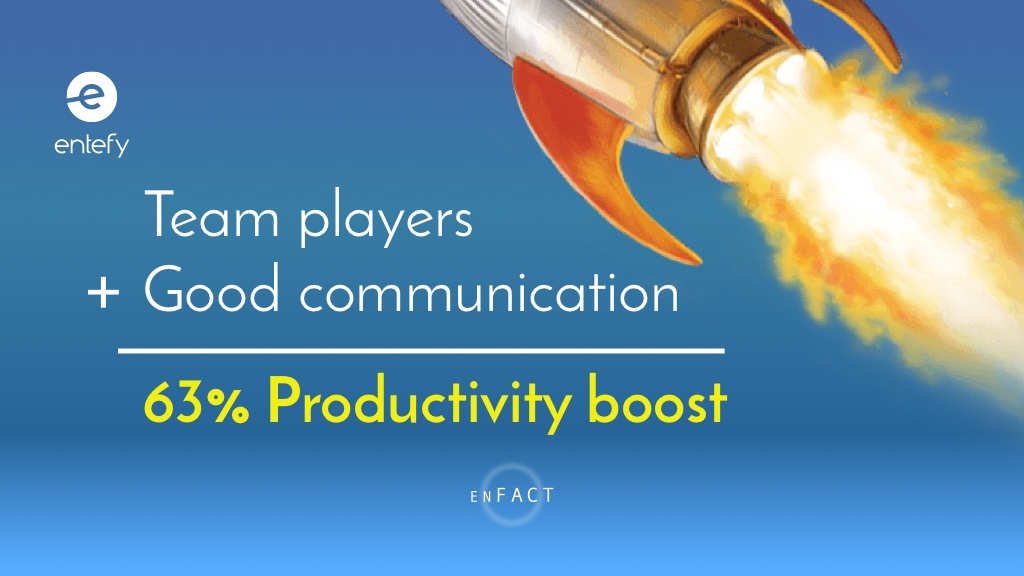
NBA legend Michael Jordan once said, “Talent wins games, but teamwork and intelligence wins championships.” That emphasis on teamwork is backed up by evidence from an academic study of how NBA players contribute to team success, which found that excellent team players add 63% more value to their team above and beyond personal contribution.
But what makes a high-performance team click? Communication, according to data defining what makes great teams. Researchers at MIT were able to predict which team would win a business plan competition solely based on the nature of their teammate-to-teammate communication. The strongest teams consisted of communicators who were energetic, engaged, and curious.
All of this suggests that at the office, the real “slam dunk” move is passing the ball to a teammate. It might be less glamorous but it can lead to more wins.
Entefy’s enFacts are illuminating nuggets of information about the intersection of communications, artificial intelligence, security and cyber privacy, and the Internet of Things. Have an idea for an enFact? We would love to hear from you.
One surprisingly powerful use of artificial intelligence in healthcare is how well it does…paperwork. By automating administrative tasks, AI gives doctors and nurses more time to provide patients with reassurance, comfort, and insight. And that’s just one example of the many roles AI is already playing in healthcare.
In this video, we look at some of the cutting-edge uses of AI in healthcare, including disease research, medical imaging, and patient diagnosis.
You can read more about Entefy’s analysis of AI in healthcare here.
Entefy’s research into the complexity of modern life continues below. In Part 1: The bygone Golden Age, we outline the paradox of prosperity, the observation that despite widespread evidence of the world’s progress, our individual experience of life is often something quite different. In Part 2: Defining modern complexity, we analyze the aspects of life today that create the experience of complexity and consequentiality. In Part 3: The general erosion of confidence, we look at the evolution of our collective trust in social institutions. In Part 4: Family, friends, and community, we analyze the structure of social circles and changes to income and education. The report concludes by examining how digital technologies can contribute to meaning and fulfillment in modern life.
Part 2: Defining modern complexity
Complexity is central to the paradox of prosperity. It emerges from the rapid pace of change, and the arrival of seemingly endless choices in practically every area of life. But not just the number of choices we face. It’s the number of choices we make that carry great weight and consequentiality, yet are made with little outside support.
This pattern of choice and consequentiality can be seen in many areas of life. We are more responsible for our own retirement saving than in the past, as demonstrated by the decline of employer-provided pensions and the rise of personally-managed savings accounts like 401(k)s. Similarly, education choices are greater as are their costs. Healthcare planning is more complex and driven by our own choices.
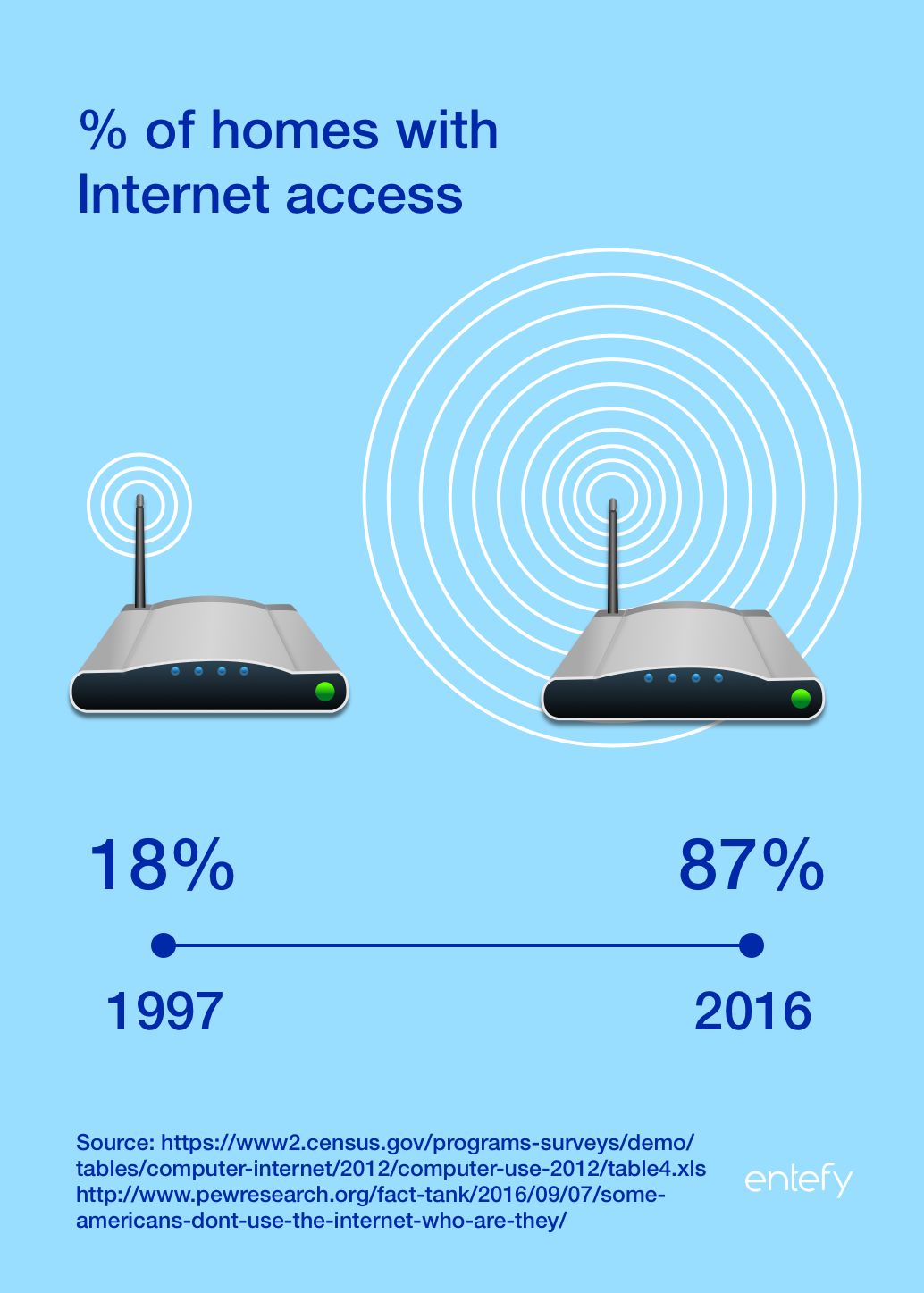
And nowhere is complexity and the pace of change more apparent than in digital technology. To take just one example, there’s the increasing complexity and volume of communication that occurs in our connected worlds. Digital messaging technologies allow astounding opportunities for personal connection, independent of time and space. Yet the technologies have also created very real obligations in terms of hours in a day and number of emails, phone calls, text messages, and the like. When you consider that just 10 years ago, the first smartphones were hitting store shelves, the pace at which we’ve adjusted our lives to accommodate their capabilities is astounding.
Financial planning, education, healthcare, and technology are not carefully selected examples. We see the same dynamics of complexity throughout our day-to-day lives. Here are some more concrete manifestations of increased choice and consequentiality.
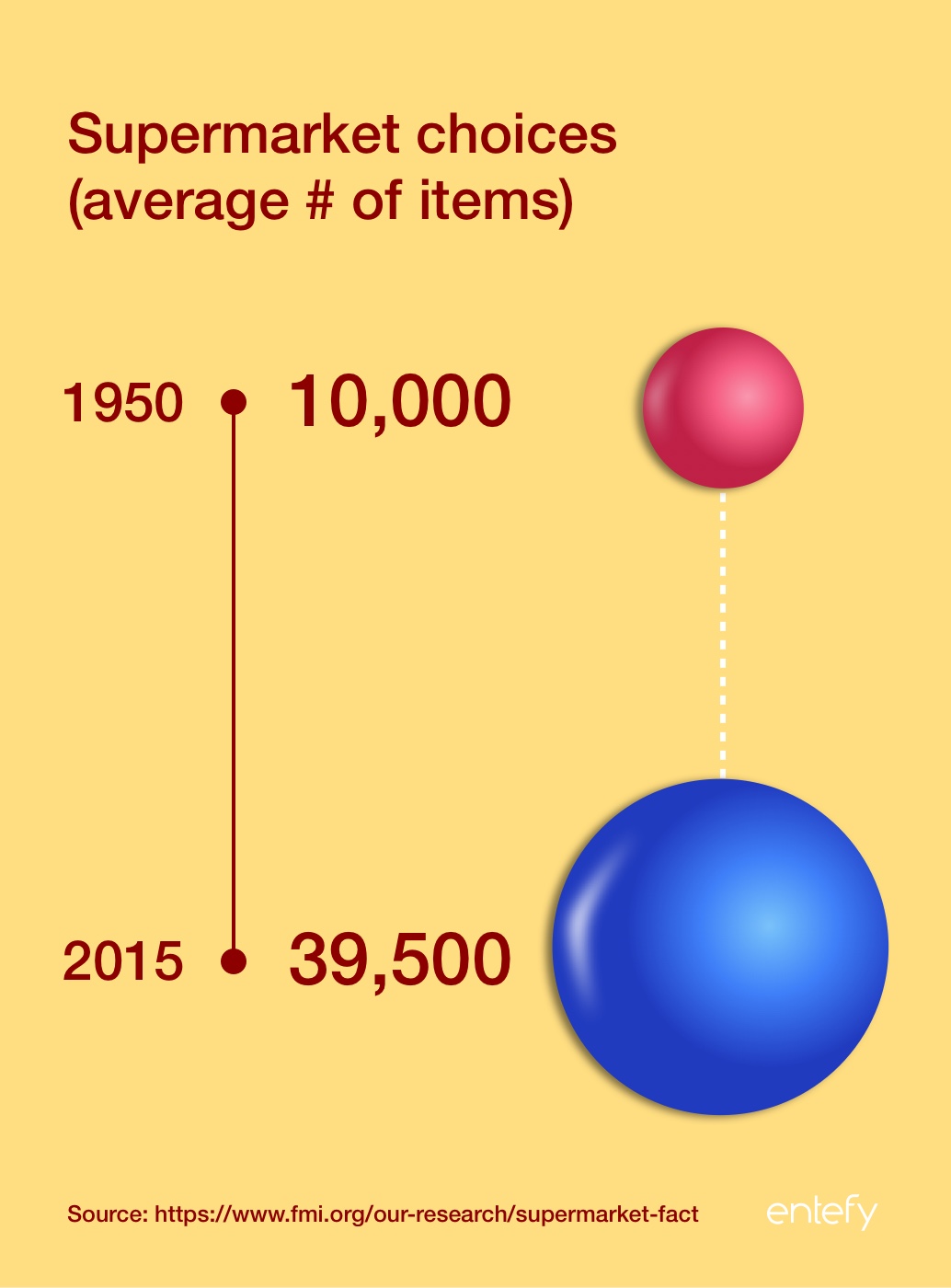
It is important to note that, for example, the 4x increase in items in the supermarket is neither inherently good nor bad. In fact, choice in life is generally considered a positive—until it overwhelms us and leads to analysis paralysis.
As the data suggests, today’s world for the most part offers us more choices.
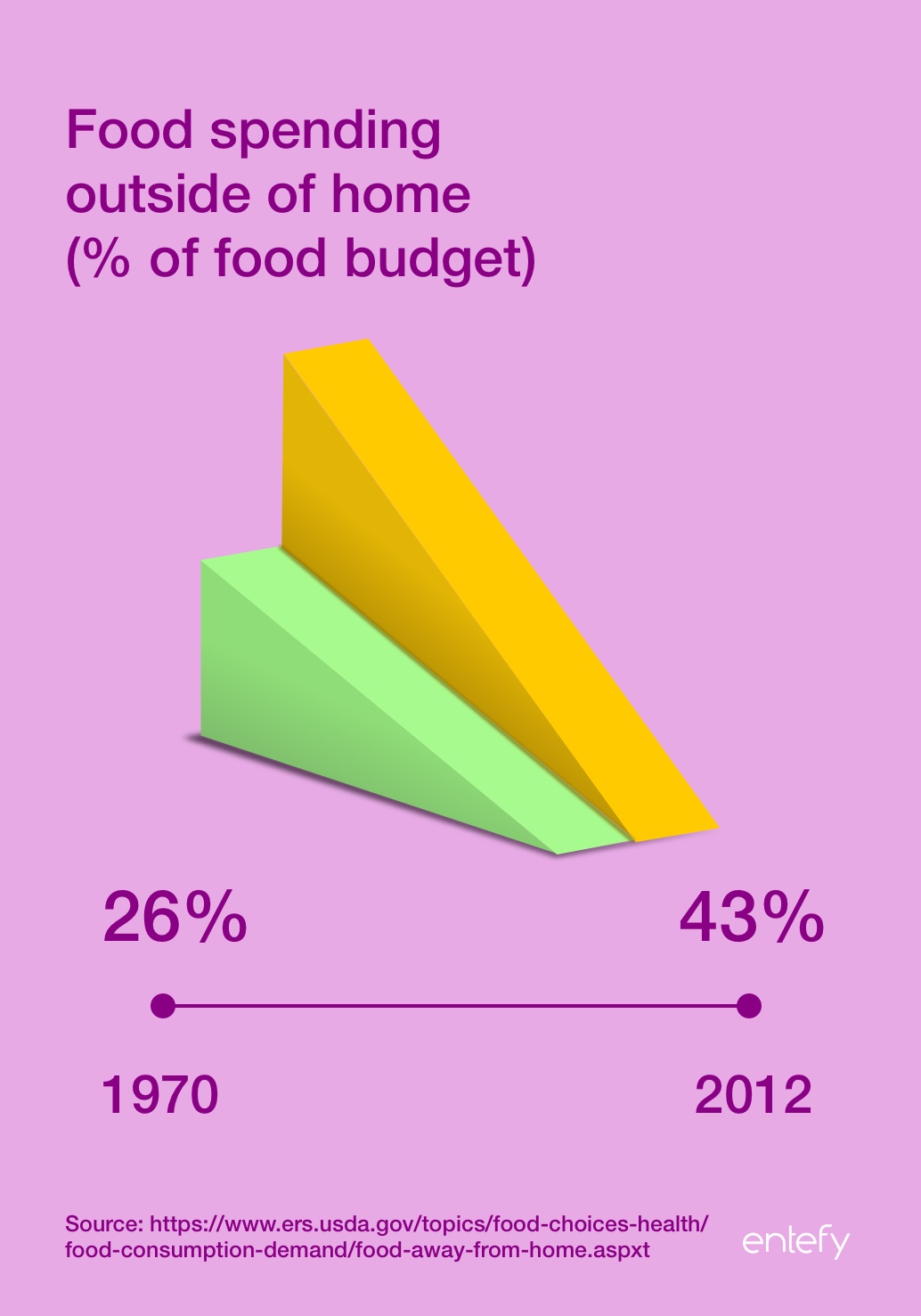
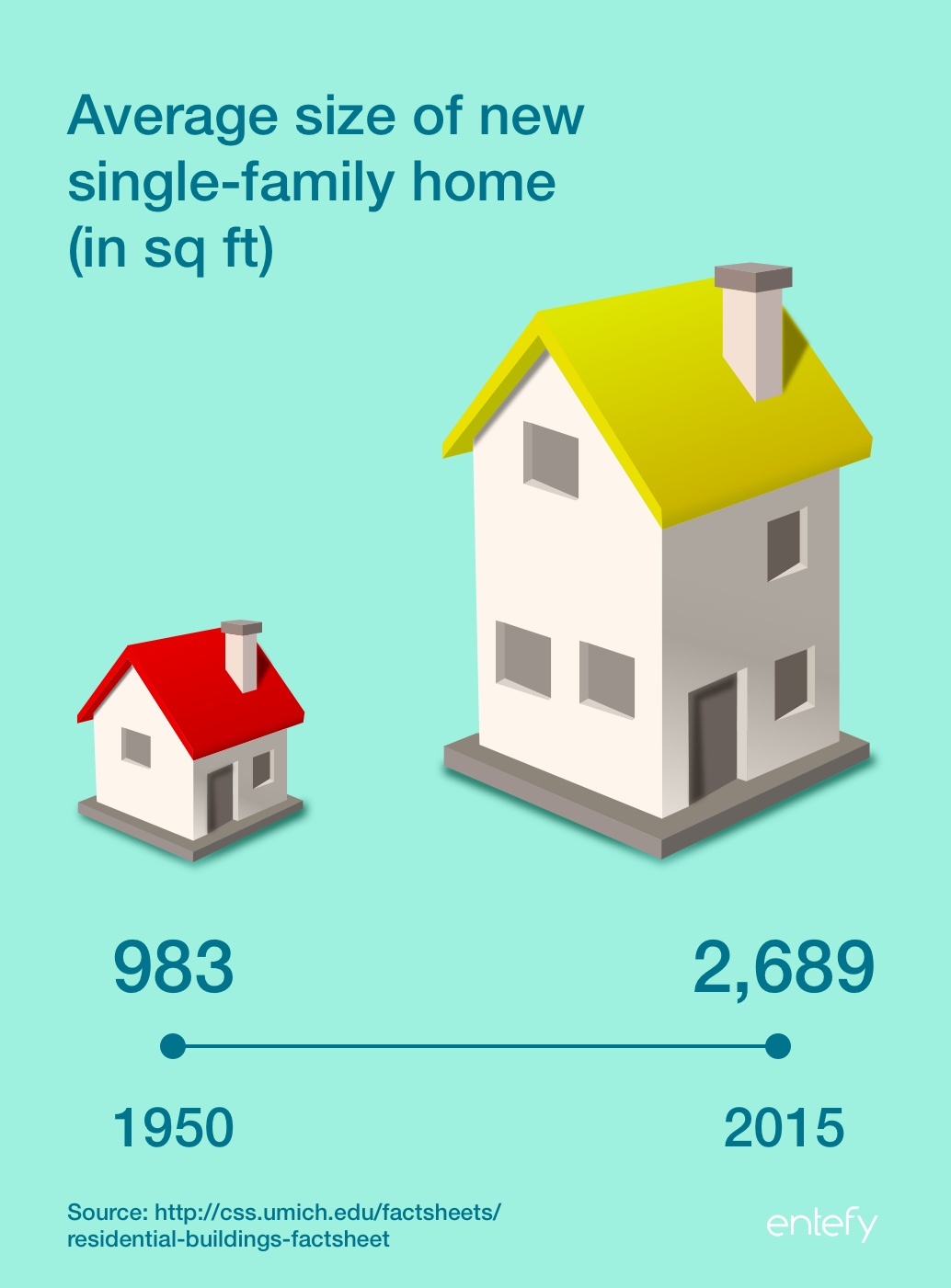
We have more items to choose from at the grocery store, we dine out more often, we live in larger homes, and those homes are equipped with more labor-saving and electronic devices than before.
The number of unique items for sale in a typical grocery store rose nearly four-fold between 1950 and now. This is a good thing in terms of increased choice. However, it is a challenge in terms of efficiency. Here’s an example: You are sent to the grocery store to “pick up an extra package of spaghetti.” You get there and discover that you have a dozen brands to choose from, you realize you don’t know the difference between n. 8 and n. 9 spaghetti, and you aren’t sure whether to buy the regular or gluten-free version. The consequences aren’t grave in making a bad decision. But a decision has to be made nonetheless.
Eating out is a pleasant indulgence but again: “Where do you want to eat?” “I don’t know, where do you want to eat?” This is trivial, until you add up all of the time we spend making all of these decisions.
Homes that are 2.7x the size of those in the 1950’s represent a rising degree of prosperity but that extra space also means more decorating decisions, more decisions about home security, energy consumption, furnishings, and so on. A corollary to home size is the number of electronic devices. Not just straightforward things like a TV or a computer but also a microwave, an alarm clock, a thermostat, a speaker. Each one of these electronic devices has attendant complexities – whether to buy a warranty, learning how to use it, figuring out how to connect one with another. We take much of this day-to-day complexity for granted, but there are hidden costs.
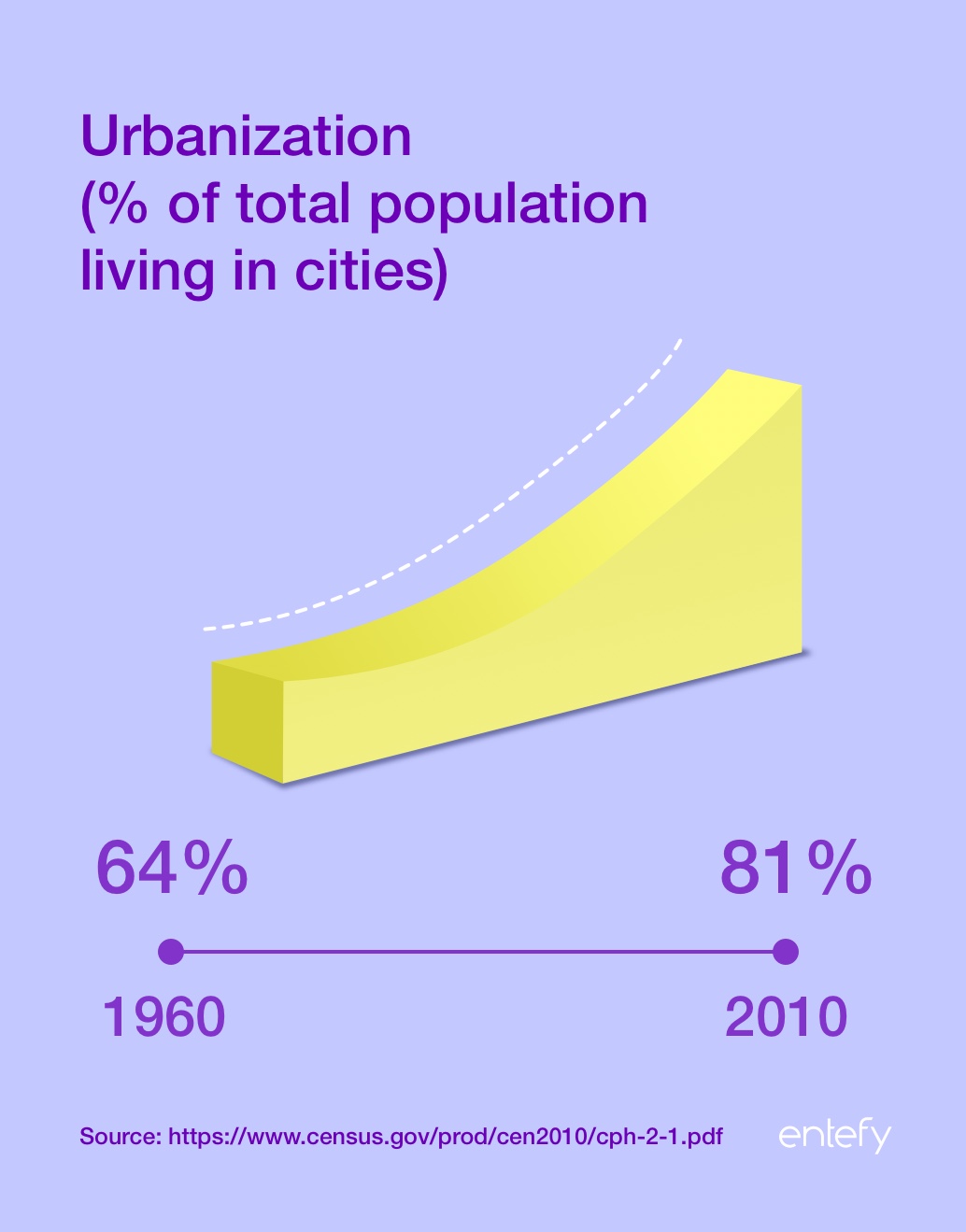
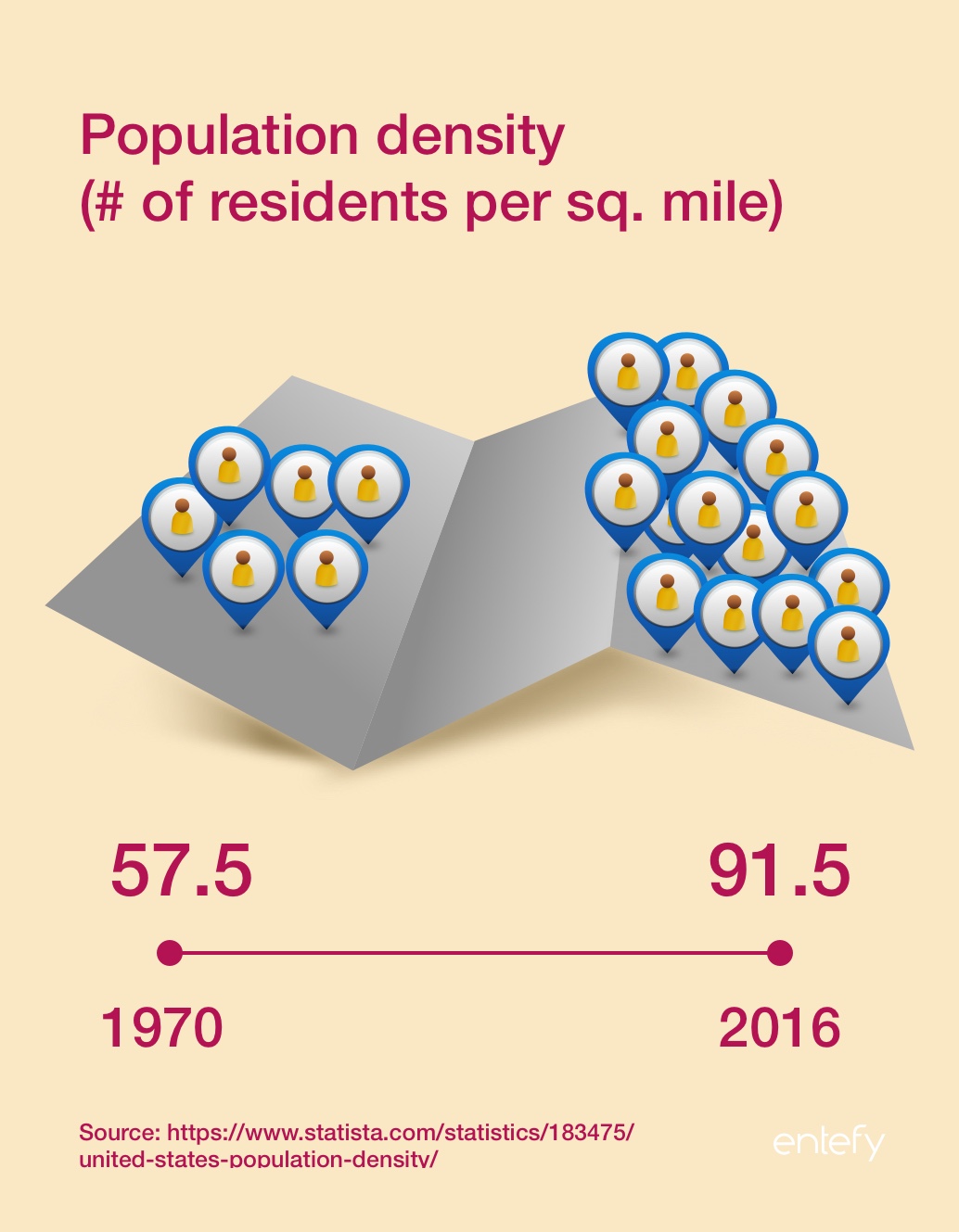
There are other forms of complexity. We are living more densely than we used to do, with nearly half again as many neighbors as we had in 1970. More neighbors mean more interactions but also more chances for contention and conflict.
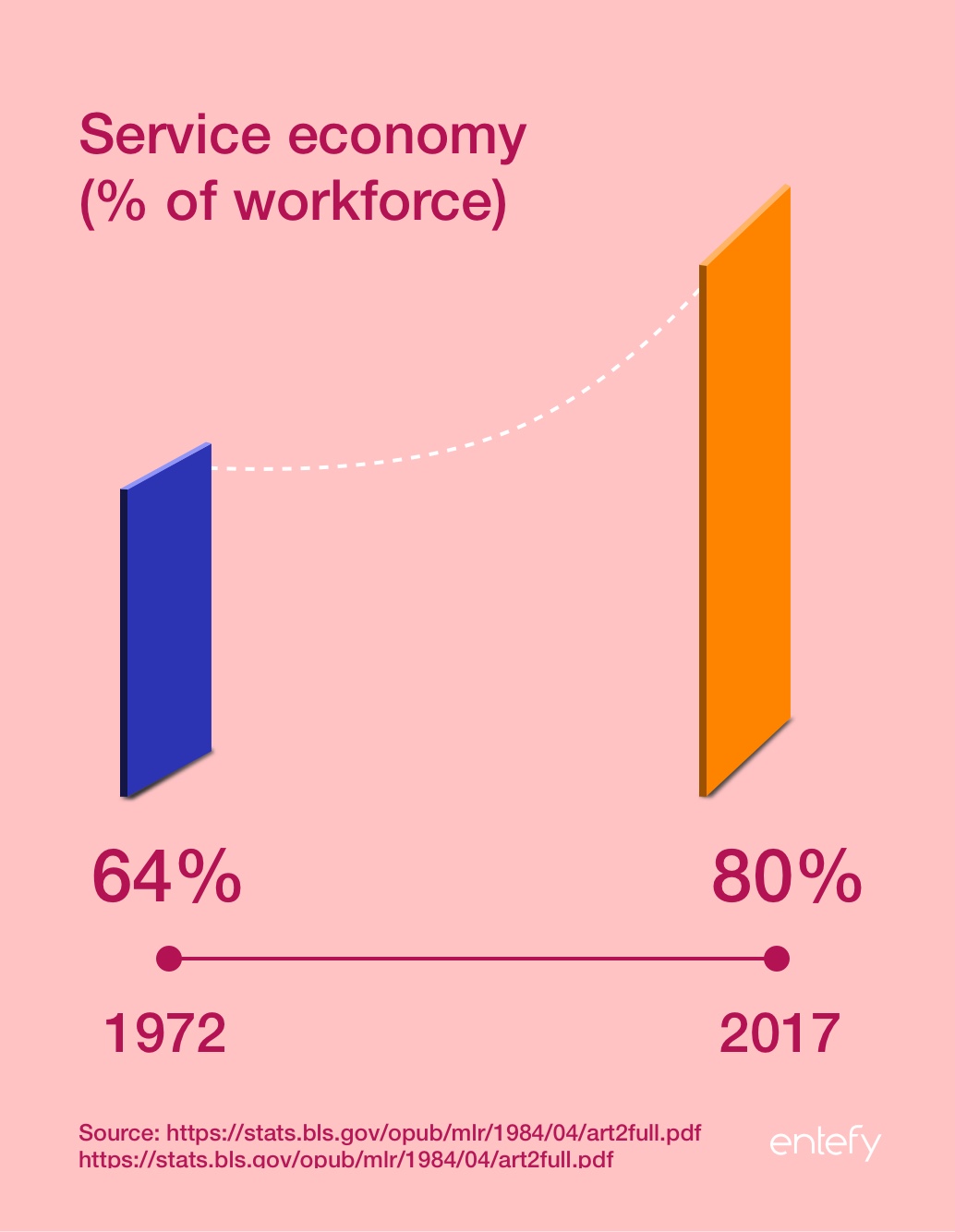
Then there’s employment. In Agriculture, we have been moving off the farm and into cities for more than a century. Manufacturing has seen workers exiting manufacturing jobs for 50 years. Where are these workers headed? Into the Service sector, which is nearly 30% larger today than in 1970—a figure that has a direct link to complexity as well. There is complexity in Agriculture and Manufacturing, but it tends to be slow developing
with long cycle times. The expertise required to drive a tractor or work on an assembly line changes slowly. In contrast, Service sector jobs, roles, processes, and skills tend to evolve quickly. The more that employment is concentrated in the Service sector, the greater uncertainty and volatility there will be for more people.
What is so interesting about complexity is how much the picture of life changes the farther you zoom out from these individual data points. We have become so accustomed to many of the characteristics we discuss here that we take them for granted. Only with some distance can we see what makes the modern world “modern,” and the complexity and consequentiality that define so many of our many decisions.
Part 3 of this report continues Entefy’s analysis of the complexity of modern life with a look at the changes to our confidence in social institutions.
There is a paradox at the heart of life in the digital age.
Despite what we often see in the headlines about politics or the economy, in most ways of measuring life outcomes, people in the U.S. and much of the world are living better today than ever before. Americans are living longer and healthier; are more educated; have plentiful and varied food supplies; live in bigger and safer homes; experience a cleaner and greener environment; work in safer workplaces; are less likely to suffer violence and accidents; collect incomes that are higher while absolute poverty is lower. Globally, human rights are expanded; more countries are democracies; income inequality is down as is warfare between states. However, not everything is better for everyone, everywhere, all the time. Yet in the aggregate, much of humanity is at the pinnacle of a march towards better living.
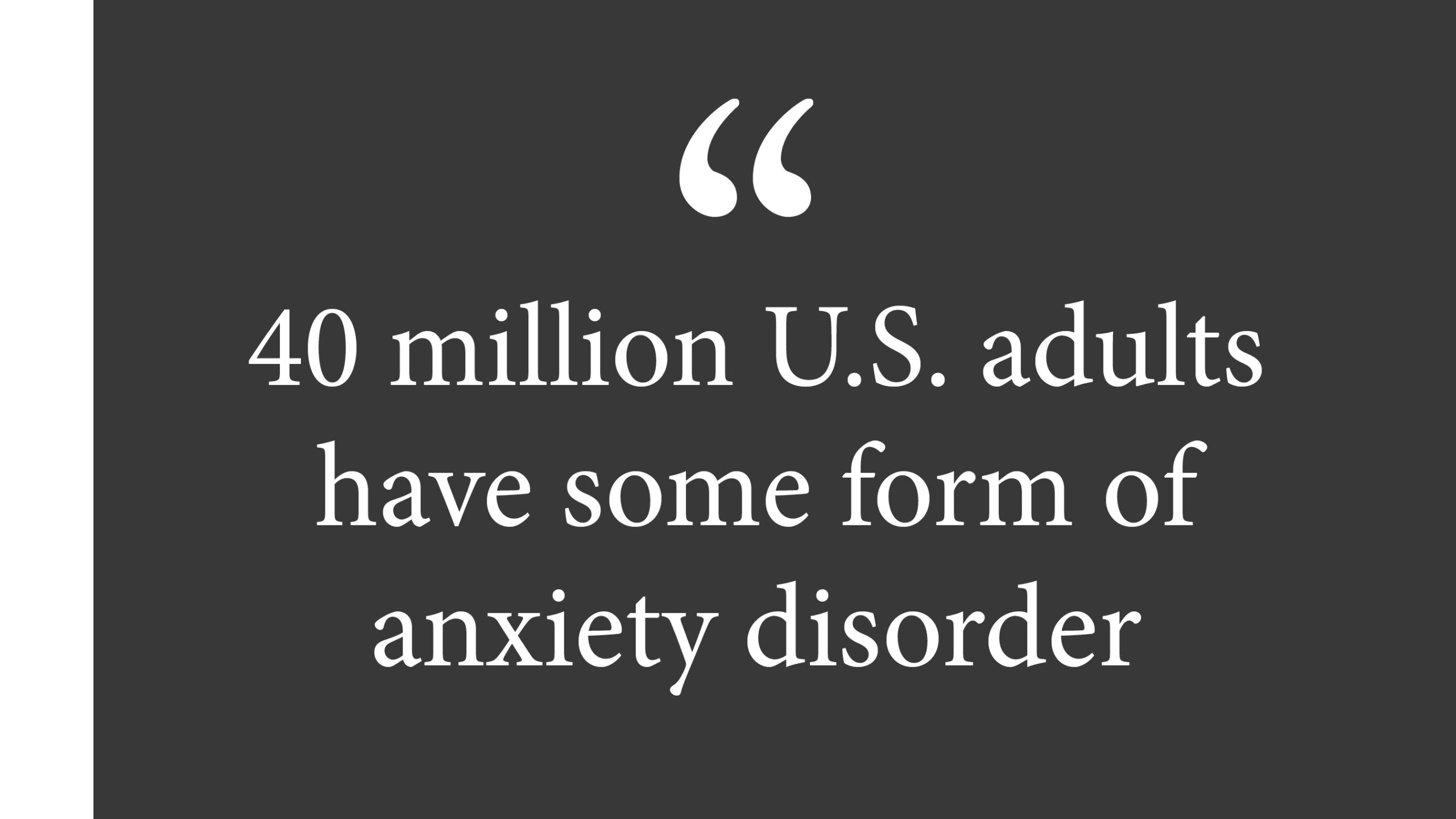
But we don’t experience life in the aggregate. We experience life specifically, uniquely, personally. Not as an average but as a point. And many people’s experience of life today is not that of a pinnacle of progress. It is, day in and day out, a feeling of inexplicable unease, a sense of unending challenge, a fear that things are perhaps more dangerous, the sensation of being constantly overloaded and ceaselessly stressed. By one measure, 40 million U.S. adults have some form of anxiety disorder. And 71% of Americans surveyed say they are dissatisfied with the way things are going.
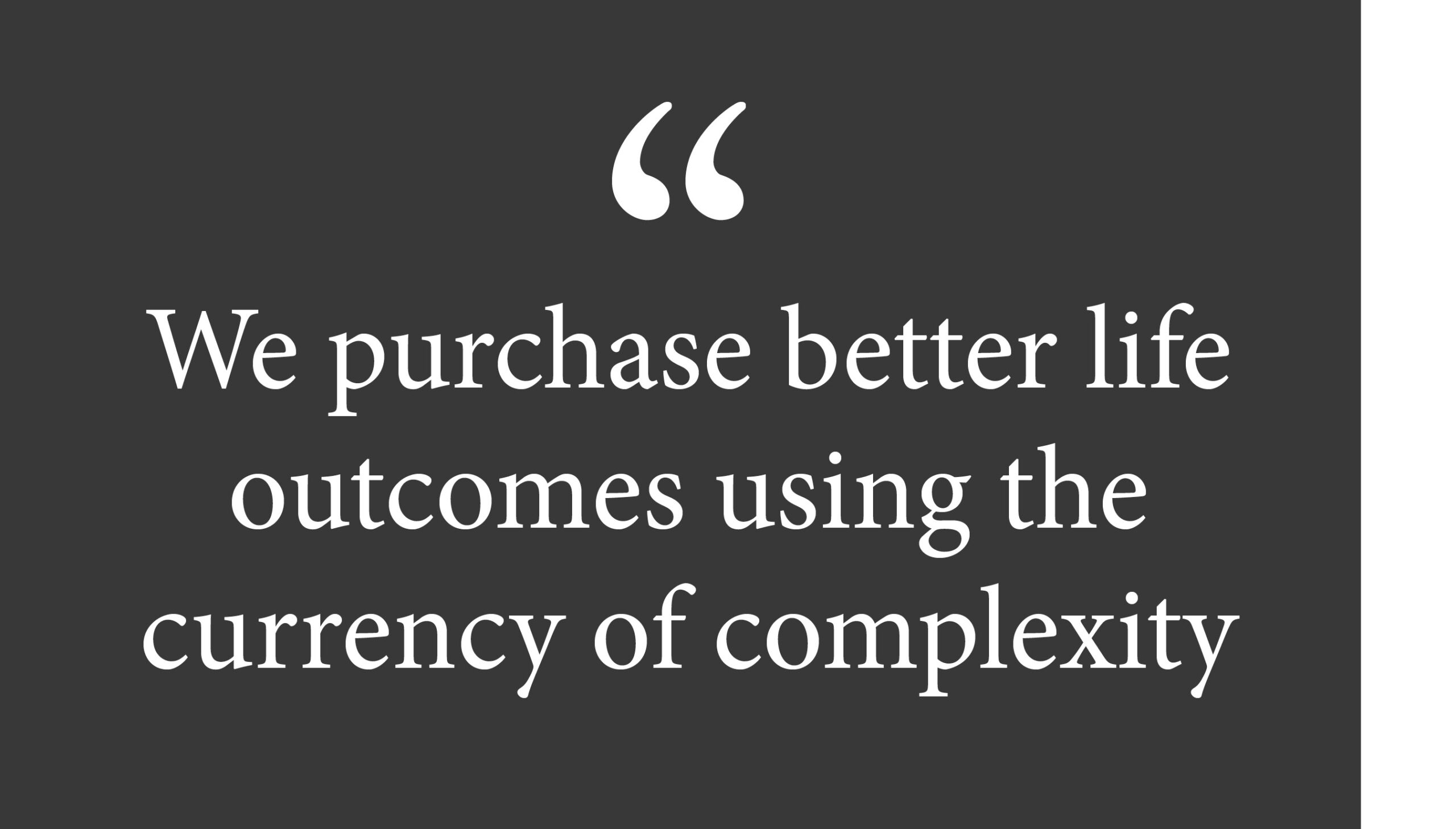
This Entefy research attempts to answer the question at the heart of the paradox of prosperity: Why is our day-to-day experience of life out of sync with data telling us things are going so well? The answer starts with some important relationships. To achieve the improved outcomes we collectively and individually desire (longevity, wealth, health, etc.), we have to generate increased prosperity; to generate increased prosperity, we have to be more productive; to be more productive, we have to make changes that accomplish more; and when a lot of changes takes place at once, the result is increased complexity. You might say that we purchase better life outcomes using the currency of complexity.
In seeking to explain the disconnect between objective data and subjective experience, we analyzed information from 45 different sources—everything from the U.S. Census Bureau and Bureau of Labor Statistics to polling firms like Gallup—covering the decades from the 1950’s until today. This report is divided into 4 parts.
In Part 1, which continues below, we start decades back in time to examine that communal feeling of widespread success that today sometimes feels part of a bygone Golden Age.
In Part 2, we will define complexity, put some measurements around it, and evaluate the familiar and surprising ways it impacts our lives today.
In Part 3, we take a data-driven look at our shared confidence in society’s institutions.
In Part 4, we analyze changes to the structures of families, friends, and communities as well as changes to income and education.
Where we end up might surprise you because merely pointing out the challenges of modern life is not the goal here. It is simply the first step in identifying ways for each of us to participate more fully in modern progress. When we understand the paradox, perhaps we can break through it and start enjoying better, more fulfilling lives.
From team owner to team captain
At the end of World War II in 1945, the United States found itself the single largest country with its industry and economy still intact. But that economy was structured for war-fighting purposes. Soon after the war, slowly at first and then in earnest, the nation embarked on a 25- to 35-year period (up to roughly 1980-1990) in which we systematically dismantled the regulatory structures put in place during the War years.
During this period, the country largely eliminated price controls and capital controls. We deregulated the rail industry, the trucking industry, the airline industry, the shipping industry, the telecommunications industry, the financial services industry, the healthcare industry, and the energy industry. This strategic deregulation permitted greater competition, which in turn accelerated investment and innovation. Strategic deregulation was complemented by tactical regulation, which strengthened areas like product safety standards, consumer protection, and labor law.
Because we emerged from the War with a functioning economy, the U.S. began the post-War period with significant momentum driving its economic expansion compared to most other major economies. Deregulation further accelerated that growth during the 1970’s through the 1990’s. All told, the U.S. would sit atop the global economic ladder and experience 50 years of steady economic growth, interrupted only by temporary periods of recession.
Importantly, the benefits of post-War growth—the living experience of it—were enjoyed by most everyone. There was inequality but generally speaking most boats were floating higher on a rising tide.
Another factor contributing to post-War prosperity was the culmination of the accumulation of science and technology innovation across most economic sectors that took place over a 100-year period beginning around 1870. Throughout this time frame, transformative scientific discoveries were made in fields as diverse as pharmaceuticals, metallurgy, agrichemicals, electronics, biology, and physics. This broad tide of innovation drove great increases in productivity.
After 1970, innovation became increasingly restricted to the high technology and communication industries. While innovation was and continues to be dramatic in these two fields, these two sectors account for just 7% of U.S. GDP. At the same time, the pace of innovation in other key sectors such as agriculture, finance, and transportation slowed dramatically. Innovation continues, but many industries today sit atop their S-curves with their inventive heydays behind them.
During the 50-year period following the War, it was reasonable to conclude that the U.S. held a special and unique place in the world. It was easy to take for granted the multiple circumstances that created so much prosperity for so many, so quickly. Our corporations grew ever-larger, employing more and more people, and delivering to them more and more comforts. We reached the moon and defeated Communism. We conquered or contained centuries-old diseases such as smallpox, diphtheria, cholera, typhus, and malaria. Our universities were unrivaled, our scientists provided a constant flow of amazing discovery. At any point along this timeline, the future looked bright.
Today, much has changed. Broad-based, easy gains in productivity may be behind us. We have to make harder choices. We have to live within constraints we did not anticipate or wish to acknowledge. There is more competition within our country and among global competitors. Digitization, the Internet, chip designs, and artificial intelligence are disrupting all our other industries. The U.S. still holds a unique and commanding position but the global order is disrupted and unpredictable. Our collective sense of exceptionalism has been upended by clear signs that we are one among many.
Which brings us to the paradox that defines life in the digital age.
The paradox of prosperity
Let’s restate the paradox of prosperity: despite pervasive evidence that life today is better than ever before in history, our subjective experience of life can feel—take your pick—unsettled, uncertain, or just plain anxiety-riddled.
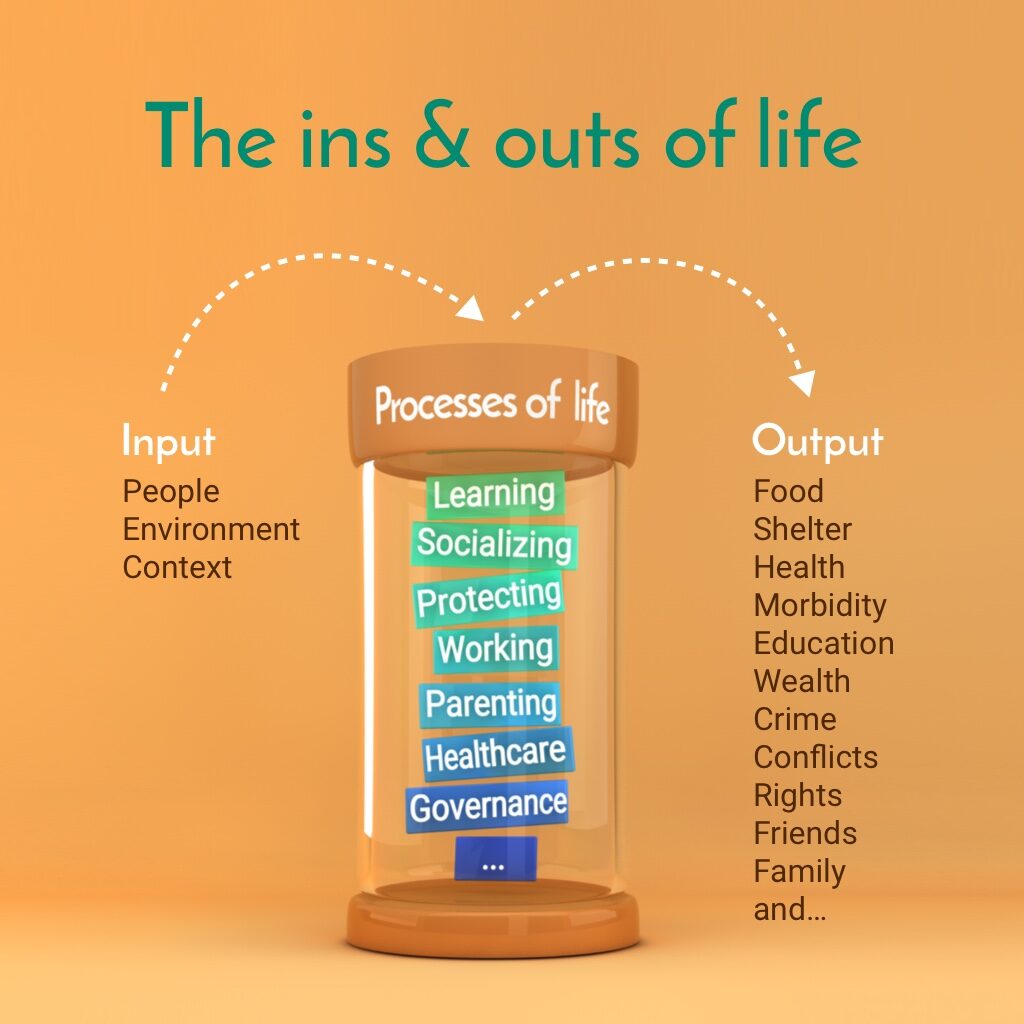
How do we reconcile these contradictory ideas? The first step is to establish a credible description of the problem. Matt Ridley, a former editor of The Economist, did just that in a speech to the Long Now Foundation entitled “Deep Optimist,” a great starting point on this topic. If we acknowledge that life has improved in general, what is the basis for all this pessimism? The answer begins in the abstract. Picture life as a black box with inputs, processes, and often unpredictable outputs. It looks a little like this:
Life’s inputs are people, environment, and context (an individual’s circumstances at birth and beyond). The processes of life influence and transform people’s lives, everything from parenting and education to employment and law. These processes impact the outputs: your quality of life. When we talk about the evidence that life today is better than ever, we are talking about measurements of these outputs, everything from GDP to educational attainment to average lifespan.
As we presented above, outputs have improved across the board for most Americans and for many around the globe. If all the outputs have improved, perhaps the perception of life’s difficulties and challenges reside within the processes that generate the outcomes—learning, socializing, protecting, working, parenting, healthcare, governance, and so on.
The sense of generalized anxiety so many people experience is a byproduct of the very complexity that emerges from increased productivity. We have access to incredible amounts of information to solve very targeted problems but this same ocean of information threatens to drown us. With greater complexity, we are less in control.
To dig deeper, we need to look at a representative example of complexity then and now. Let’s use the example of financing the purchase of a home in 1970 versus today.
To buy a house in 1970, you had to save enough for a down payment and then select from two choices of mortgage: a 15-year fixed-rate mortgage and a 30-year fixed-rate mortgage. Then, as it is now, that decision was monumental and consequential because a home is typically the single largest investment most people make in their lives.
In 1970, while your choice was simple (basically two mortgage options), it was also constrained. You had to have enough money saved for a sizable down payment as well as closing costs. You had to document a steady and secure income and an unblemished credit record. It was difficult to get a mortgage back then, with fewer mortgage lenders from which to borrow. Fewer choices and less risk.
In 2017, you have many more choices of a mortgage: Fixed Rate, Adjustable Rate, and Balloon Mortgages as well as 10-, 15-, 20-, 30-, and 40-year terms. There are many more providers than there were then, supplemented with countless mortgage brokers and online services. There are many options in down payment rules and credit requirements. It is much easier to borrow more than you can afford these days. What was a simple choice in 1970 has turned into a series of rather complex decisions for you to make.
Importantly, the consequences of poor decision making are now far greater than they were back then. It was much harder to get a mortgage in 1970 because the requirements were more stringent. But because they were more stringent, you were also much less likely to default with all the negative consequences that creates.
This change in consequentiality became tragically apparent in 2008 with the bursting of the real estate bubble. Millions of families lost their homes or declared personal bankruptcy for many different reasons but often simply because they had not properly understood the liabilities and risks of their mortgage decisions. Complexity and ambiguity created financial chaos that nearly collapsed the global economy.
Mortgages are just one example. You can see the same dynamics of complexity in college education (where to study, what to study, how to pay for it). Or in health insurance (HSA, PPO, HMO, HDHP). Or just select from the 39,500 different items in the average grocery store. The list goes on and on.
Common threads run through all of these examples. What you find is that today we have more choices, the context surrounding decisions is more volatile (past assumptions are not always reliable), there is greater uncertainty (not because of an absence of information but often because of an overabundance of information), and greater ambiguity (more fine print and nuance in terms).
Now, add isolation to this complexity. People in general have fewer friends and family members to call upon for advice and support, making us more responsible for our own lives than ever before. Family sizes and close friendship circles are smaller, church attendance is down—important because these institutions traditionally provided a buffer against life’s unanticipated setbacks. We are on our own in a world that is often volatile, uncertain, confusing, and ambiguous. Or at least that’s how it feels to a lot of people a lot of the time.
And so we find that, without intending to, we have collectively made a Faustian bargain. Across practically every area of life, we have more options to choose from and greater flexibility in achieving what we want. But at the same time we also bear a very real burden of greatly increased responsibility for the outcomes of those choices.
Part 2 of this report continues Entefy’s analysis of the Paradox of Prosperity. We’ll look at what decades of polling data reveal about the impact of complexity in our lives.
You write the perfect email, hit send, and…wait. How long you wait depends on quite a few factors, according to results from the largest-ever study of email. Data shows 90% of people will respond to emails within a day or two if they intend to respond at all. So if you’re still waiting for a reply after 2 days, you’ll most likely not receive an answer. But luckily, the most common reply time is much quicker, just 2 minutes.
If you’re the average U.S. professional, you’re sending and receiving 110 emails daily. Two findings are useful for your work emails. Sending an email to a contact when they’re on the go is twice as effective as sending it when they’re at their desk. And if you’re looking for an in-depth reply, send your email early in the day. Morning responses tend to be longer than those in the afternoon.
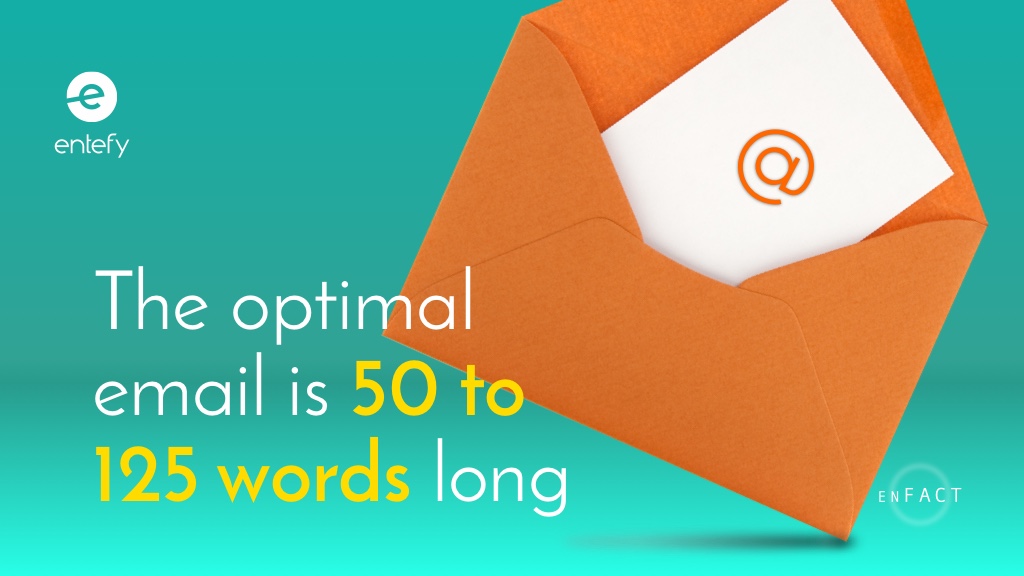
Another email study provides a useful rule of thumb: the optimal length for an email is 50 to 125 words. Emails of that length receive a response 51% of the time. So, it’s brevity that gets your message across.
Entefy’s enFacts are illuminating nuggets of information about the intersection of communications, artificial intelligence, security and cyber privacy, and the Internet of Things. Have an idea for an enFact? We would love to hear from you.
There are a lot of really useful apps out there that you download to your smartphone at no cost. The thing is, there is a price for “free.” It’s your data. Many of these free apps collect personal and private data about you, then re-sell that data to third parties around the globe.
So it’s not surprising that 91% of Americans agree that they’ve lost control over their online personal information. In this video enFact, we take a quick look at the how’s and why’s of private data collection.
Entefy’s enFacts are illuminating nuggets of information about the intersection of communications, artificial intelligence, security and cyber privacy, and the Internet of Things. Have an idea for an enFact? We would love to hear from you.
Curiosity is a big factor in technological innovation. Would computers, electricity, cars, or rockets exist if humans weren’t such curious creatures? There’s also a much more practical aspect to curiosity. With effort and direction, curiosity can help you find success in today’s world of uncertainty and rapid change.
Curiosity leads to a broader knowledge base, the ability to transfer skills into new domains, and the ability to spot new opportunities. The challenge is that when it is misapplied, it can lead absolutely nowhere. Think of hours spent “exploring” what’s around the next corner on social media. And that’s the trick. The inquisitive nature of the human mind naturally adapts to change, provided we learn how to manage curiosity effectively.
What is curiosity?
We’ve each experienced curiosity when we’ve clicked on an attention-grabbing headline or followed a creaking sound downstairs at night. But what is curiosity exactly?
Curiosity is an impulse innate to each of us and, according to the psychologist Jean Piaget, the purpose of curiosity is “to ‘construct knowledge’ through interactions with the world.” He concluded that children were naturals at forming hypotheses and conducting experiments to test them. This is how we teach ourselves about the world. When a child bangs a spoon against a table or chews on a crayon, they’re learning about their environment through trial and error.
This same expression of curiosity in a different form describes how science and technology evolve. Scientists form ideas then try to prove or disprove them by conducting experiments. While scientists are dealing with far more complex and ambiguous concepts than a child wondering about a crayon, in both cases curiosity is propelling them towards answers.
Yet despite the incredible effect human curiosity has had on the world, its evolutionary purpose remains somewhat mysterious. Evolution would suggest that safety and familiarity would provide greater survival benefits than risk taking. In today’s relatively safe world, it’s easy to forget just how dangerous it was once upon a time to leave the comfort of the home to discover what was over the horizon. A journey fraught with peril: Where is the benefit in that?
Research into how humans make choices found that people will often forgo a guaranteed gain to risk an option they’ve never seen before. We opt for the uncertainty because we’re lured by what could be. The reward we imagine looms large in our minds, and overrides any natural tendency towards safety and conservatism. Which explains why leaving the cave to go exploring might have made sense. If, say, a sheltered valley of rich farmland lay over the horizon, the reward for the risk would be quite worth it.
Getting back to today’s world, curiosity takes a different form. We never know what information we learn about today might be useful tomorrow. Curiosity can thrive without exposing us to a wandering pride of lions or a hidden patch of quicksand. These days, letting our curiosity loose might be exactly what we need to keep our skills up-to-date and maintain our professional competitiveness.
Why curiosity is important
A World Economic Forum report on the future of jobs predicted that 65% of today’s elementary school children will take jobs that don’t exist yet. It wasn’t much more than a generation ago when it was common for people to keep the same job with the same employer throughout their entire career. In those days, education was something you completed before transitioning into the workforce. But that era has passed. As the rapid advancement of science and technology forces entire industries to change and adapt, professionals must do the same.
Curiosity is perfectly suited to this dynamic environment. Research has found that curiosity actually improves our ability to learn. Brain scans demonstrate that curiosity sparks up brainwaves in the hippocampus, an area critical in forming long-term memories; as well as the brain’s reward pathway that is responsible for dopamine secretion, a neurotransmitter that helps form repetitive behaviors and motivate action.
What’s more, curiosity is deeply personal. Any two individuals will be curious about very different topics. Rather than imploring us to drive into the complete unknown, it is more common that we try to extend upon what we know already. In his paper on the psychology of curiosity, George Lowenstein defined the “information gap” as a hole in what we already know, a missing piece that, once we become aware of it, concerns us enough to want to fill it.
Research in how curiosity works in the brain supports this idea. One group of researchers asked participants a series of questions, including how confident they were in their answer and how curious they were about the question’s topic. What they found was that people were most curious about the answers they had some idea about, as when they weren’t certain of the answer but knew just enough to form a hypothesis. Similar behavior has been found in how infants allocate their attention. When presented with three different visual patterns, they will select the one that contains both familiar and unfamiliar elements.
Today there is so much information available to us that we could never hope to learn it all. Each of us will only ever be able to grasp a fraction of the whole, and a shrinking one at that. Trying to grapple with a topic that exists in the vast unknown can be an overwhelming proposition, yet curiosity insists we simply start in the unknown and wade out from there. Doing so can offer an important benefit.
Because we follow our curiosity through different fields and ideas, we end up carving our own path, and creating a personalized, unique sphere of knowledge. This can offer us a creative edge, as discovering the obscure links and relationships between disparate fields can lead to unexpected solutions and ingenious creations.
Consider Swiss engineer George de Mestral, who was walking in the woods with his dog in 1941 when he noticed that burrs from burdock plants were clinging to his pants and his dog’s fur. He was curious about how the burrs stuck and, after conducting research, used what he learned to invent Velcro.
Curiosity is not perfect—the same urge that has us exploring a strange plant stuck to our pants is the same sensation that has us scrolling through social media and falling for clickbait headlines. To get the most from our curiosity, we must learn how to direct it.
Direct your curiosity
Curiosity is perfectly suited for boredom-driven novelty seeking. Take social media for example. Research by B. F. Skinner into how people reward themselves showed that unpredictable rewards keep us coming back to re-earn the reward more often than predictable rewards. Curiosity and uncertainty go hand-in-hand. Scrolling through emails or news feeds will yield a lot of pointless or irrelevant information, but eventually we find something of interest, and that possibility is enough to keep us coming back.
The most difficult aspect to directing your curiosity is ignoring the irrelevant while you try to track down the relevant. In an era of information overload, when the volume of digital information is growing rapidly, even the information available within your professional field may be constantly changing. Conducting research today often means wading through hundreds of papers, articles, books, interviews, or other media. And then reconciling contradictory data and sources. That’s if you can find what you’re looking for in the first place.
Maintaining an open mind can be achieved by asking the right questions. Networking with other people gives you the opportunity to probe their understanding of a topic and discover where it differs from your own. Meanwhile, questioning your own knowledge and intuitions can make you aware of gaps and shortcomings and missing pieces. Here’s a case when acting like a child and asking “why” over and over again can be a good thing.
A mind that is always willing to learn, that is capable of replacing outdated ideas with new information—this is the curious mind that succeeds in unpredictable times.
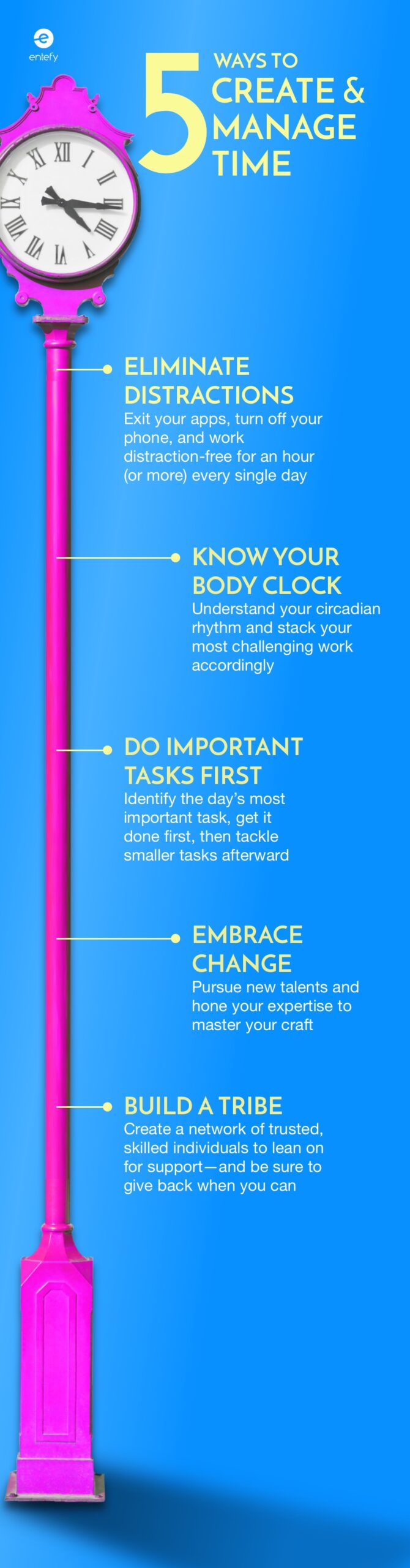
More and more professionals are opting for careers as “solopreneurs,” those superstars of freelancing, consulting, entrepreneurship, and so on.
Solopreneurs are a diverse lot, but share one big thing in common: their success is closely tied to how well they manage their time. When there’s always another project to bid on or a networking event to attend, finding time to do everything well becomes difficult.
But there are 5 effective techniques for magically summoning more time out of thin air, as highlighted in this infographic.
A lot of what you read about artificial intelligence is speculation about what might happen years in the future. These articles are interesting to read, but they often ignore an important point: AI systems are already at work, already having an impact.
Take healthcare and medicine. The use of AI technologies in medical care is already demonstrating the technology’s potential to improve the quality of patient care. Around the globe, doctors and researchers are finding new ways to utilize AI as a revolutionary tool in the caregiver tool kit. From diagnosis, to personalized medical advice, to genetic and disease research, AI has emerged as a force in medical care.
In an environment where the cost of healthcare is a significant issue, not just in the U.S. but globally, advances in AI are opening new paths to cost savings as well. It’s a simple formula: Make doctors and nurses more productive with AI support, and costs decline when they can treat more patients in less time. You see the same dynamics with AI systems that support preventative care. Healthier people need less care, especially expensive acute care. The list goes on and on.
Here’s a rundown of 9 ways AI is being used to bring down costs and drive efficacy in healthcare today:
Drug discovery. With the promise to do in a day what currently takes months, AI drug discovery systems are taking aim at the conventional wisdom in pharmaceuticals and biotech that “one new drug coming to market can take 1,000 people, 12-15 years, and up to $1.6 billion.”
Decreasing caregiver time spent on low-value activities. A study by the American Medical Association (AMA) found that doctors spend 37% of their office time doing paperwork. AI’s strength in automating routine tasks like record keeping and compliance filings frees up doctors to focus more on patients.
Enhanced medical diagnosis. To understand AI’s impact on diagnosis, look no further than this case in Japan. After weeks of struggling to determine the cause of a 60-year-old woman’s health issues, doctors entered her genetic data into an AI diagnostic system. In 10 minutes, the system analyzed thousands of gene mutations to correctly determine that she had a rare type of leukemia.
Personalized medical advice. Though still in its infancy, AI systems can mine patient data to provide personalized medicine covering disease prediction, detection, and diagnosis as well as treatment optimization.
Genetic and disease research. AI-driven research is taking place in areas like heart disease, diabetic complications, and brain trauma. One example is an AI system designed to analyze rare childhood immunological conditions, generating insights into how to treat and cure these issues.
Preventative care. Hospital databases, electronic records, in-home monitors, fitness trackers, and implanted devices are all providing data that allows AI systems to identify at-risk patients. One AI system at Mount Sinai is designed to conquer heart disease through preventative care.
Data mining medical records. The prospect of mining electronic health records can lead to insight in a range of health areas, everything from improved medication labeling to personalized medicine.
The combined impact of all of these individual AI advances can be expressed in dollars saved: lower compliance costs, cheaper medications, less demand for emergency services, and so on. The foundation for long-sought-after affordable healthcare may be AI technologies.
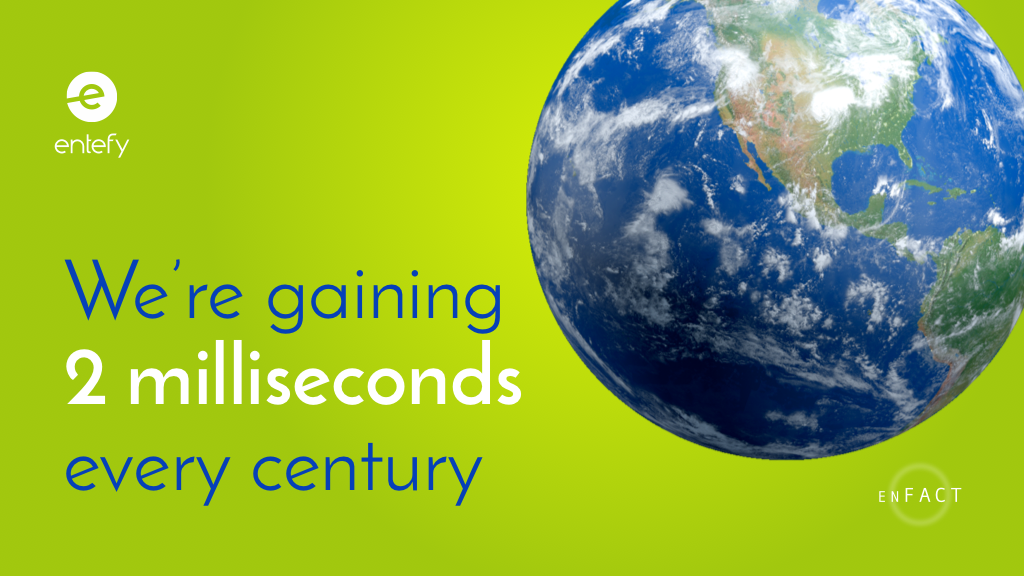
Days are getting longer. And we’re not talking about hours of sunlight following the Summer Solstice. Evidence from atomic clocks shows that the Earth’s rotation has been slowing imperceptibly for millions of years, by about a couple of milliseconds each year. In fact, when the diplodocus, the largest-ever land animal, roamed the Earth during the Jurassic Period, days were only 23 hours long. And looking ahead 200 million years, days will be 25 hours long.
You can do quite a bit in an hour. Catching up with a friend over lunch takes about an hour. So does a trip to the gym or whipping up a batch of your favorite dumplings from scratch. It’s also about how long it takes to receive 14 new messages in your email inbox.
One thing is true: almost everyone would be happy with an extra hour in their day. What would you do with yours?
Entefy’s enFacts are illuminating nuggets of information about the intersection of communications, artificial intelligence, security and cyber privacy, and the Internet of Things. Have an idea for an enFact? We would love to hear from you.
Request a Demo
Is your organization pursuing an AI-first transformation strategy? If so, start the conversation by submitting the form below.
Contact Us
Thank you for your interest in Entefy. You can contact us using the form below.
Download Data Sheets
See our Privacy Statement to learn more about how we use cookies on our website and how to change cookies settings if you do not want cookies on your computer. By using this site you consent to our use of cookies in accordance with our Privacy Statement.