

Cat

Curiosity killed the cat, but it can save your job

Curiosity is a big factor in technological innovation. Would computers, electricity, cars, or rockets exist if humans weren’t such curious creatures? There’s also a much more practical aspect to curiosity. With effort and direction, curiosity can help you find success in today’s world of uncertainty and rapid change. 

Curiosity leads to a broader knowledge base, the ability to transfer skills into new domains, and the ability to spot new opportunities. The challenge is that when it is misapplied, it can lead absolutely nowhere. Think of hours spent “exploring” what’s around the next corner on social media. And that’s the trick. The inquisitive nature of the human mind naturally adapts to change, provided we learn how to manage curiosity effectively.

What is curiosity?

We’ve each experienced curiosity when we’ve clicked on an attention-grabbing headline or followed a creaking sound downstairs at night. But what is curiosity exactly?

Curiosity is an impulse innate to each of us and, according to the psychologist Jean Piaget, the purpose of curiosity is “to ‘construct knowledge’ through interactions with the world.” He concluded that children were naturals at forming hypotheses and conducting experiments to test them. This is how we teach ourselves about the world. When a child bangs a spoon against a table or chews on a crayon, they’re learning about their environment through trial and error.

This same expression of curiosity in a different form describes how science and technology evolve. Scientists form ideas then try to prove or disprove them by conducting experiments. While scientists are dealing with far more complex and ambiguous concepts than a child wondering about a crayon, in both cases curiosity is propelling them towards answers. 

Yet despite the incredible effect human curiosity has had on the world, its evolutionary purpose remains somewhat mysterious. Evolution would suggest that safety and familiarity would provide greater survival benefits than risk taking. In today’s relatively safe world, it’s easy to forget just how dangerous it was once upon a time to leave the comfort of the home to discover what was over the horizon. A journey fraught with peril: Where is the benefit in that?

Research into how humans make choices found that people will often forgo a guaranteed gain to risk an option they’ve never seen before. We opt for the uncertainty because we’re lured by what could be. The reward we imagine looms large in our minds, and overrides any natural tendency towards safety and conservatism. Which explains why leaving the cave to go exploring might have made sense. If, say, a sheltered valley of rich farmland lay over the horizon, the reward for the risk would be quite worth it. 

Getting back to today’s world, curiosity takes a different form. We never know what information we learn about today might be useful tomorrow. Curiosity can thrive without exposing us to a wandering pride of lions or a hidden patch of quicksand. These days, letting our curiosity loose might be exactly what we need to keep our skills up-to-date and maintain our professional competitiveness. 

Why curiosity is important

A World Economic Forum report on the future of jobs predicted that 65% of today’s elementary school children will take jobs that don’t exist yet. It wasn’t much more than a generation ago when it was common for people to keep the same job with the same employer throughout their entire career. In those days, education was something you completed before transitioning into the workforce. But that era has passed. As the rapid advancement of science and technology forces entire industries to change and adapt, professionals must do the same.

Curiosity is perfectly suited to this dynamic environment. Research has found that curiosity actually improves our ability to learn. Brain scans demonstrate that curiosity sparks up brainwaves in the hippocampus, an area critical in forming long-term memories; as well as the brain’s reward pathway that is responsible for dopamine secretion, a neurotransmitter that helps form repetitive behaviors and motivate action.

What’s more, curiosity is deeply personal. Any two individuals will be curious about very different topics. Rather than imploring us to drive into the complete unknown, it is more common that we try to extend upon what we know already. In his paper on the psychology of curiosity, George Lowenstein defined the “information gap” as a hole in what we already know, a missing piece that, once we become aware of it, concerns us enough to want to fill it. 

Research in how curiosity works in the brain supports this idea. One group of researchers asked participants a series of questions, including how confident they were in their answer and how curious they were about the question’s topic. What they found was that people were most curious about the answers they had some idea about, as when they weren’t certain of the answer but knew just enough to form a hypothesis. Similar behavior has been found in how infants allocate their attention. When presented with three different visual patterns, they will select the one that contains both familiar and unfamiliar elements.

Today there is so much information available to us that we could never hope to learn it all. Each of us will only ever be able to grasp a fraction of the whole, and a shrinking one at that. Trying to grapple with a topic that exists in the vast unknown can be an overwhelming proposition, yet curiosity insists we simply start in the unknown and wade out from there. Doing so can offer an important benefit. 

Because we follow our curiosity through different fields and ideas, we end up carving our own path, and creating a personalized, unique sphere of knowledge. This can offer us a creative edge, as discovering the obscure links and relationships between disparate fields can lead to unexpected solutions and ingenious creations. 

Consider Swiss engineer George de Mestral, who was walking in the woods with his dog in 1941 when he noticed that burrs from burdock plants were clinging to his pants and his dog’s fur. He was curious about how the burrs stuck and, after conducting research, used what he learned to invent Velcro

Curiosity is not perfect—the same urge that has us exploring a strange plant stuck to our pants is the same sensation that has us scrolling through social media and falling for clickbait headlines. To get the most from our curiosity, we must learn how to direct it. 

Direct your curiosity

Curiosity is perfectly suited for boredom-driven novelty seeking. Take social media for example. Research by B. F. Skinner into how people reward themselves showed that unpredictable rewards keep us coming back to re-earn the reward more often than predictable rewards. Curiosity and uncertainty go hand-in-hand. Scrolling through emails or news feeds will yield a lot of pointless or irrelevant information, but eventually we find something of interest, and that possibility is enough to keep us coming back.

The most difficult aspect to directing your curiosity is ignoring the irrelevant while you try to track down the relevant. In an era of information overload, when the volume of digital information is growing rapidly, even the information available within your professional field may be constantly changing. Conducting research today often means wading through hundreds of papers, articles, books, interviews, or other media. And then reconciling contradictory data and sources. That’s if you can find what you’re looking for in the first place.

Maintaining an open mind can be achieved by asking the right questions. Networking with other people gives you the opportunity to probe their understanding of a topic and discover where it differs from your own. Meanwhile, questioning your own knowledge and intuitions can make you aware of gaps and shortcomings and missing pieces. Here’s a case when acting like a child and asking “why” over and over again can be a good thing.

A mind that is always willing to learn, that is capable of replacing outdated ideas with new information—this is the curious mind that succeeds in unpredictable times. 

Time

Boost your solopreneur superpowers: 5 ways to create and manage time [INFOGRAPHIC]

More and more professionals are opting for careers as “solopreneurs,” those superstars of freelancing, consulting, entrepreneurship, and so on. 

Solopreneurs are a diverse lot, but share one big thing in common: their success is closely tied to how well they manage their time. When there’s always another project to bid on or a networking event to attend, finding time to do everything well becomes difficult.

But there are 5 effective techniques for magically summoning more time out of thin air, as highlighted in this infographic.

Read more about the science behind these tips for boosting your solopreneur superpowers.

Healthcare

Affordable healthcare? Artificial intelligence may be the secret

A lot of what you read about artificial intelligence is speculation about what might happen years in the future. These articles are interesting to read, but they often ignore an important point: AI systems are already at work, already having an impact. 

Take healthcare and medicine. The use of AI technologies in medical care is already demonstrating the technology’s potential to improve the quality of patient care. Around the globe, doctors and researchers are finding new ways to utilize AI as a revolutionary tool in the caregiver tool kit. From diagnosis, to personalized medical advice, to genetic and disease research, AI has emerged as a force in medical care.

In an environment where the cost of healthcare is a significant issue, not just in the U.S. but globally, advances in AI are opening new paths to cost savings as well. It’s a simple formula: Make doctors and nurses more productive with AI support, and costs decline when they can treat more patients in less time. You see the same dynamics with AI systems that support preventative care. Healthier people need less care, especially expensive acute care. The list goes on and on. 

Here’s a rundown of 9 ways AI is being used to bring down costs and drive efficacy in healthcare today:

  1. Drug discovery. With the promise to do in a day what currently takes months, AI drug discovery systems are taking aim at the conventional wisdom in pharmaceuticals and biotech that “one new drug coming to market can take 1,000 people, 12-15 years, and up to $1.6 billion.”
  2. Easing the global doctor and nurse shortage. The World Health Organization (WHO) has estimated that there is a global shortfall of approximately 4.3 million doctors and nurses, with poorer countries disproportionally impacted.
  3. Decreasing caregiver time spent on low-value activities. A study by the American Medical Association (AMA) found that doctors spend 37% of their office time doing paperwork. AI’s strength in automating routine tasks like record keeping and compliance filings frees up doctors to focus more on patients.
  4. Enhanced medical diagnosis. To understand AI’s impact on diagnosis, look no further than this case in Japan. After weeks of struggling to determine the cause of a 60-year-old woman’s health issues, doctors entered her genetic data into an AI diagnostic system. In 10 minutes, the system analyzed thousands of gene mutations to correctly determine that she had a rare type of leukemia.
  5. Personalized medical advice. Though still in its infancy, AI systems can mine patient data to provide personalized medicine covering disease prediction, detection, and diagnosis as well as treatment optimization.
  6. Genetic and disease research. AI-driven research is taking place in areas like heart disease, diabetic complications, and brain trauma. One example is an AI system designed to analyze rare childhood immunological conditions, generating insights into how to treat and cure these issues. 
  7. Preventative care. Hospital databases, electronic records, in-home monitors, fitness trackers, and implanted devices are all providing data that allows AI systems to identify at-risk patients. One AI system at Mount Sinai is designed to conquer heart disease through preventative care. 
  8. Medication management. New systems using artificial intelligence to improve medication adherence combine AI with text messaging and other messaging protocols to prompt patients to stick to their medication plans. Another system used at Vanderbilt University Medical Center predicts which patients may need specific drugs in the future.
  9. Data mining medical records. The prospect of mining electronic health records can lead to insight in a range of health areas, everything from improved medication labeling to personalized medicine.

The combined impact of all of these individual AI advances can be expressed in dollars saved: lower compliance costs, cheaper medications, less demand for emergency services, and so on. The foundation for long-sought-after affordable healthcare may be AI technologies.

Check out Entefy’s in-depth look at AI in healthcare, “Patients are about to see a new doctor: artificial intelligence.”

Globe

Want an extra hour in your day?

Days are getting longer. And we’re not talking about hours of sunlight following the Summer Solstice. Evidence from atomic clocks shows that the Earth’s rotation has been slowing imperceptibly for millions of years, by about a couple of milliseconds each year. In fact, when the diplodocus, the largest-ever land animal, roamed the Earth during the Jurassic Period, days were only 23 hours long. And looking ahead 200 million years, days will be 25 hours long

You can do quite a bit in an hour. Catching up with a friend over lunch takes about an hour. So does a trip to the gym or whipping up a batch of your favorite dumplings from scratch. It’s also about how long it takes to receive 14 new messages in your email inbox

One thing is true: almost everyone would be happy with an extra hour in their day. What would you do with yours?

Entefy’s enFacts are illuminating nuggets of information about the intersection of communications, artificial intelligence, security and cyber privacy, and the Internet of Things. Have an idea for an enFact? We would love to hear from you.

Classroom

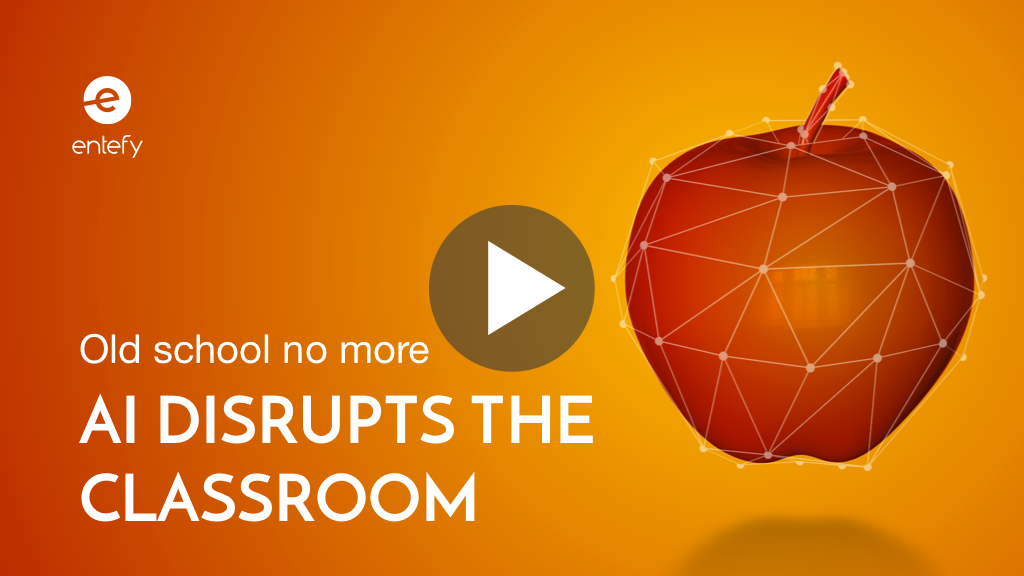
Old school no more: AI disrupts the classroom [VIDEO]

Imagine a teacher that can deliver completely personalized lessons to an entire classroom of students. Simultaneously. That’s one vision for the use of artificial intelligence systems in education. But it’s not all there yet, and potentially represents a long list of trade-offs as well.

In this video we’ll look at the state of AI technologies in education and explore some of the opportunities and challenges it represents. You can read more about Entefy’s analysis of AI in education here.

Man

How much information do you need to make smart decisions?

You’ve probably heard a variation of “to one with a hammer, every problem looks like a nail.” And that’s true when it comes to decisionmaking as well. It’s a matter of perspective. Economists have complex models that describe how people make financial decisions. Sociologists have frameworks that explain social behavior. Ditto psychologists. And neurologists. And so on. Every one of these decisionmaking systems sees the world as a specific type of nail. 

And none of these are straightforward enough to help you make better decisions in your everyday work and home life. Making good decisions really comes down to two things: asking the right questions and understanding how much information you need before deciding. But in an era of limitless free information, how do you know when you have enough information? That’s tricky business.

A general, a CEO, and an economist walk into a bar…

Making good decisions is such an important and difficult topic that there are practically as many opinions as people expressing them.

Colin Powell, the respected former Chairman of the Joint Chiefs of Staff and U.S. Secretary of State, shared one of his decisionmaking rules. He said that when you have an important decision to make, remember “40 to 70.” Never make a decision with less than 40% of the information you think you need. And never delay making a decision once you have at least 70% of the information you think you need. The time it takes to gather enough information to be 100% sure of making a good decision usually delays the decision beyond when it needs to be made. A problem known as analysis paralysis.

In contrast to Powell’s well-ordered decisionmaking style was that of Steve Jobs, the former CEO of Apple. Was Jobs a good decision maker? His style emphasized intuition and gut instincts over information. He made quick decisions after discussing problems with his employees in order to identify and elevate the best ideas, regardless of their origin. He also seems to have relied on relatively little information, instead making a stream of micro-decisions that added up to great things. 

Then there’s Daniel Kahneman, the Nobel Prize-winning economist, whose lifelong research found that people generally make one of two types of decisions. As he outlined in his book Thinking Fast and Slow, people use two different approaches to decisionmaking. Fast decision making is based on rules of thumb (heuristics), past experiences, and untested assumptions. He calls these types of decisions System 1 thinking. Its advantage is that it is a fast way to make a decision. Its disadvantage is that it is not always the best way to make a good decision. System 1 thinking is most useful for decisions that are inconsequential or are easily reversed.

In contrast, System 2 thinking is logical, evidence-based, and emphasizes rational analysis. You examine and test all your assumptions, weigh the various alternatives, assign probabilities to outcomes, define the net benefit. System 2 gets you much closer to a quality decision but at the expense of taking a lot of time and effort. 

System 1 and System 2 both have their costs and their benefits. The worst outcomes, however, occur when you misapply them. You use detailed and exhaustive analysis for an inconsequential decision (Should I have one more French Fry?) or you use a simple rule of thumb for a consequential decision (They say interest rates may be going up. Better refinance now.). 

So what do these diverse perspectives about decisionmaking tell us? After all, they really seem to raise more questions than answers. How much do you know about the particular issue? Is this a casual decision or an irreversible decision? Do you have a lot of time or not much time? How much do you know and how much do you still need to learn? What does your gut tell you?

What’s important is what’s in common between them: information. And in today’s digital age, information is a tricky subject.

Information and ambiguity

The Internet gave us practically limitless access to facts and opinions. It did not, however, give us a filter to manage these facts and opinions. Without that filter, trying to decide anything using infinite data is an invitation to paralysis by analysis. 

Once upon a time, when decisionmaking took place in an environment of scarcity of information, people had to be clever in finding the choice bits of data that were available. Today, we have to be clever about asking the right questions, in order to avoid the deluge. 

Limited access to information made it expensive to spend the time necessary to get the information you might have wanted for the decision you needed to make. Before the Internet, when you had to go to a library or a government agency to photocopy or transcribe information, it took hours and it cost money. When you have access to that same information instantaneously, at any time, it only takes as much time as is required to cut and paste. Little time and virtually no cost. 

In standard economics, what happens when the cost of something goes down? Demand rises. Today, with the cost of information and data plummeting, the demand for it rises. But do we need that information? When is there too much information and are there circumstances when we should cut back? Certainly not every choice requires a deep analysis. Just because information is cheap doesn’t mean that we make everyday decisions into research projects. 

But the opposite condition does also still prevail, mostly in fast changing environments with uncertain information. Some significant, long-lasting decisions need to be made within tight time frames. You might want to wait until you have better information but circumstances require a prompt decision. How do you resolve this tension?

Asking the right questions

Avoid overly broad and general questions. The right questions are those that are more likely to lead you to relevant, useful answers. Although they’re more difficult to answer, questions with more specifics will generate more meaningful results. The more specificity you include in your question, the more opportunity you have to find the right answer and avoid getting stuck in information overload. 

The critical factor is time. Context and circumstances change at their own rate and your decisionmaking has to keep up. Information gathering and analysis take time and if you wait too long, the moment has passed. In Powell’s experience, 70% is enough to make the decision reasonably safe without waiting too long. 

At the end of the day, too much information slows you down and can cause you to delay making important decisions. The antidote is to accept ambiguity and risk—you can’t know everything. But you can ask the right questions, explore relevant answers, then pull the trigger on your decision with confidence. 

Paintings

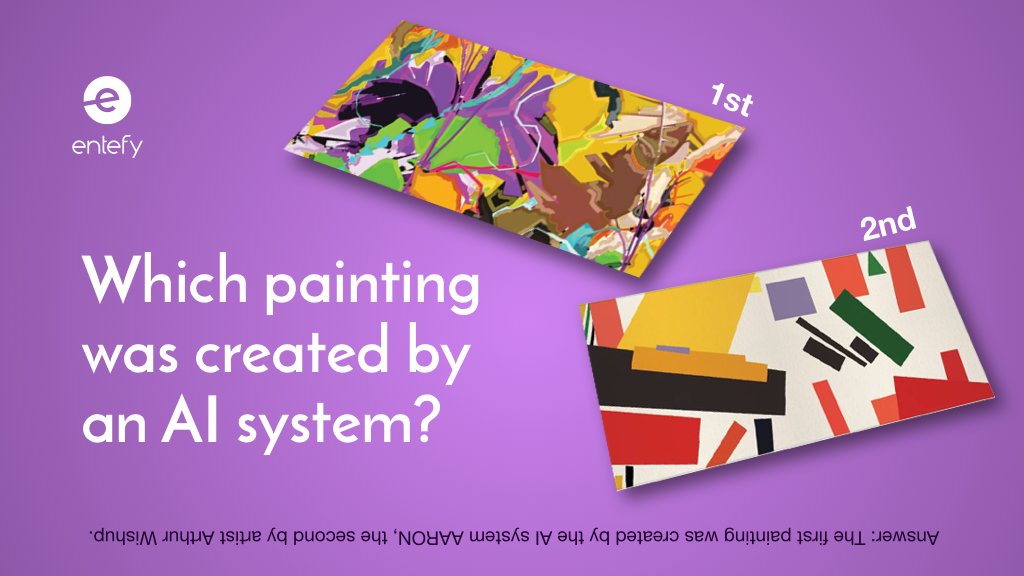
Pop quiz! Can you spot the AI-generated painting?

When you think about artificial intelligence, you probably don’t think “art” before, say, predictive analysis or self-driving cars. But there are AI systems that have been designed to generate paintings, music, even poetry. We shared some real-life examples of AI art in our article “Can artificial intelligence learn creativity?

AI algorithms won’t exactly challenge the legacy of Picasso or Hemingway any time soon. That is until you consider the pace of advances in AI. It’s possible that someday soon we’ll see legitimate creative work that deserves the label of capital-A for “Art.” After all, it wasn’t too long ago that an AI system trouncing a chess master or winning at poker seemed far-fetched.

Once you’ve spotted (or missed!) the AI artist in our graphic, check out other vibrant abstract paintings by the AI system called AARON, which has been painting since the 1970’s

Cog

AI disruption is already underway in these 8 industries

Artificial intelligence is shaping the future. Many of the near-term developments are already fairly familiar: self-driving cars, machine-brewed coffee ready before you’re out of bed, and refrigerators that order groceries when you’re running low.

Beyond these personal conveniences, however, AI is already changing the dynamics of entire industries. The details vary from industry to industry, but the overall story remains the same: disruption. Artificial intelligence transforms business-as-usual in ways both straightforward and complex. According to IDC, global spending on cognitive systems is expected to grow to $31 billion in 2019. 

Entefy has written about AI in industries as diverse and financial serviceseducationonline dating, and professional sports. But there’s a lot more to say right now about AI’s transformative impact, so we put together this roundup of the most remarkable artificial intelligence advances taking place in 8 major industries. 

  1. Aerospace. AI algorithms enable an entirely new type of self-healing aircraft that makes use of new sensors and other on-board recording devices. Smart systems could use data from these tools to spot problems long before failure occurs, making planes safer, lowering maintenance costs, and reducing the number of delays caused by mechanical issues. 
  2. Defense. The military and intelligence worlds are changing in a big way, with AI increasingly important to national defense strategies, on the ground and online. New AI cybersecurity platforms are being fed massive amounts of user-generated data so they can learn to spot anomalies associated with cyberattacks. In addition to using AI for cyber defense, the U.S. military wants to build autonomous weapons, such as drones that can conduct real-time surveillance of enemy territory, jam communications, and fire against enemy combatants. 
  3. Automotive. Mass adoption of self-driving cars is still some ways off. But AI is already impacting the auto industry in ways that weren’t possible just a few years ago. A new generation of smart features such as accident avoidance, alerts, and automated braking systems contribute to safer driving conditions for everyone. AI systems are being used to predict mechanical failures as well, employing sensors, apps, and Internet of Things technologies to track performance in individual cars. The data collected triggers alerts to drivers to warn them of potential problems, while manufacturers use the same data to improve production and identify faulty or unreliable parts. 
  4. Consumer Goods & Services. Clothing and cosmetics companies—just to name a few—are using smart algorithms to bring shopping experiences out of department stores and into consumers’ homes. A customer who wants to purchase new make-up need only open an app on her smartphone, and she can “test” a range of product shades to see whether they suit her skin tone. Meanwhile, a person in search of new jeans can pop his measurements and style preferences into a simple interface powered by an online shopping algorithm based on a selected brand’s sizing trends. These experiences are powered by AI technologies such as facial recognition and machine learning systems that use partial or uncertain data to make predictions.  
  5. Energy & Utilities. It’s difficult to find a segment of the energy industry not being impacted by the opportunities and challenges of AI, including renewable energy producers using Big Data to better predict supply and demand as well as traditional utilities rolling out smart electrical grid improvements. AI is helping paint a truer picture of the oil industry as well. Not all oil-producing nations are fully transparent about their supply picture, which creates uncertainties in the commodities markets and volatile oil prices. But a combination of convolutional neural networks, shadow detection, and satellite imaging is shining an AI-powered spotlight on the situation. By analyzing the shadows on oil storage tanks, AI systems can assess how full the containers are and approximate oil supplies in any part of the world, forcing greater transparency on oil-producing nations.
  6. Manufacturing. Factory productivity doesn’t have to come at the cost of workers’ safety, especially with AI in the mix. Japanese researchers are studying how AI can not only detect defective products and increase quality output, but how it can monitor workers’ physical conditions as well. Fatigue can cause serious mistakes, particularly when a worker is operating heavy machinery. But AI systems can determine when an employee becomes drowsy and needs to be reassigned to a safer task. Greater productivity and better working conditions are a win for everyone. 
  7. Transportation. Self-driving cars get a lot of media attention, but the entire transportation industry is evolving rapidly with AI technologies. One interesting development is the environmental improvements created by AI. The transportation industry accounts for 27% of greenhouse gas emissions in the U.S. When you add up the impact of a cluster of AI-powered autonomous transportation technologies being rolled out for airplanes, cars, trucks, trains, and ships, the potential environmental benefits are significant.
  8. Logistics. Ever wonder how goods get from their point of manufacture to your local store? That’s the business of the logistics industry, and it too is undergoing major changes via AI technologies, allowing more goods to get to more places more quickly. The recipe for the supply chain of the future mixes autonomous delivery vehicles—cars and trucks, but also container ships and drones—with predicative analysis to reduce transport times and fuel costs. Taken together, moving goods from point A to B can happen autonomously with greater speed and efficiency.

As you’ve seen from the variety of this list, AI is being used to tackle challenges large and small, disrupting industry dynamics like never before.

Doctors

AI in healthcare: less paperwork, more time for patients

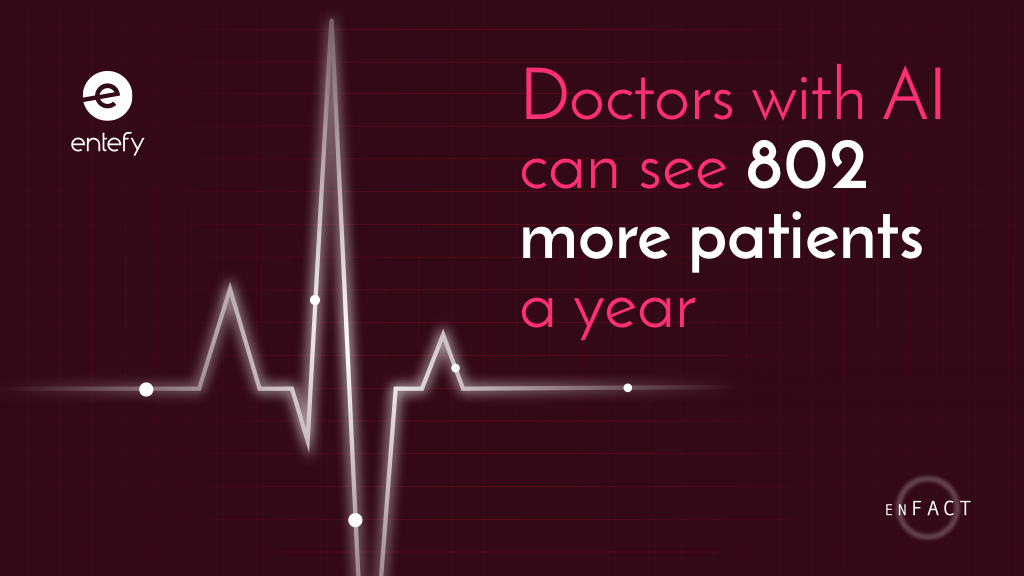
Let’s peek behind the “AI will transform everything” story and look at one industry where AI is already solving a lot of problems: healthcare. It’s estimated that there is a global shortfall of 4.3 million doctors and nurses. So technology that improves the productivity of medical practitioners allows them to provide more medical care. And effectively reduces the shortfall in caregivers.

One of the big headwinds to doctors seeing more patients is all of the time they spend on paperwork. Medical records, regulatory compliance, that sort of thing. One study by the American Medical Association (AMA) found that U.S. doctors spend 37% of their office time doing paperwork. It’s a serious headwind to delivering top-notch patient care. 

Let’s look at what could happen if doctors offload their paperwork to AI. A typical physician works 50 hours per week, and spends 34.1 hours with patients and 22 minutes per patient. Given AMA’s finding, paperwork accounts for 37% of the 15.9 remaining office hours, which translates to 5.9 hours per week. If AI freed up those 5.9 hours, a doctor could see 16 additional patients per week or 802 per 50-week work year. Multiply that across the entire healthcare system and you have a lot of happy patients and doctors. 

A very real-world, feasible use of AI that doesn’t involve the invention of robot doctors or other headline-grabbing fictions.

Entefy’s enFacts are illuminating nuggets of information about the intersection of communications, artificial intelligence, security and cyber privacy, and the Internet of Things. Have an idea for an enFact? We would love to hear from you.

Digital Universe

The digital universe at-a-glance [VIDEO]

What do you get when you add up all the files, photos, videos, websites, and digitized information available online? You get the digital universe. We’re constantly amazed by just how fast digital data is being created, and how innovative people are with how they use technology to manage their slice of the universe. 

You can also check out our slides about the digital universe, where you can clip and save information for use in your own research and presentations.