Crystal ball

Predicting predictions: useful traits that can make you better at predicting the future

Here’s something to keep in mind when you’re scanning the next “Predictions for 2018” article you come across. Because whether it’s an expert in a magazine or your own company’s market forecast, it’s easy to get caught up in predictions that sound great but have a flimsy evidentiary foundation. The hazard of forecasting is that people struggle to see past their own commitment to a particular vision for the future, and end up blinded by questionable assumptions or their own cognitive biases. 

There’s plenty of data to support the notion that people are terrible forecasters—but there’s more to the story. Philip E. Tetlock is one of the leading researchers in this area of making forecasts. He notes in his book Superforecastingthat how you think matters more than what you think. He goes on to identify a number of traits that are associated with individuals who do a very good job of making usefully accurate forecasts:

  • Be cautious
  • Be humble
  • Be intellectually curious and open-minded
  • Value and synthesize diverse views
  • Believe it’s possible to improve

With the speed at which the world moves these days, much of what we have great confidence in today has a good chance of being either wrong or irrelevant in a year, five years, or a decade down the line. Caution and humility usually do not come naturally to us, so much so that there’s a term for it: the Dunning-Kruger Effect.

So with the gates of a new year wide open before us, let’s take a pause to look at some very prominent people making very prominent predictions that were so wildly inaccurate as to be comic in hindsight.

So what is ahead for 2018? More predictions, of course. Just remember that none of us will know whether they were good or bad for some time to come.

2017

2017 was a great year for emerging technologies

As 2017 comes to a close, we thought we’d share a roundup of some major technology milestones that took place during the year. This report features technologies that you probably heard about in the news—like blockchain and genetic therapy—with important advances that didn’t get a lot of attention like “hot” solar and liquid biopsies. Taken as a whole, it’s inspiring how many major improvements to people’s lives are just over the horizon. 

Here are 11 breakthrough technologies from 2017:

  1. Quantum computers reach 50 quibit threshold. Today’s computers have become known as “classical” computers because of the rapid advancement of an entirely new computing framework: quantum computing. Classical computers are based on binary systems that use bits that can either be on or off—the familiar 1 or 0. Quantum computation works using qubits that can be simultaneously 1 and 0, which greatly expands their power for doing complex, computationally-intensive operations. Quantum computing is not a recent idea, it has been explored theoretically by researchers for some time. But during 2017 university and corporate researchers built functioning quantum computers that herald a new horizon in computing, including one system said to use 50 quibits—a significant milestone because that’s the level at which quantum computers begin to surpass even the fastest classical supercomputers.
  2. “Hot” solar cells. Solar panel technology has advanced in recent years, bringing costs down. In 2017 solar achieved a major new milestone in efficiency. These new “hot” solar cells convert heat to light and enable cheaper solar panels that provide continuous power. The secret to “hot” solar lies in converting heat into the spectrum of light that is most efficient at powering solar cells. Early prototypes are expected to move into commercial development in the years ahead.
  3. Harvesting clean water from air. In 2017, a team of scientists from MIT and the University of California, Berkeley successfully tested a process for harvesting clean water from the air using porous crystals that convert the water using no energy at all. Previous iterations of the technology required high moisture levels and a lot of electricity. By combining the water extraction tech with solar, zero-energy water creation becomes possible, with disruptive possibilities in everything from home appliances to agriculture to city water supplies. 
  4. Gene therapy 2.0. Countless diseases are caused by a single anomaly in a single gene. Researchers have been theorizing and experimenting with gene therapy for decades. The idea is compelling: use a uniquely-engineered virus to deliver healthy copies of a gene into patients with defective versions. In 2017, scientists made major strides towards deploying gene-based therapies for the first time, opening the door to treating previously untreatable conditions. 
  5. Precision farming. Agriculture may be one of the oldest human enterprises, but 2017 saw food production rocket into the future. Commercial agriculture and individual farmers alike are deploying sensors, automation, drones, GPS-mapping tools, and data-analytics to create new capabilities that boost crop yields and food quality while also reducing water and chemical use. Australian researchers, for example, demonstrated a streamlined, low-cost monitoring system in Indonesia that uses sustainable solar and smartphones. 
  6. Reversing paralysis. Many scientists hoping to turn brain-computer interfacing (BCI) into viable systems focus their work on paralysis, which often occurs after connections between the brain and nervous system are damaged. In 2017, a major milestone in reversing paralysis was reached when researchers wirelessly connected a BCI device to electrical stimulators elsewhere in the body. This created a ‘neural bypass’ that allowed a paralysis patient to move his limbs. Next up are attempts to use similar technology to reverse blindness and restore memories lost to Alzheimer’s disease.
  7. Liquid biopsies. 2017 saw a major step forward in doctors’ ability to evaluate cancer. Traditional biopsies involve collecting tissue samples from the patient’s body for analysis by a lab. Because they often require surgery, biopsies are invasive, risky, and painful. Rapidly advancing through clinical trials, liquid biopsies allow cancer detection from a vial of blood, offering a faster and easier alternative to traditional biopsies as well as entirely new cancer detection capabilities. 
  8. Payments using facial recognition. During 2017, years of development in facial recognition technologies paid off in China, where facial-recognition systems went mainstream. These systems use a person’s face as a “key” to do things like authorize payments, pick up train tickets, and open doors in secure buildings. In the years ahead, the same technology is expected to expand into new areas like policing and everyday interactions with banks, stores, and public transportation.
  9. Space race 2.0. Space X, the private space technologies company, achieved a major milestone earlier in 2017 when it landed one of its Falcon 9 rockets. Not because of the landing, but because that same rocket had been launched and landed previously. By demonstrating that reusable rockets are possible, the space industry took a major step towards lower-cost access to space. But that wasn’t the only big news in the space industry. Blue Origin announced that it would begin carrying tourists to space within 18 months. And then there’s NASA’s announcement of a mission to an asteroid with $10,000 quadrillion worth of nickel and iron
  10. Blockchain beyond Bitcoin. Bitcoin’s skyrocketing price got most of the media attention during 2017, but there were big milestones taking place in blockchain, the foundational technology that enables cryptocurrencies like Bitcoin. New uses of blockchain were launched in applications as diverse as music distribution, automobile title registry, and government IDs. Blockchain is rapidly disrupting industries like healthcare, insurance, and financial services, with $5.4 billion dollars in global investment expected by 2023.
  11. 4D printing. Just as 3D printing is moving into the mainstream in the aerospace, energy, electronics, and manufacturing industries, a new technology is coming of age: 4D printing. In 4D printing, the fourth dimension refers to time, because 4D-printed materials are designed to change shape when exposed to water, temperature changes, or other factors. New uses of the technology emerged during 2017 when the aerospace industry began testing the use of 4D printing to send compact, collapsed materials into space where they can self-assemble. 

In the months and years ahead, we expect many of these technological marvels to create not only new capabilities but entirely new products and even industries. The future looks bright.

Blurry image

15 jobs that barely existed 15 years ago

Creative destruction is the economics term for the incessant churn of markets and economies. New technologies and macro-level trends create new products and services that, over time, replace the demand for legacy products and services. The horse-and-buggy industry gave way to the automobile industry, which today is transitioning to the autonomous, electric vehicle future. 

Jobs, too, evolve with the times as demand for one set of skills is replaced with the need for entirely new skills. The past 15 years have been no exception. Many of today’s highest-paying roles have come into existence only recently; and some of these roles are already in decline as new technologies herald the need for entirely new skillsets.

As 2017 draws to a close, we thought it would be timely to highlight just how many of today’s jobs simply didn’t exist just 15 years ago. It’s surprising that a relatively short period of time, just a decade and half, represents the birth of the technological fixtures of our lives like the smartphone and on-demand services like ride hailing. And the jobs that make them possible.

Here are 15 jobs that barely existed 15 years ago:

  1. Mobile app developer. The iPhone arrived in 2007, followed soon after by Android devices. And just 10 years later, half of the world’s adults have a smartphone. Many tasks that once got done sitting in front of a desktop and keyboard are now more commonly done on a mobile device, everything from banking to communication to shopping. So naturally there was an explosion in the number of mobile app developers.
  2. Social media manager. These days, businesses large and small have personnel dedicated to managing a company’s social media presence. Social media is used for traditional marketing as well as customer service. Social media managers (and related jobs) evolved from earlier digital marketing roles to encompass the specific skills needed to help a brand stand out on today’s social media channels. 
  3. Ride-sharing driver. Once upon a time, urbanites stood on street corners with arms raised, hoping to attract a passing taxi cab. Today, of course, ride hailing is done with a few taps of an app, and yesterday’s taxi driver is giving way to today’s gig economy driver. Uber, the leading ride-sharing company, was founded in 2009 and quickly grew to become the world’s most valuable startup. One interesting dynamic about app-enabled ride sharing is that it has created driving jobs that will prove to be only temporary. Companies are investing heavily in self-driving cars and have their sights set on flying cars as well.
  4. Self-driving car engineer. While driverless cars are poised to make a major dent in transportation, they are also beginning to create new types of jobs. Driverless cars can’t yet develop or repair themselves, so engineers, mechanics, and software developers are in-demand jobs today and should remain so into the foreseeable future.
  5. Cloud computing specialist. You don’t have to go back much more than 10 years or so for the statement “I work in the cloud” to sound downright crazy. While the concept of distributed software services had been around for some time, cloud computing really took off after 2006. Today, more than half of U.S. businesses use cloud services of one form or another. 
  6. Big Data analyst and data scientist. Digital data management by IT professionals isn’t new; but beginning in the mid-2000’s the concept of Big Data took off as the management and productive use of data entered a new phase. These days, the path out from under all the data piling up every second lies with the skills of Big Data analysts and data scientists. With data volumes growing 40% per year, there is tremendous demand for specialists who can analyze, process, and make useable all of this information. 
  7. Sustainability manager. Sustainability was once a niche concept, reserved for progressive companies focused on finding productive uses of human and natural resources. But in the same way as electric cars have gone mainstream in recent years, so too has sustainability. Professionals who develop corporate sustainability programs are in demand, working on projects like identifying “green” cost-saving opportunities and federal, state, and local tax rebates.
  8. Vloggers. The term “weblog” evolved into the more familiar “blog” and “blogger” in the late 1990’s. You would be forgiven for not recognizing the term “vlogger,” a more recent term that combines “video” with “blogger.” With the rise of video sharing platforms like YouTube and Vimeo, vlogging has become big business, with top YouTube stars earning millions of dollars through advertising, social media, and sponsorship deals.
  9. Commercial drone operators. Even though government regulations covering unmanned aerial vehicles—commonly called drones—are just now being written, demand for drone pilots is skyrocketing. Once reserved for military use, commercial use of drones is expanding to include everything from deliveries by UPS and Amazon to aerial photography and videography of commercial real estate sites. 
  10. Digital content marketers. The marketing industry is one of many that has seen phenomenal changes over the last decade and it continues to develop constantly. Go back 15 years or so and marketing budgets were still focused on traditional advertising channels like radio and TV and print brochures. Beginning with email marketing, though, marketing departments evolved quickly to encompass sophisticated data-driven digital campaigns covering websites, social media, and digital ads. Driving much of this transformation was the rise of “content marketing,” the strategy of using high-value content like articles and explainer videos to market without really marketing. 
  11. Search Engine Optimization (SEO) specialist. Before Google came along and gave the world near-instant search of the Internet, companies like Yahoo! thrived by providing directories that categorized websites. But as the number of websites exploded, a marketing problem emerged: how does my business get found amongst all the noise? “Getting found” became the domain of Search Engine Optimization, the art and science of selecting keywords to support business objectives. Once limited to a handful of tips and hacks, SEO today is a complex and ever-changing field, and its professionals are in-demand at businesses large and small.
  12. Market research data miner. Businesses are awash in data. Making sense of the data involves turning all the 1’s and 0’s into actionable insights. The role of market researchers has evolved in lock step with the Big Data revolution, so that today these prophets of market trends are a highly technical specialty skilled at finding meaning in reams of marketing and customer data. 
  13. Elder-care services coordinator. Two powerful trends are driving the demand for jobs in the elder-care space: the aging U.S. population and the increasing complexity of the healthcare system. Demand by older Americans for in-home healthcare services is growing, but because so much of the healthcare systems is DIY, figuring out how to access those services can be complicated. Elder-care services coordinators are specialists who understand the healthcare needs of elderly patients and the intricacies of the services available to them. 
  14. Medical biller and coder. Here’s another newly emerged role driven by changes to technology. The U.S. healthcare system is largely structured around fixed rates that doctors receive as reimbursement for services. A regular office visit is reimbursed at one rate, treating a broken ankle at another. Medical billers and coders provide the expertise that connects doctors’ services to insurance and governmental reimbursement, commonly employed at doctors’ offices, hospitals, and other healthcare facilities.
  15. Genetic counselor. Advances in genetics are taking place at a breathtaking pace, as seen by the successful uses of the Crispr-cas9 gene editing technology. As genetic technologies move out of the labs and into mainstream, a new job title has emerged as well: genetic counselor. Genetic counselors help patients interpret the results of genetic tests to aid in the prevention and management of illness. As medical capabilities around genetic testing improve, and as new technologies like genetic modification of embryos mature, these counselors will be increasingly in demand at healthcare facilities the world over.

There’s an important insight to be gleaned from this list: given the rapid advances in technology, 15 years from now the world will no doubt look quite different than it does today, and we’ll take for granted new technologies that are now in their infancy. Think: artificial intelligence, robotics, autonomous transportation, and smart cities. For any professional expecting their career to continue into this future, the lesson is to keep learning the new skills that will keep you competitive and productive. The need to learn new skills through lifelong learning has perhaps never been greater.

Happy Holidays 2016

Warm holiday wishes for all

As 2016 comes to a close, we’d like to express our thanks to those who support us on our amazing journey. It’s this support that inspires us to continue doing the work that we do. We look forward to an exciting year ahead!

Wishing you and yours all the warmth, wonder, and joy during this season and beyond.

With gratitude and cheer,
The Entefyers

Happy Holidays 2017

Warm holiday wishes from everyone at Entefy

As 2017 winds down, we wanted to thank all of the amazing people who inspire our work at Entefy. It’s been a hugely productive year for us, and we can’t wait for everything that’s ahead in 2018. 

Wishing you warmth, wonder, and joy for the holidays and beyond.

The Entefyers

Medical

Medical records fetch a premium on the black market. Then along comes blockchain.

Cybercriminals have a number of options for purchasing the personal data they need to really ruin someone’s financial life. Obviously, they need a social security number. Date of birth, current address, and a credit card number or two are no brainers. Many novice identity thieves make a common mistake when they’re starting out, buying this data piecemeal on the black market. But there’s a better way! They can get all of the data they need bundled together in one convenient package: medical records.

Medical records have been called the “holy grail” for cybercriminals because they contain a person’s name, address, date of birth, and Social Security number in a single record, making identity theft far easier than any of us would like to realize. So it’s not surprising that medical records fetch 10x the price of credit card numbers. The illicit demand for stolen medical data is on the rise, with the situation likely to get worse before it gets better. 

Data security is already a mess in the U.S., as the Equifax breach demonstrated in 2017. That attack left more than 145 million Americans vulnerable to identity theft after their Social Security numbers were exposed in the breach. Those 10 digits have become the keys to our financial identities, but 81 years since the first SSNs were issued, their utility in the digital age has become questionable. We need a more secure way to protect our digital data, and blockchain technology may well provide the answer.

Why the premium on medical data? 

Medical data is a lucrative haul for would-be criminals, particularly because the theft goes undetected for longer periods than in other crimes. People check their credit card balances more often than they review their medical files and insurance records, so they’re likely to spot a suspicious purchase much quicker than a false insurance claim. This buys hackers time to not only sell the data but use it to schedule medical procedures, purchase prescription drugs, or exploit the information in other ways. 

Once victims realize what’s happened, coping with the theft can be arduous. With credit card theft, they can simply call and cancel the card, and they’ll have a new one within a few days. But the damage from medical data theft is more sinister, as criminals can use the information included to file false tax returns as well. Although careful, consistent monitoring of your accounts can help you protect your identity and catch suspicious activity early, there’s not a lot you can do to prevent the types of widespread hacks that have plagued hospitals and medical providers in recent years. 

A substantial shift in how both governments and healthcare providers use cybersecurity defense technologies is long overdue, as evidenced by the WannaCry ransomware attack that struck the U.K.’s National Health Service, an attack the country’s own National Audit Office said could have been prevented if it had followed standard security best practices. The fact that a leading national health system could be crippled by what experts described as a “relatively unsophisticated attack” indicates just how fragile our most important data systems are around the globe. 

When electronic isn’t everything  

Security isn’t the only challenge when it comes to electronic medical records. Tom Price, the former U.S. Secretary of Health and Human Services, lamented earlier this year that, “We’ve turned physicians into data entry clerks.” Some doctors say that having to navigate electronic health records systems detracts from the quality of their patient interactions. Rather than having conversations about a patient’s symptoms, they’re concerned with whether they’re documenting the visit properly, which weakens the doctor-patient relationship and leads to inferior care. A 2016 study showed that physicians spend half their time consumed with desk work and electronic health records and only 27 percent actually attending to patients. The Mayo Clinic even found that the work burdens created by electronic records systems contributed to increased risk of physician burnout

Accessing your medical records as a patient isn’t exactly a walk in the park, either. Once you submit a request to your doctor, it can take 30 days to receive the information, and you may have to provide a written statement asking for the records. If you want to change incorrect information, the provider may charge you. While we want some level of security when it comes to accessing medical records, submitting a written request and waiting 30 days to see our own information seems a bit outdated, to say the least, especially in an era in which we can transfer money, book flights, and even schedule doctor appointments directly from our phones. 

Online portals allow a bit more flexibility and immediacy when we want to review test results or physician’s notes, but it’s cumbersome to have to log into different portals for every provider we visit. Someone who sees several specialists is often tasked with obtaining their medical records to ensure that each doctor has access to the same information, and even then, there is no guarantee of a cohesive care plan. There’s also little transparency as to who can see sensitive medical data, leaving patients disempowered. 

What would a blockchain health record solution look like?

Blockchain could be a potent antidote to what ails existing electronic health record (EHR) systems. Medical data stored on a specially designed blockchain could be encrypted using a patient’s private key for access. This would make medical data less vulnerable to cyberattacks, as does the distributed structure of the blockchain. Because the data blocks in the chain are linked together, cyber attackers can’t simply try to hack one aspect or hide what they’re doing. 

A blockchain-based EHR system would also put power in the hands of the patients, something demonstrated by researchers at Beth Israel Deaconess Medical Center in Boston. Their team engineered a proof-of-concept system that showed promising results. Writing in Harvard Business Review about the power of blockchain to transform EHR, the team outlined how their system works:

Imagine that every EHR sent updates about medications, problems, and allergy lists to an open-source, community-wide trusted ledger, so additions and subtractions to the medical record were well understood and auditable across organizations. Instead of just displaying data from a single database, the EHR could display data from every database referenced in the ledger. The end result would be perfectly reconciled community-wide information about you, with guaranteed integrity from the point of data generation to the point of use, without manual human intervention.

Importantly, the system shifts the control of medical records from institutions to the patients themselves: 

It stores a signature of the record on a blockchain and notifies the patient, who is ultimately in control of where that record can travel. The signature assures that an unaltered copy of the record is obtained.

Under this scenario, all of a patient’s doctors and caregivers would access the same, up-to-date information. With less recordkeeping burden, doctors would spend more time engaging with patients, ostensibly leading to an increase in the quality of care. 

Improving cybersecurity in general, and medical data in particular, is an urgent concern. With advances in artificial intelligence giving hackers better tools to commit cybercrimes, the future is one of more and more cyberattack attempts around the globe. We can’t stop hackers from pursuing valuable data like medical records, but we can make it harder for them to steal them—and blockchain could be an important tool in that fight. 

Bitcoin and gold

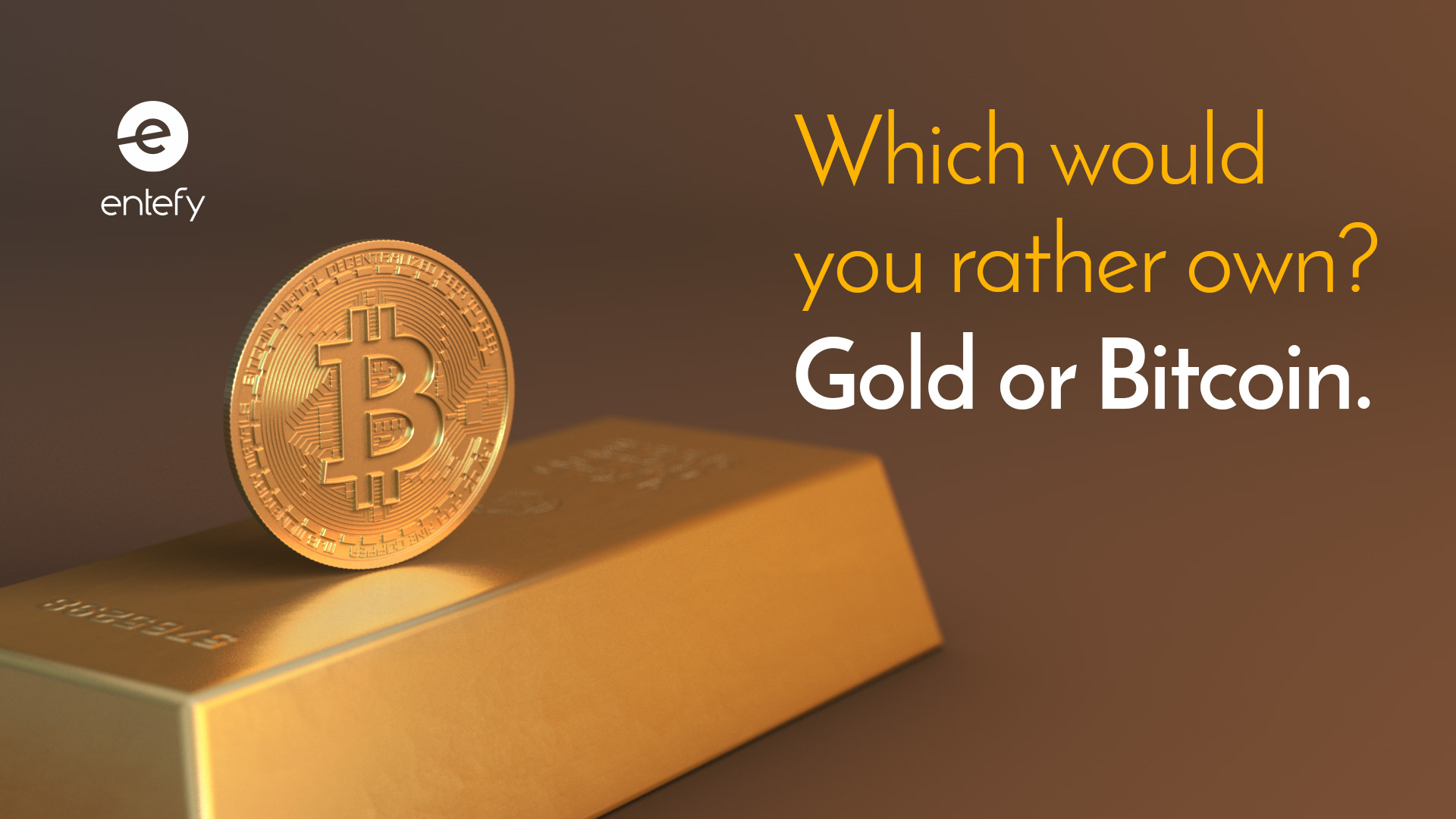
Comparing gold and Bitcoin: 1 surprising similarity

Gold has been mined from the Earth for around 6,000 years, serving as a repository of value ever since in the form of coins, the bejeweled headgear of pharaohs, and the gold bullion in Fort Knox. But recent predictions from economists suggest that in 2015 the world may have passed “peak gold,” with global gold mine production expected to decline annually until the last accessible gold is extracted around 2035

That date has an interesting parallel with Bitcoin, the world’s most popular cryptocurrency. Just as there’s a fixed amount of gold on Earth, the design for Bitcoin restricts the total number of Bitcoins that can ever be mined to 21 million tokens. To date, 16 million have been mined but the rate at which new Bitcoins are being created slows each year as mining becomes more computationally complex and expensive. It’s been estimated that the last Bitcoin will be mined in 2040.  

A fixed supply of gold and Bitcoin may be where their parallels end. Gold’s value is determined on market exchanges where an ounce of gold sold at around $1,283 today whereas a single Bitcoin was valued at nearly $17,000. 
Entefy’s enFacts are illuminating nuggets of information about the intersection of communications, artificial intelligence, security and cyber privacy, and the Internet of Things. Have an idea for an enFact? We would love to hear from you.

Dream

Are we witnessing the end of remote work?

For the past two decades, remote work seemed to represent the way of the future. As of 2016, 43% of Americans surveyed worked from home at least some of the time, signaling the growing demand for flexible work arrangements and work-life balance. Technologies such as smartphones, email, video conferencing platforms, messaging tools, and project management software made it increasingly easy to collaborate with colleagues around the globe. 

These technologies also gave rise to a new generation of digital nomads and solopreneurs, professionals who could consult, contribute, and create for clients regardless of location. The effects of the economic downturn combined with tech advancements inspired millions of people to strike out on their own, which is why 35% of the workforce is now comprised of freelancers and 44 million Americans operate side hustles in addition to their day jobs. 

Companies embraced remote work policies for employees and contractors as a means of keeping workers satisfied and reducing their overhead expenses. After all, happy employees are productive employees. What difference does it make where they’re located? 

Turns out, quite a lot, and the remote work trend now appears to be headed in reverse. Marissa Mayer’s decision to end Yahoo’s work-from-home policy in 2013 drew considerable criticism, but it also seems to have opened the gates for other companies to follow suit. IBM announced earlier this year that thousands of remote workers would need to report to an office, and Reddit and Bank of America have scaled back their teleworking programs as well. 

Why the change of course on remote work?

Up to 90% of workers desire the flexibility of remote work policies, which give them more autonomy over their schedules and working habits. In theory, remote workers are happier and more productive because they can maintain their careers without sacrificing precious time with their children and loved ones. Remote work allows working parents in particular greater flexibility in how they balance their professional responsibilities with their familial obligations. 

But from an employer’s perspective, remote work simply doesn’t add up – at least not for all employees. While it might make sense to work virtually with contractors and other outsourcing vendors, companies such as Yahoo and IBM decided that digital communication is simply no substitute for in-person collaboration. Tech companies that thrive on innovation to stay competitive must move quickly on new ideas, and many leaders have found that the best ideas stem from spontaneous, face-to-face conversations. A chance encounter around the water cooler (or the ping-pong table or nap pods) can spark discussions and problem-solving sessions that lead to the company’s next big idea.

Some companies have found that remote work arrangements afford employees a little too much flexibility. One business owner discontinued his company’s work-from-home policy after some workers became difficult to reach during work hours or refused to come into the office due to personal priorities. Remote work only works if people are actually working, and you can lose hours just trying to track down a colleague who’s gone MIA or who takes an entire workday to respond to emails. 

The remote work trend isn’t dead

Given that most workers value work-life fulfillment and personal autonomy, employers know that demanding that everyone work the traditional 9-5 schedule is unappealing, not to mention impractical. Employees who need little coworker interaction to get their work done, as is the case with client-facing employees or certain writing jobs, will gain little from being in the office every day. But those who regularly collaborate with team members or are integral to product and strategy development are likely less productive working from home than they would be in the office. 

Employers recognize that workers fall on a spectrum, which may explain why many companies are taking a hybrid approach to workplace flexibility. They might require employees to be in-house three days of the week but allow them to work remotely on the remaining two. Some create flexibility by allowing employees to set their own schedules. Letting employees determine their work hours accommodates their need for autonomy and enables them to structure their days around their professional and personal priorities. 

Codifying work-from-home rules seems to be the best way to find the happy medium. Companies that allow some degree of flexibility in people’s working habits benefit from laying out clear expectations for availability, responsiveness, and output when they’re out of the office. Because in-house employees’ productivity can suffer if the work environment feels like a ghost town, employers may also want to establish set days when different departments can work from home so as to maintain a vibrant office atmosphere. 

What does the decline in remote work mean for freelancers and solopreneurs?

Working from home (or a co-working space or a coffee shop) is inherent to how freelancers and solopreneurs operate, but they need clients to make a living. Independent workers who are worried about a shift in their client relationships can accommodate the trend by offering to travel for in-person meetings and project launches. They might also consider building on-site work into their arrangements. Those who have especially flexible circumstances could work in clients’ offices a few days a week or for the duration of a several months-long project. At the very least, a willingness to travel for meetings and events may assuage clients’ fears about lost productivity and innovation opportunities. 

Remote work is evolving. For the first time in history, millions of people were able to build their careers outside standard office environments, and both employees and employers alike rushed to embrace that opportunity. Now we’re seeing that a more nuanced approach is needed and that the right way to work depends on your role and your circumstances. But it’s clear that tech has allowed us to expand our concept of work beyond traditional paradigms, and whether you’re in the office or teleconferencing from your house, that is real progress. 

Network cables

If you love the Internet, you’ll hate what the FCC just did to net neutrality today

What is net neutrality?

According to the Public Knowledge, “net neutrality is the principle that individuals should be free to access all content and applications equally, regardless of the source, without Internet Service Providers discriminating against specific online services or websites. In other words, it is the principle that the company that connects you to the internet does not get to control what you do on the internet.”

What happened at the FCC today?

The FCC voted today to repeal net neutrality as we know it.

A landmark 2015 FCC ruling prohibited cable and telecommunication companies from manipulating Internet traffic. Under those rules, Internet Service Providers (ISP) like AT&T or Comcast could not unilaterally show favoritism to one website over another through preferential access, variable download speeds, or even blocking certain sites altogether. That’s what ended today.

Under the new rules, ISPs no longer have to provide open, equal access to the Internet. In fact, these providers can now block specific sites, charge higher fees, and prioritize some content over others, including advertising. “The federal government will also no longer regulate high-speed internet delivery as if it were a utility, like phone services.”

The FCC received millions of comments on its public comment page on the issue. Despite evidence from the New York Attorney General that 2 million comments were fake, today the FCC voted to overturn the 2015 rules.

Why is net neutrality important? 3 big reasons.

Net neutrality impacts you as an individual, our society at large, and the economy. Net neutrality:

  1. Provides protection against unfair data discrimination. According to the Electronic Frontier Foundation,the FCC’s action repeals net neutrality, allowing “ISPs to block or throttle lawful content, or give the highest-paying websites and apps a better ability to reach customers’ devices, or to favor Internet traffic from the ISPs’ own subsidiaries and business partners, all without any legal repercussions.”
  2. Preserves free speech online. By reversing 2015 net neutrality rules, free speech online suffers: “The Internet was built on the simple but powerful idea that while you may need to pay a service provider for Internet access, that provider doesn’t get to shape what you access – or who has access to you… Users, in turn, can make their own choices about which services they want to use.”
  3. Fosters entrepreneurship and innovation. In a time when a handful of tech platforms dominate the Internet, the end of net neutrality can greatly damage entrepreneurship and innovation. The MIT Technology Review summed it up succinctly: “Entrepreneurs are rightly concerned that large companies will spend heavily to dominate fast-lane access, making it harder for some startups, such as bandwidth-hungry mobile video companies, to challenge them… Milliseconds of difference can leave you at a disadvantage when potential customers are evaluating your product.”

How can you take action to democratize the Internet?

In protest, many have taken the fight online, especially since Big Tech has remained somewhat silent on the issue.

Congress has the power to enact legislation that would overturn today’s FCC ruling.

You can express your opinion on net neutrality to Congress. The website BattleForTheNet.com provides an easy-to-use form letter that you can send to your Congressional representatives.