
Alston

Entefy CEO Alston Ghafourifar speaks on enterprise AI readiness at event hosted by Franklin Templeton Investments

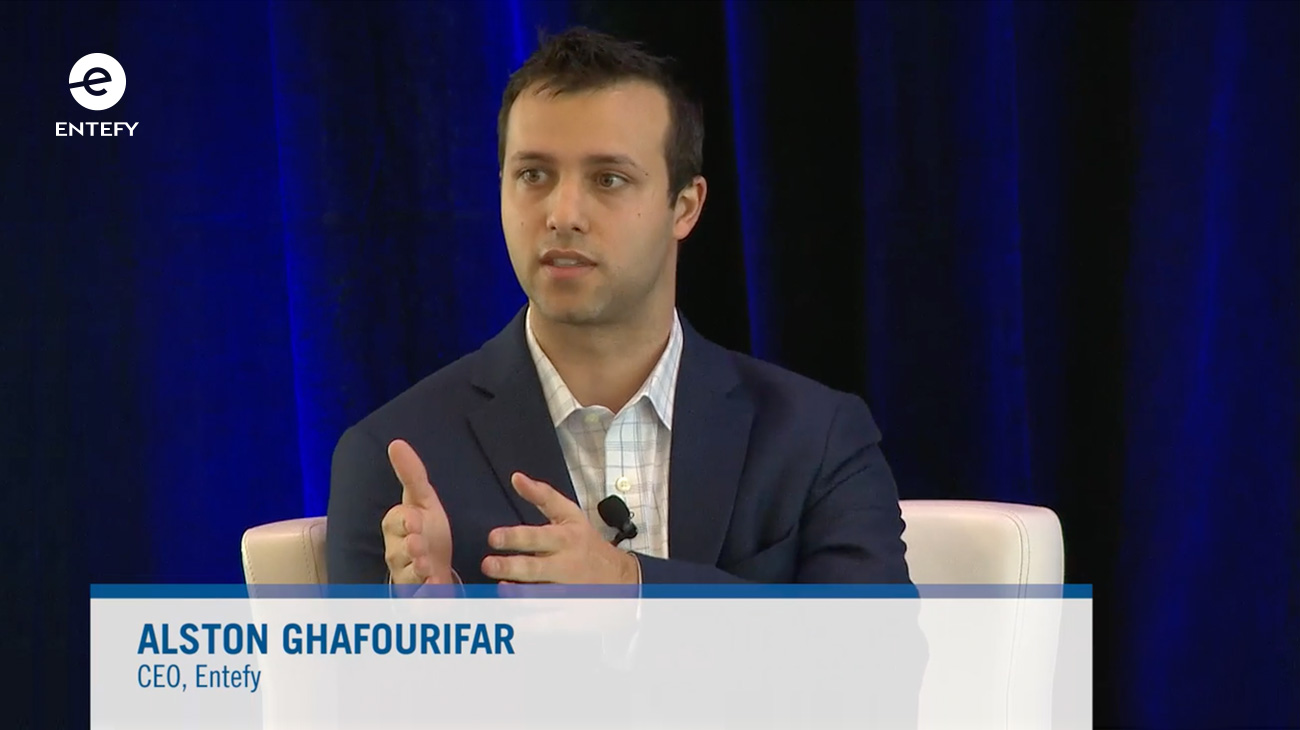
Entefy CEO Alston Ghafourifar spoke to a group of international institutional investors hosted by Franklin Templeton Investments in San Francisco, California. The event focused on the future of AI, its impact and value creation, as well as the importance of data optimization for organizations. 

In an in-depth conversation about organizational bottlenecks for building effective AI solutions, Alston expressed his view on the importance of a company’s commitment—

especially at the executive level—to digital transformation and the intelligent enterprise. Realizing the full potential of AI and machine intelligence within the enterprise, closely resembles any other type of organizational change. “If you don’t have the organizational will to address the data readiness problem from a system’s perspective then you’re not going to actually be leading the stack,” Alston stated. 

In an effort to transform idle, dark data into valuable insights, enterprises worldwide are looking into ways AI can make their operations more efficient, enhance their customer experience, and ultimately become more competitive. This pursuit is occurring across a broad spectrum of industries as well as functional departments within organizations. Underlying this activity is a paradigm shift in how companies perceive the role of data and AI to optimize productivity and business processes.

When it comes to AI and data, every organization is at a different phase of readiness. Alston shared that, at Entefy, we spend time to understand where an organization is in terms of their AI journey. “Are they just talking about it?” Or do they have “at least a process for how they aggregate, transform, and move information throughout the system?” Entefy’s advanced multimodal AI is designed to solve the information overload problem for organizations large and small. And to do this, we along with our customers are reimagining knowledge management, workflow orchestration, and process automation.

We thank the event organizers, speakers, and attendees for making this event possible. Special thanks to Ryan Biggs from Franklin Templeton Investments who moderated the discussion. 
Enterprise AI

Is your enterprise ready for AI? Here are 18 important skills you need to make it happen

The artificial intelligence (AI) revolution is unfolding right before our eyes, and organizations of all types have already begun taking advantage of this amazing technology. Today, machine learning is transforming industries and disrupting software and automation across the globe.

AI/machine learning as a discipline is highly dynamic, relying on a unique blend of science and engineering that requires training models and adjusting algorithms to make useful predictions based on a dataset. Building algorithmic models and thoughtful process orchestration are central to work in this field and extensive experimentation is simply par for the course. And, high precision in AI and machine learning is achieved where science meets art.

At Entefy, we’re obsessed with advanced computing and its potential to change lives for the better. Given our work in AI and machine learning over the years, we’ve had the good fortune of working with amazing people, inventing new things, and building systems that bring unprecedented efficiency to operations, processes, and workflows. This includes our work in the emerging, complex field of multimodal AI

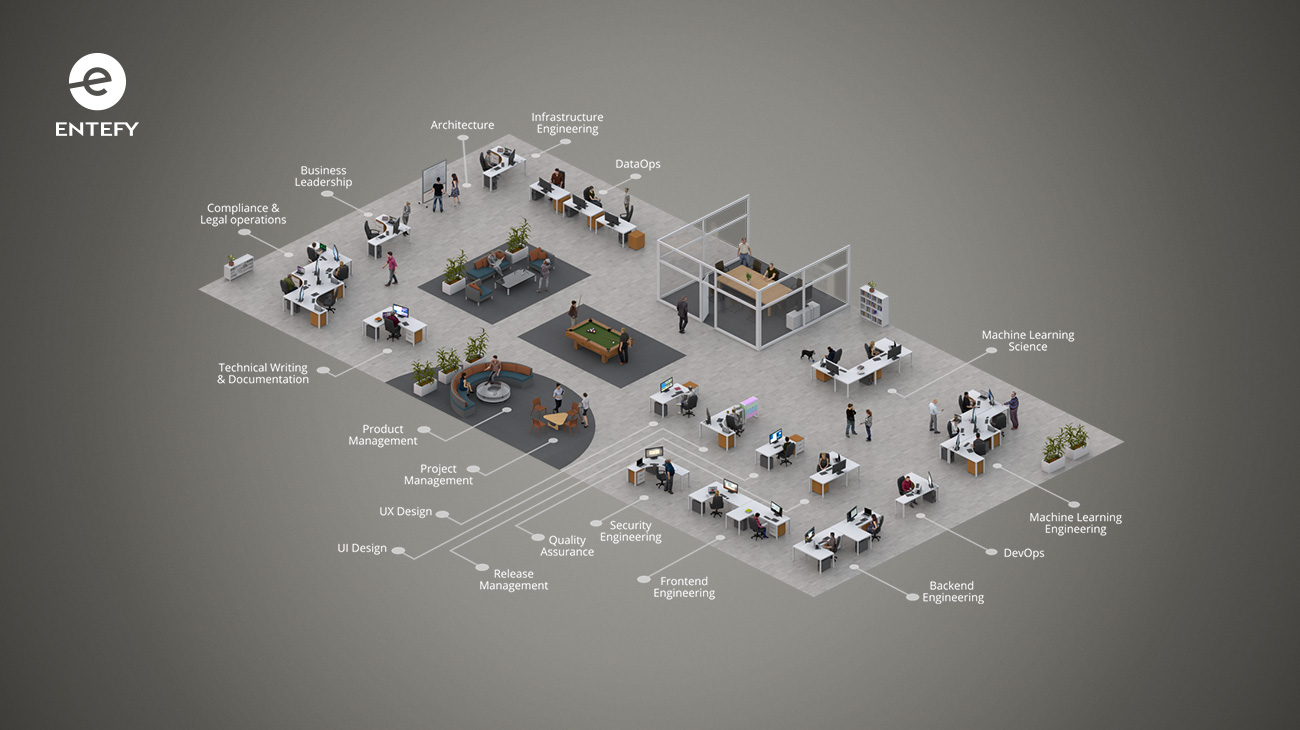
So, what does it take to make it all work and work well? What are the proficiencies and competencies required to bring AI applications to life? Here are the 18 skills needed for the successful development of a single AI solution from ideation to commercial delivery:

Architecture: Design and specification of software subsystems, supporting technologies, and associated orchestration services to ensure scalable and performant delivery.

Infrastructure Engineering: Implementation and maintenance of physical and virtual resources, networks, and controls that support the flow, storage, and analysis of data.

DataOps: Management, optimization, and monitoring of data retrieval, storage, transformation, and distribution throughout the data life cycle including preparation, pipelines, and reporting. 

Machine Learning Science: Research and development of machine learning models including designing, training, validation, and testing of algorithmic models.

Machine Learning Engineering: Development and software optimization of machine learning models for scalable deployment.

DevOps: Building, packaging, releasing, configuring, and monitoring of software to streamline the development process.

Backend Engineering: Development of server-side programs and servicesincluding implementation of core application logic, data storage, and APIs.

Frontend Engineering: Development of client-side applications and user interfaces such as those present in websites, desktop software, and mobile applications.

Security Engineering: Implementation and management of policies and technologies that protect software systems from threats.

Quality Assurance: Quality and performance testing that validates the business logic and ensures the proper product function.

Release Management: Planning, scheduling, automating, and managing the testing and deployment of software releases throughout a product lifecycle.

UI Design: Wireframing, illustrations, typography, image and color specifications that help visually bring user interfaces to life. 

UX Design: Specification of the interaction patterns, flows, features, and interface behaviors that enhance accessibility, usability, and overall experience of the user interaction.  

Project Management: Coordination of human resources, resolution of dependencies, and procurement of tools to meet project goals, budget, and delivery timeline.

Product Management: Scoping user, business, and market requirements to define product features and manage plans for achieving business goals.

Technical Writing and Documentation: Authoring solution and software specifications, usage documentation, technical blogs, and data sheets. 

Compliance and Legal Operations: Creation and monitoring of policies and procedures to ensure a solution’s adherence to corporate and governmental regulations through development and deployment cycles, including IP rights, data handling, and export controls. 

Business Leadership: Strategic decision making, risk assessment, budgeting, staffing, vendor sourcing, and coordination of resources all in service of the core business and solution objectives.

Electric bulb

Entefy awarded three new patents by US Patent and Trademark Office

USPTO awards Entefy new patents covering inventions in digital security and privacy

PALO ALTO, Calif. October 29, 2018. Entefy Inc. has recently been issued a series of patents by the U.S. Patent and Trademark Office (USPTO). The company’s IP portfolio includes 48 combined pending and issued patents and a number of trade secrets related to its technology domains. Entefy’s latest three issued patents cover innovations in areas of cybersecurity and data privacy.

Patent No. 10,037,413 describes “System and method of applying multiple adaptive privacy control layers to encoded media file types.” A solution using this technology gives users and content creators alike advanced control over the viewing, distribution, and other use of their videos in a variety of formats. This unprecedented level of protection can extend from entire files down to select scenes, objects, or even a single pixel within a video.

Patent No. 10,055,384, “Advanced zero-knowledge document processing and synchronization,” explains the method by which live, multi-person document collaboration products can provide the same level of convenience for the user without sacrificing security or privacy.

One major consideration when dealing with the cloud or distributed computing is the ongoing trade-off between ease of maintenance and the need for security, including proper authentication, role management, and permission. Patent No. 10,110,585 describes the first “Multi-party authentication in a zero-trust distributed system” that involves automated collaboration between people, hardware, and software in determining the correct authorization for data access, policy changes, system updates, and more in a distributed infrastructure.

“I’m really proud of the team’s technical prowess and commitment to excellence. Over the years, we’ve had to think about new approaches to solving some of the most challenging engineering problems in areas of communication, security, and machine intelligence,” said Entefy’s CEO, Alston Ghafourifar. “I’m delighted to see these newly issued patents being added to our growing IP portfolio as we continue to push the envelope and move the dial on what’s technically possible.”

Today’s news is the latest in a series of patent issuance announcements, including an Entefy patent that enhances intelligent message delivery and a patent covering encrypted group messaging simultaneously across multiple protocols.

ABOUT ENTEFY

Entefy is an AI software company, specializing in machine learning that delivers productivity and growth. Our multimodal AI platform encapsulates advanced capabilities in machine cognition, computer vision, natural language processing, audio analysis, and other data intelligence. Organizations use Entefy to accelerate their digital transformation and dramatically improve existing systems—knowledge management, search, communication, intelligent process automation, cybersecurity, data privacy, and much more. Get started at www.entefy.com.

Couple

What’s your sign? Introvert or extravert?

You need to change who you are. Or at least that’s the message of the self-improvement industry, which annually accounts for billions of dollars’ worth of books, workshops, apps, and the like designed to help a person tweak who they are or become who they want to be. 

But does any of it work? Can you really change your personality?

If the self is stable and you are who you have always been, change seems impossible. But if the self is dynamic and you are a different you from one moment to the next, meaningful change is possible. To get started, let’s define personality and its measurement.

What is personality?

Personality is best thought of as the stable and (generally) consistent thoughts and ideas that guide a person’s behavior. Just as our physical features can be used to identify us even after we have a haircut or grow a few inches taller, so too does our personality act as an identifier, even if in the moment you’re tired, excited, or totally stressed out. 

The psychologist Carl Jung took a stab at classifying personality types in his 1921 book Psychological Types, which describes the mental functions people rely on to perceive the world. That work served as the foundation for the Myers-Briggs Type Indicator, a popular self-assessment tool that grades people along four dimensions of psychological preferences: Introversion/Extraversion, Sensing/Intuition, Thinking/Feeling, and Judging/Perceiving. About 2 million people take the Myers Briggs test each year, with HR departments often using it to analyze potential employees. Despite research that suggests the test is ineffective at predicting success, in part because a single test-taker will often get different results when taking the same test multiple times. 

In psychiatry circles, the most well-regarded personality framework in use today is called the Five-Factor Model. It is organized around the Big Five personality traits, dubbed OCEAN: 

  • Openness to experience, the quality of being intellectually curious, likely to find enjoyment in the likes of art and travel. 
  • Conscientiousness, hardworking and organized, with those low on the scale being more carefree and spontaneous.
  • Extraversion, energized by social situations, whereas introversion defines those who get exhausted around people. 
  • Agreeableness, friendly and cooperative, those low on this scale are more competitive and selfish.
  • Neuroticism, moody, easily annoyed when little things don’t go their way.

Each of these personality traits is a part of a person’s personality. The one we’re all most familiar with is likely the Extraversion/Introversion axis, since we’ve all used those terms as a shorthand when describing someone else’s behavior and preferences. 

Technically, introversion and extraversion (E/I) simply refer to how a person uses and replenishes energy—introverts grow tired with social interaction while extraverts thrive with it. E/I are not either/or. They exist on a spectrum, with most people’s personalities landing somewhere in between the extremes. There are even terms that distinguish other positions inside the continuum. People who are evenly situated between introversion and extraversion are considered ambiverts. Then there are four types of introversion as well: social, thinking, anxious, and inhibited.

The differences between introverts and extraverts go beyond their approaches to social interaction. A 2013 study concluded that extraverts associate feelings of reward with what happens around them, while introverts rely more on their inner thoughts. The differences can even manifest in how we express ideas, with introverts speaking more concretely while extraverts more abstractly. 

Thanks to recent advances in brain scanning technology, there have also been several neurological differences identified. Introverts and extraverts have different levels of baseline cortical arousal (the amount of brain activity) suggesting that introverts tend to process more information per second, leading to the theory that they get overwhelmed in highly stimulating environments, such as social situations. Several other studies have found specific brain regions that are more active in either introverts or extraverts. 

Despite all the differences, it is not the case that we each occupy a particular spot on the scale and remain devoid of the characteristics of the other side. Introverts will often behave like extraverts and vice versa. A 2009 study found that extraverts would act moderately extraverted 5-10% more often than introverts, so what distinguishes them is not how they behave but for how long they do so. 

Some research has suggested that extraverts report higher levels of happiness, and that introverts who act extraverted also experience a boost. However, high levels of extraversion have also been correlated with delinquent behavior and psychopathy.

Introvert to extravert. Extravert to introvert.

Switching between introverted and extraverted behavior in the moment is not the same as making long-term meaningful changes to behavioral predisposition. Because we are each unique and often shift between certain qualities, the best way to maximize the benefits of both is to maintain an optimal and highly personal balance between the activities that suit us best. That is, if you are highly introverted, don’t try to force yourself to be social too often, but when you do, use it in the best way possible. Know what you want to accomplish.

Our personality can be refined with the right tools and mindset. But any changes that occur should be personal and self-directed. Conversely, it’s important not to expect others to behave in ways that conflict with who they are: workplaces and groups in general are more likely to thrive with a combination of personalities. Allowing people to work in their most comfortable state of mind will keep them happy and performing at their best.

Chart

The banking sector is growing smarter with AI

When thinking about innovation and business domains, typically the banking sector isn’t one that readily comes to mind. But these days, tech companies are challenging banks and credit unions to improve their digital capabilities while customers are increasingly demanding more convenience and personalized service. This has led to banks spending billions on artificial intelligence which is transforming banking across internal and consumer-facing processes.

AI improves operational efficiency

One of the fundamental ways in which AI is changing industries of all kinds is through automation of repetitive, low-level tasks. Smart automation not only reduces costs, it provides employees the opportunity to spend their valuable time on more complex, creative, and customer-focused work. 

As banking institutions shift necessary but low-skill tasks to automation platforms, their employees gain the additional time needed to engage with customers in more meaningful ways. This can significantly enhance the customer experience and enable decisionmakers at banks to differentiate their companies in an increasingly competitive market.

Until recently, traditional banks have drawn criticism for not keeping pace with customers’ demands. For too long banks have been offering generic, one-size-fits-all products and features that now seem woefully out of date. The modern consumer expects personalization and dynamic digital experiences.

But to cast banks as slow-moving luddites is to miss the bigger picture. Financial institutions face complex regulatory requirements, grapple with dated cultures, and answer to a diverse set of stakeholders. Therefore, change doesn’t come easy to these established institutions and adopting new technology can take time. Plenty of time.

Today, artificial intelligence is helping banks not only catch up but innovate in many areas of operations. For example, in IT alone banks are reducing their infrastructure, development, and maintenance costs by 20-25 percent. The savings, both in terms of financial and personnel time, give these institutions the additional room needed to invest in new products and key operational areas such as security.

Intelligent process and workflow automation allows banks to reinvest personnel resources into the types of tasks for which humans are best suited. By leveraging smart chatbots for certain customer interactions, banks enable employees to again focus on more complex and interesting problems. Instead of having employees respond to the same set of common questions day in, day out, companies can now leverage AI to engage customers directly through apps or websites. Common or simple questions need never take up an employee’s time. For more complex or unique customer interactions, banking personnel can intervene and provide superior service with that newly saved time.

Data intelligence uncovered by machine learning can also lead to increased efficiency. By collecting information about customer behavior in banking apps or websites, managers gain the insights necessary to develop new product features or implement their business strategies with greater confidence.    

AI to transform risk and compliance

Banks are also finding powerful uses for AI in the area of risk and compliance. With compliance representing an enormous cost to financial institutions in the decade following the financial crisis, AI tools promise to save organizations billions of dollars collectively. As previously covered by Entefy, banks spend $270 billion on compliance with a significant portion of these expenses centered purely around personnel.

It is estimated that globally money laundering represents 2%-5% of GDP. And combating this is a costly endeavor requiring significant levels of manual effort to stay in compliance with strict regulations. AI can help banks fight the war against money laundering with the potential to reduce personnel-related anti-money laundering (AML) costs by 50%. Machine learning can be used to analyze a broad range of data points, such as location, ISP information, identity, and myriad transaction patterns. This analysis can be critical in identifying suspicious activity.

AI-powered automation would not only reduce compliance costs but could decrease risks associated with human error as well. Machine learning algorithms can be trained to detect potentially fraudulent activity by comparing current account usage against historical trends. Advanced anamoly detection can be used in sending the right alerts to specialists who can best determine whether intervention is warranted. This type of smart analysis is critical because the number of transactions that occur each day far exceed human capacity to track and flag them all. 

AI Brain

Entefy’s quick introduction to multimodal AI [VIDEO]

Back in 1955, when the term “artificial intelligence” was first coined by John MacCarthy, the promise of thinking machines as intelligent as human beings was only a generation away. It wasn’t long though before scientists and engineers realized that true machine intelligence was in fact much more complex than originally anticipated and that it would take many more years to materialize.

Decades later with many new innovations in the field, the AI community is once again enthusiastic about all the recent advances and the potential of artificial intelligence. Today, while there may be a debate as to what is real AI or what differentiates one technique or technology from another, it’s clear that there is a growing fervor around this field and its potential for impact in our society.

In this video, Entefy’s Vice President of AI/Machine Learning Engineering, Arnulf Graf, PhD, provides a brief introduction to the emerging area of multimodal AI and the major benefits that can be derived from it.

Unimodal systems (such as those which can separately analyze bodies of text, audio files, or images) can provide great value for select tasks and use cases, however they can lack the breadth necessary to truly generalize and seamlessly scale across domains and topics. This ability to generalize and contextualize learning outside of a narrow domain is something people do exceedingly well, but remains largely elusive to machines. Machines capable of human level cognition may still be a few years out, but it’s clear that mastering multimodal machine learning is a critical step in that journey.

At Entefy, we’re focused on applying advanced multimodal AI to everyday processes and workflows, saving time, increasing productivity, and improving security for people and organizations everywhere.

To learn more about Entefy’s multimodal AI, read our previous post. For other key AI terms and definitions, see our Helpful AI terms for today’s business professional.

AI for Electronics

Connecting the dots between AI, manufacturing, and CO2

Artificial intelligence is making its mark transforming industries, remaking jobs and job markets, and redefining the dynamics of cybersecurity. One thing that doesn’t come up often when we talk about AI is the environment. But it should. Because AI technologies like machine learning have great promise to make manufacturing processes and supply chains more efficient.

Data shows that 70% to 80% of the carbon footprint of a personal computing device like a laptop or smartphone is generated during its manufacturing. To put that in perspective, 17 of the world’s largest consumer electronics companies produce greenhouse gas emissions of around 103 million metric tons of CO2E per year. That’s on par with the total greenhouse gas emissions of a country like Chile.

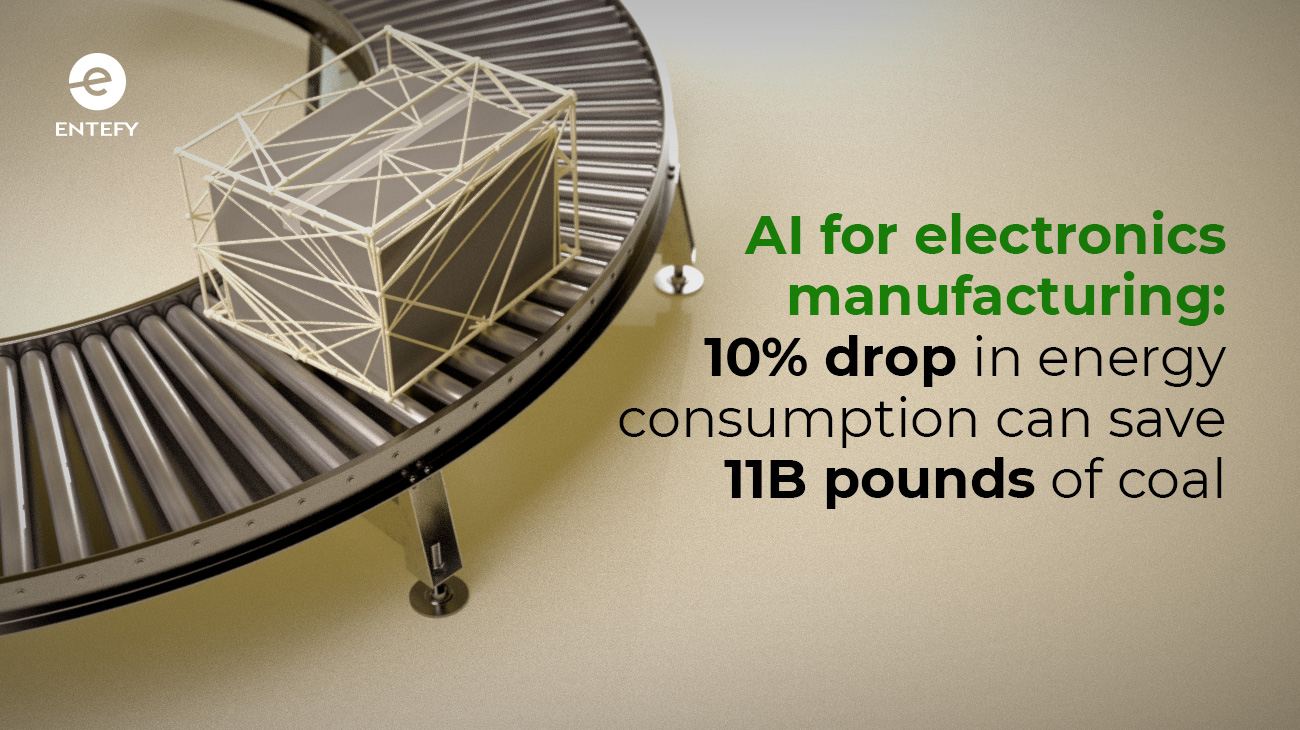
AI to the rescue. McKinsey projects that the use of machine learning in semiconductor manufacturing can lead to a 30% improvement in efficiency. Not all of that AI-driven efficiency leads directly to reduced energy consumption. But even small improvements can have a big impact. For those 17 electronics companies, every 10% reduction in energy use during manufacturing would save the equivalent of 1.1 billion gallons of gasoline, or 11.2 billion pounds of coal burned, or the equivalent of 1.5 million U.S. homes’ annual electricity use. AI that’s good for the Earth, and good for the bottom line.

Entefy’s enFacts are illuminating nuggets of information about the intersection of communications, artificial intelligence, security and cyber privacy, and the Internet of Things. Have an idea for an enFact? We would love to hear from you.

Avatar

Blockchain and the end of the middleman

While technology consistently improves and gives us new and better ways to conduct business and manage our lives, truly groundbreaking inventions are often few and far between.

One such invention is blockchain, the distributed ledger technology on which Bitcoin and other cryptocurrencies are built. The technology is steadily influencing global industries, and it’s changing everything from how energy grids are managed to how medical records are stored. But blockchain isn’t just reshaping how we build, ship, and secure products. It’s also transforming how industry supply chains are structured. And it’s happening fast.

The end of the middleman?

One of the most celebrated features of blockchain is its decentralized structure. When transactions are recorded, no single entity owns the record. All relevant parties can access the information and see exactly when and how a payment or transfer of value was processed. Data isn’t stored in one single location, either. It’s distributed across a series of computers, or nodes, which makes it less vulnerable to corruption. The distributed, decentralized structure reduces the need for an intermediary middleman to transfer information and goods between buyers and sellers.

Here’s an example of how that works. Let’s assume that an entrepreneur decides to open an online business selling handmade, artisanal goods from her hometown. She wants consumers across the country to be able to buy her high-quality products, so she seeks out a shipping company to manage the deliveries. By using a blockchain-based smart contract, she doesn’t need an intermediary to set up the relationship or act as a go-between for her and the shipping vendor. The details of their agreements are recorded on a blockchain, and both parties have encryption keys that allow them and their authorized users to review contracts at any time. Contracts are  virtually tamper-proof and the original agreements, once recorded, are immutable. Everyone involved saves time and money since they don’t need to coordinate – or pay – an intermediary service to facilitate the transactions.

Although middlemen often provide value, there’s no getting around the fact that the more people involved in a process, the longer it takes to complete, the more expensive it is, and the more opportunities there are for mistakes. Every additional layer in a business environment creates costly, and often unpredictable, variability. The hope is that blockchain can significantly reduce transactions costs, frictions, and inefficiencies across the board.

Here are 4 examples of what a world without middlemen might look like:

Pharmaceuticals

Supply chain costs represent a massive expense, largely due to middlemen companies that nurture relationships and serve as mediators between different points in the production pipeline. Companies in a number of industries are beginning to shift their dependence from middlemen to blockchain.

For example, pharma companies have begun exploring the use of blockchain to reduce the number of counterfeit drugs that make it to the market, which constitute 1% of sales in the developed world and up to 70% in poorer countries. In Europe alone, pharmaceutical corporations lose more than $11.5 billion a year due to counterfeits, and at least 40,000 jobs are jeopardized by the crisis. By using blockchain to document and verify drug production and sales at every point in the supply chain, pharma companies can better control the products that are sold to their clients and consumers while also reducing the number of players involved in their supply chains.

Real estate

Commercial real estate transactions are often lengthy and complex endeavors. But blockchain could make the process less burdensome. If all property details, including key information about ownership history and titles, were stored on a blockchain, buyers and sellers could easily access that information without the need for a real estate agent’s assistance.

Instead of relying on agents and title management companies to build trust between buyers and sellers, a blockchain allows them to verify ownership and vet deals without involving one or more third parties. This could mean faster transaction times and decreased transaction costs, as buyers and sellers negotiate directly and avoid paying intermediaries for their involvement.

Energy

To help ease strains on the energy supply, utility companies are experimenting with blockchain by developing platforms that allow individual consumers to buy and sell energy through smart contracts.

One application would be to allow homeowners with solar arrays to sell the power captured via their panels to neighbors who need it. Blockchain platforms allow these exchanges to happen in real-time, with immediate transfers of energy and money. Importantly, such options enable communities to become more resilient against power outages, storms, and other adverse events by developing blockchain-enabled microgrids.  

Banking

Security and efficiency are particular concerns in the financial world, given that banks and other financial institutions are the ones handling corporate and consumer finances. It is in everyone’s interests for banks to adopt safe, cost-effective processes, and blockchain delivers on that. Back-office functions, including accounting, transaction clearing and settlement, and regulatory compliance, are critical to healthy banks. But these departments and processes can also be subject to headcount bloat and runaway costs, particularly as banks attempt to get their arms around growing fraud and cybersecurity risks. By instituting blockchain systems, banks could save $20 billion on back office costs while also securing their clients’ data and financial assets.

Big picture, we’re beginning to see blockchain create new services that can generate efficiency and at times bypass intermediaries. Innovative companies that adopt blockchain have the opportunity to capture more of the value in their supply chain. 

TV Screens

AI-powered hyper-personalization is the future of entertainment

How is the $735 billion U.S. entertainment and media industry responding to constantly changing consumer tastes and revenue declines in several traditional market segments? By getting personal. Very personal. And to do it, they’re leveraging AI and machine learning to develop entirely new forms of personalized user experiences.

Today’s consumers expect increasingly individualized entertainment, a trend that has led to revenue declines in traditional entertainment segments like movie theaters and on-demand rentals. In response, industry leaders are exploring cutting-edge solutions built on AI and machine learning technologies. These early efforts point to a highly personalized future that moves far beyond today’s recommendation engines to individualized content experiences and even custom-generated celebrities.

Here is a look at several high-impact AI and machine learning projects in different segments of the media industry.

Behind-the-scenes machine learning workflow management

Netflix has been a pioneer in the use of machine learning technology to enable personalized user experiences. So much so that their success has raised user expectations to the point where personalized experiences are no longer surprising but simply expected.

Netflix offered a behind-the-scenes look at how it manages its machine learning technology, a system it calls Meson. The system acts as a traffic cop for the company’s multiple ML pipelines that “build, train, and validate personalization algorithms that drive video recommendations.”

Meson is a great example of how a media brand can successfully build upon its early experiments with machine learning personalization to enable sophisticated new capabilities.

The future of AI-generated podcasts

A graduate student at the University of California, Santa Cruz developed an AI-generated “infinite” podcast technology that hints at the future of audience-of-1 entertainment. The project is known as Sheldon County, and works as an algorithmically-generated content engine that provides each individual listener of the podcast their own unique narrative and characters.

The project makes use of symbolic AI to generate rules and logic to fuel the story engine. Users enter a number, or “seed,” that the story engine uses to generate a unique set of story elements. It then uses a language generation system to create the story and a voice synthesizer to read it aloud. Sheldon County is a work in progress. But in an era when media executives complain of skyrocketing production costs, the auto-generated podcast serves as a promising model for both hyper-personalized content and machine-produced creativity.

AI-generated celebrities

In 1990’s Star Trek, crew members retreat to the holodeck to enjoy deeply personal, entirely immersive narrative entertainment. Back on Earth, today we call that virtual reality (VR), even if the nascent technology is far from the ultrarealistic format enjoyed by the crew of the starship Enterprise. Putting aside the limitations of today’s VR hardware, who is going to star in tomorrow’s virtual entertainments? Breakthrough research at NVIDIA suggests that the virtual celebrities of tomorrow will be perfectly cast for each viewer. And entirely computer-generated.

NVIDIA artificial intelligence scientists published a paper describing a new training technique for generative adversarial networks (GANs) that allows these systems to generate realistic celebrities using a vast database of actual celebrities. It’s a short leap from that use case to cutting-edge systems that generate the perfect actors or irresistible product pitchmen tailored for the individual viewer. Removing the fiction from science fiction.

Predicting audience engagement using machine learning

A team of MIT researchers points to another path into the personalized future. The scientists developed a machine learning system that scores the emotional content of filmed entertainment. “We developed machine-learning models that rely on deep neural networks to ‘watch’ small slices of video—movies, TV, and short online features—and estimate their positive or negative emotional content by the second,” the team explained.

The near-term use for this technology is to augment the creative powers of screenwriters and to predict the likely audience engagement with a given script. Yet as we’ve seen with these other examples of advanced personalization, it is possible to imagine machine learning being used to generate entertainment content specifically tailored to the personalities of a narrow audience, even of specific individuals. What better way to garner 5-star reviews than to tailor a film to the audience’s specific tastes?

NBCUniversal explores intelligent content

Machine learning that produces personalized advertisements, for example, can be thought of as first-generation entertainment AI. Current-generation AI might include voice-enabled systems that use natural language processing. NBCUniversal is pushing ahead into next-generation entertainment with intelligent content created using AI. ‘We have very many talented people that create content. AI enables this great content to become intelligent and allows us to access this content across multiple platforms (digital and linear) and in any format from TV to Alexa to Snapchat,’ the company explained.

The entertainment giant is leveraging emerging AI technologies like computer vision (CV) to automatically discover the content and context of video, including data on who is in a scene, what is happening, what is being said, and even the underlying sentiment. NBCUniversal uses this metadata in new products like customized clip generators or advanced search tools. Leveraging AI allows the company to better leverage its video collection. And create next-generation customer-facing services and internal capabilities.

With AI and machine learning supporting new forms of entertainment in virtual and real space, the future of entertainment looks to be a highly personalized one.

MIMI AI

Here’s a quick look at the advantages of Entefy’s multimodal AI [VIDEO]

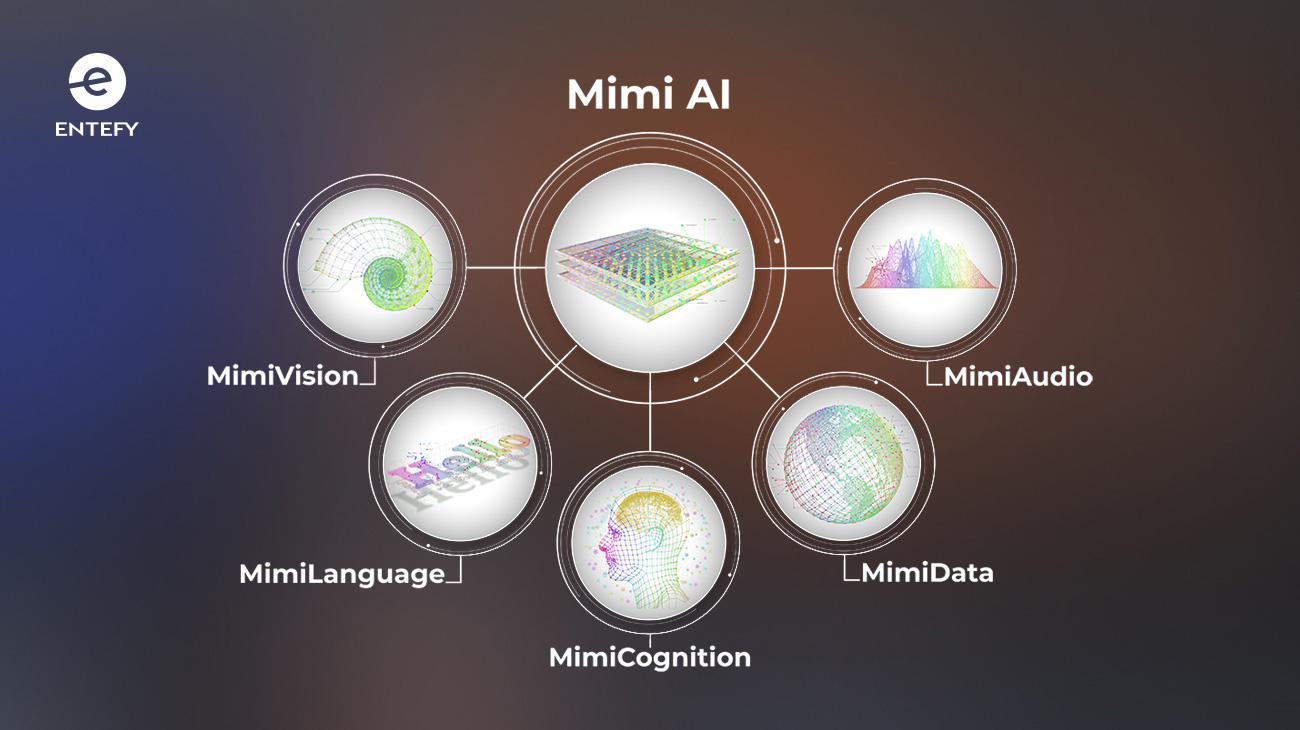
If ever there was a case of “greater than the sum of its parts,” you’ll find it with Entefy’s multimodal AI, the machine learning paradigm where computer vision, natural language, audio, and other data intelligence work together to generate advanced capabilities and insights.

As people, we experience the world using a number of senses or modalities that are beautifully integrated to create a holistic understanding of the world. From touch to vision to hearing, our ability to learn is based on a complex, yet seamlessly integrated cognitive process. Much of the success in machine learning so far has been based on learning that involves only a single modality. Good examples include text, audio, or images. But for AI to achieve much better performance and understanding it needs to get better at dealing with cross-modal learning, involving diverse data types. What’s important here isn’t simply the mechanics but rather the artful interpretation, fusion, disambiguation, and knowledge transfer needed when dealing with the multiple modalities and the models that evaluate them.

To see just how powerfully effective the multimodal approach can be, check out this overview of Entefy’s Mimi AI. In this video, Entefy’s Co-Founder Brienne Ghafourifar provides a guided tour of the Mimi platform and hints at the valuable use cases Mimi makes possible.