
Girl

Old school no more: AI disrupts the classroom

K-12 educators are deep in the midst of re-thinking the design of the classroom and the responsibilities of the teacher within it. The Internet brought a rush of new educational resources and technologies, like high-quality, free instructional videos from Khan Academy (which has 2.9 million YouTube subscribers) and crowdsourced lesson plans from nonprofit websites like ReadWriteThink and Teacher.org. Deciding on the best way to integrate these resources into schools has become another factor in the perpetual discussion about how to improve American public school education.
As these new technologies made their way into schools, the phrase “blended learning” was coined to describe education environments where the traditional teacher-led classroom is augmented by digital media and online resources. As schools reconfigure their classrooms around blended learning, the role of the teacher is transitioning from “the sage on the stage” to the “guide on the side.” But where does this transition stop? What role will the teacher play in the classroom of tomorrow?

Don’t answer yet. Because a game-changing new force has arrived on the scene: artificial intelligence. With the potential to disrupt education far more pervasively than the Internet, educators, parents, and students need to consider what role AI should play in the classroom. It’s a timely question and the answers could hold revolutionary changes in how our children learn.

A VISION OF TOMORROW’S CLASSROOM

Imagine that you’re standing in the middle of a classroom. At first glance, nothing appears out of the ordinary. Desks are neatly arranged in small groups, books line the shelves, and motivational posters hang on the walls. A teacher speaks from the front of the room, delivering an enthusiastic lecture on the American Civil War.

But when you look at the students, the picture changes. They’re tapping and swiping at tablets, taking notes that will be compiled into personal databases by automated learning companions. Individual students are being continuously assessed and receive personalized real-time learning plans. The bell rings, and students file out of the classroom on their way to meet with AI-powered virtual tutors that reinforce the concepts taught in school that day.

The question of whether artificial intelligence has a place in education has been discussed in academic circles for the past 30 years. But it is no longer a theoretical exercise. Many experts believe that AI applications are best used to augment the classroom experience, while some educators fear that increased reliance on computer programs is premature or will marginalize the role of human teachers. Like computers and the Internet, the question isn’t whether AI is here to stay, it’s only a matter of “how.”

THE HUMAN FACTOR

Most of us can name a teacher who had a memorable impact on our lives. A teacher who excited our interest in the subject that later became our career. Or turned us on to a book that we treasure today. That one special teacher who touched our lives and shaped our educational experience.

Our individual memories are confirmed by data about teachers as a group. Research shows that teachers are considered a highly respected profession, ranking 6th on the public’s list of most respected careers. They earn this esteem by playing a constantly shifting series of roles as leaders, mentors, administrators, proctors, and guides. So it is worth looking at what specifically human teachers contribute to the classroom:

“High-quality teachers guide their students through activities and projects that stretch them to analyze, synthesize, and apply what they have learned across academic subjects and into the real world. They provide personalized, qualitative feedback to help students develop their critical and creative thinking. They create a classroom culture that intrinsically motivates students by honoring their hard work and by making academic achievement socially relevant.”

And through these activities, teachers build the bridge from learning to living.

Students’ face-to-face interactions with teachers are also credited with helping students develop “21st century skills” including cognitive abilities like problem solving and critical thinking, and other characteristics like determination and outlook.
Through their own behavior in class, human teachers model behavioral norms like resilience and emotionally appropriate behaviors. Research into observational learning shows that modeling behaviors has both instructive and corrective benefits, helping students develop and fine-tune behaviors ranging from proper reactions to mistakes, moderating aggression, and accepting constructive criticism.

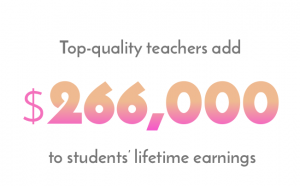
These core contributions are central to arguments that human teachers are indispensable. Looking at the importance of teachers from another angle, Harvard economists concluded that top teachers make life-long contribution to their students by improving test scores and college attendance rates, reducing teenage pregnancy rates, and generating $266,000 in added lifetime earnings (compared to a low-quality teacher).

THE LIMITS OF TODAY’S “AI ED” OFFERINGS

As it stands today, most existing AI Ed technologies are designed to enhance the productivity and effectiveness of human teachers across a wide range of classroom activities. Instructors can use software to automate grading on multiple-choice assignments and essays. One such AI system from EdX, the education nonprofit formed by Harvard and MIT, provides essay-grading software that assesses students’ work and provides instant feedback designed to improve writing skills.
AI systems called intelligent tutoring systems (ITS) provide supplemental instruction and guidance so that students gain practice in targeted subject areas and obtain deeper knowledge of the concepts being learned. The systems use Big Data techniques and machine learning to deliver personalized, individually optimized learning.

To teach physics, for example, an ITS system presents the core theory and demonstrates how to solve different types of problems. The system monitors the student’s responses to evaluation questions, can answer questions the student asks of it, and uses a real-time assessment of the student’s knowledge to determine the best path to follow towards mastery of the subject.

These early ITS systems are already having an impact. Research shows that intelligent tutoring systems’ use of machine learning to adjust teaching approaches as they gather data about students produce higher test results compared to large-group instruction.

AI is making other in roads as well. A company called CTI has developed an AI system that uses a teacher’s syllabus to assemble the contents of a customized textbook. In the educational app world, there are various hybrid systems that teach subject-specific skills and pair learners with human tutors who provide updates and analyses to their parents.

But the true impact of AI still lays over the horizon.

THE POSSIBILITIES OF TOMORROW’S AI-POWERED EDUCATION

Looking ahead, AI Ed programs are being designed as standalone technologies that could serve as substitutes for human intelligence in certain areas. These systems rely on three types of modeling: pedagogical, domain, and learner. Which is to say that the systems know how to teach effectively, understand the subject being taught, and have knowledge of the student being assessed.

Learner-focused AI makes use of machine learning techniques to maintain real-time knowledge of students’ progress and provide them tailored feedback and lessons. In a report from Pearson and the University College London, the current state of learner model AI technology is described as already quite advanced:

 “Deep analysis of the student’s interactions is also used to update the learner model; more accurate estimates of the student’s current state (their understanding and motivation, for example) ensures that each student’s learning experience is tailored to their capabilities and needs, and effectively supports their learning.”

Advancements in AI Ed are taking place outside the learner, pedagogical, and domain models, in the area of student emotional development. Researchers have developed open learner models (OLM) focused on the social, emotional, and meta-cognitive aspects of learning. Metacognition refers to an individual’s thoughts about their own thoughts, which in the context of the classroom includes the awareness of how well one is learning a subject. Research shows that OLMs “serve several purposes, most being strongly linked to metacognitive activities of reflection, monitoring progress, planning both in the short and long term, and aiding the learner in taking responsibility and control of their own learning and progress.”
This last part is important, because this is the point at which AI Ed applications make the leap from being learning supplements to standalone instructors. Because when an AI system is able to collect, analyze, and make use of information about a student’s emotional state, a key role of the human teacher has been co-opted by an intelligent machine.

THE IMPORTANCE OF DELIBERATE USE OF ARTIFICIAL INTELLIGENCE

Today there is no call for a wholesale replacement of teachers by AI. After all, those memories we have of that one special teacher are confirmed by academic research that supports the need for a facilitator in the classroom who is empathetic and trained in instruction techniques.

AI adds unprecedented new capabilities to the educational environment, from personalized learning plans to real-time testing and assessment, but the impact from these capabilities on the classroom and teachers remains to be seen. No single existing AI application is sufficiently advanced to warrant the replacement of a teacher.
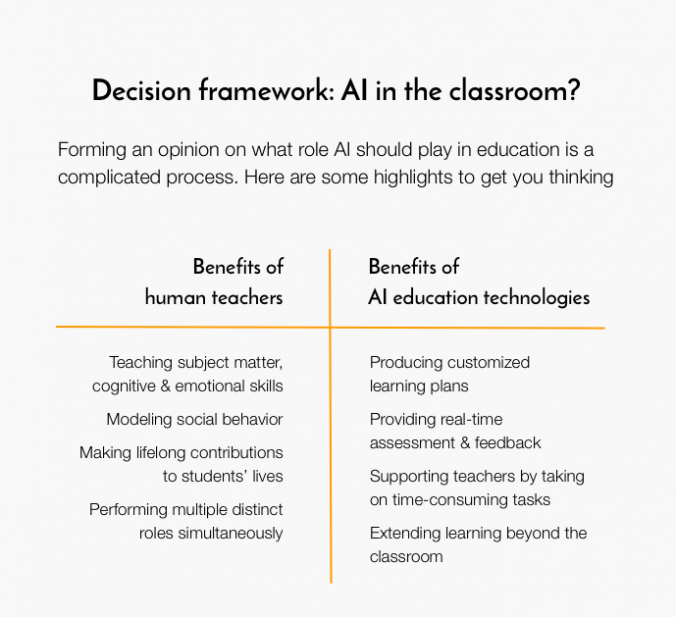
The best use of AI Ed technologies may be to supplement and extend the abilities of the teacher. By freeing teachers from rote time-consuming activities like grading and recordkeeping, teachers have more time to focus their energies on the individual needs of their students, bringing creativity and empathy into the classroom.

Yet it must be acknowledged that human history demonstrates again and again our propensity to adopt any and all tools we create for ourselves. And if AI Ed systems can be conceived as all-out teacher replacements, eventually such a system will come into existence. At that point, the belief in the indispensable role of the human teacher will go head-to-head with passionless cost-benefit analyses by perennially budget-constrained school boards.

So then, the very complex question facing educators, students, and parents is this: How sophisticated does AI need to become before we give it the lead role in the classroom of tomorrow?
Office standup

Standing up for standing meetings

A new Entefyer recently raised a good question—why is everyone standing around during meetings?

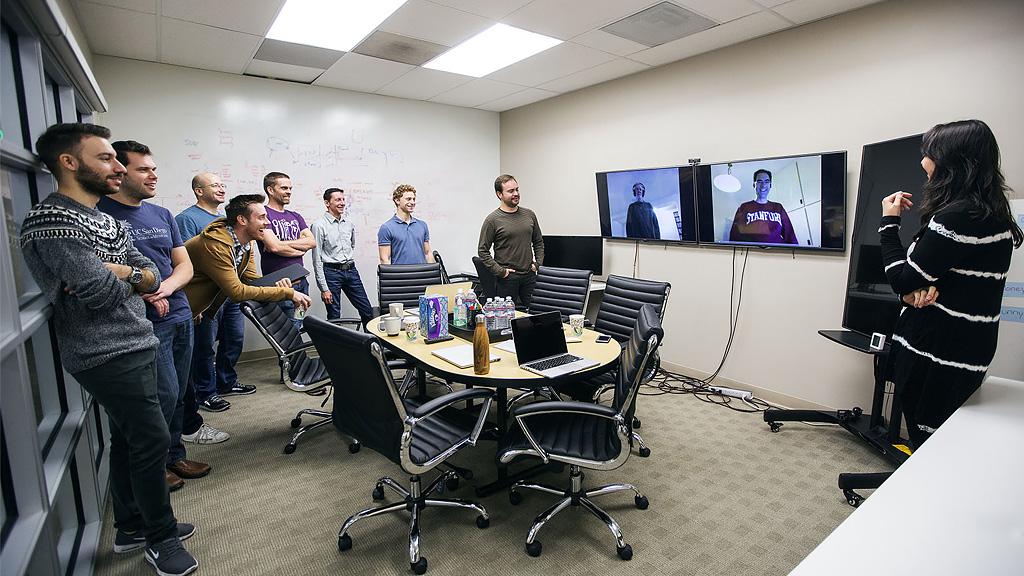
Our team is working on a long list of projects at any given time. Meetings are necessary for status updates, setting goals and timelines, and connecting with other team members overseas. We’re a collaborative and health-conscious bunch, so when we got wind of the potential risks of prolonged sitting we wanted to encourage Entefyers to get out of their chairs.

And that’s when our experiment with standing meetings began. We had two goals in mind: improving health and fostering collaboration.

It’s been said that “sitting is the new smoking” because excessive sitting comes with health risks. Prolonged sitting can negatively impact metabolism, affect the onset of type 2 Diabetes, and is correlated to various cancers. Which: yikes! We want none of that.

Another guide suggests that standing “burns up to 50% more calories” than sitting, and “avoids the decrease of enzyme activity that can contribute to cardiovascular disease.” Burning a few extra calories while at the office is efficient. And here at Entefy, we love efficiency.

Standing meetings have also been proven to enhance creativity, productivity, and teamwork. In one interesting finding, standing meetings “reduced territoriality, led to more information sharing and to higher-quality [work].” None other than Sir Richard Branson wrote a short article for Virgin’s blog in which he advocates for standing meetings, arguing that they open the door to direct and real communication versus getting points across through lengthy presentations on a big screen.

Back at Entefy, our own experience with standing meetings supports these productivity findings. Meetings are often 33% to 50% shorter. More ideas are exchanged around the room and Entefyers show up to meetings focused and prepared to make succinct, point-driven contributions.

What we didn’t expect is that standing meetings also translate into more information sharing and bonding across teams—from Product to Talent, for instance.

The spirit of mobility has led to other positive changes around the office. We offer standing desks to any Entefyer who requests one. One of our team members was inspired to buy a treadmill desk for his home office. During afternoon coffee runs, team members utilize the time to walk-and-talk about projects.

Around here, we’re taking a stand for the productivity and healthy living that comes from standing.

Dog

Man’s best friend’s surprisingly large vocabulary

In a previous enFact, we highlighted how 50% of what we say to each other in English is limited to only 135 words. That’s a small number of words to capture a universe of things to talk about. Which got us thinking about what happens when humans attempt to communicate with other species.

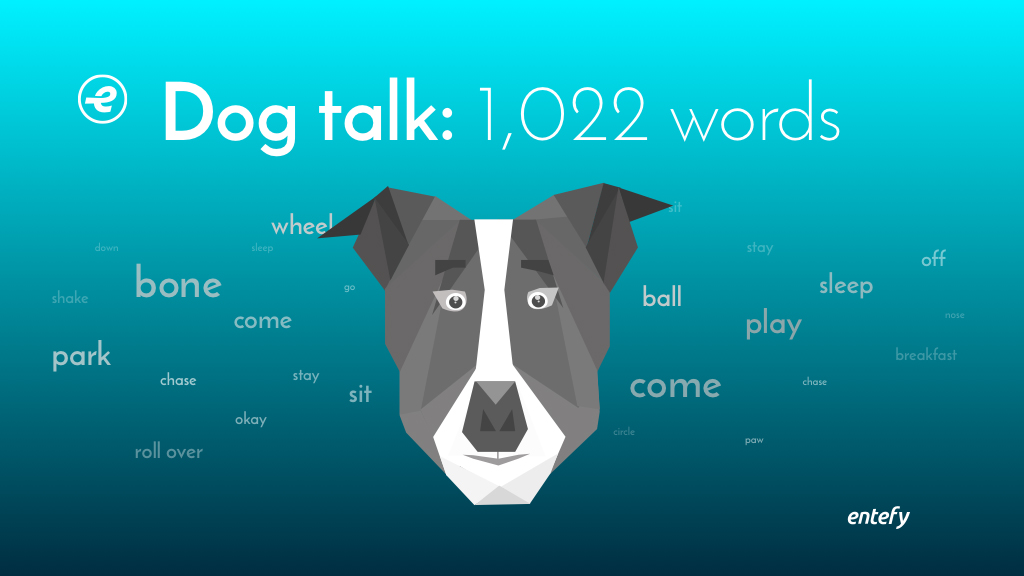
Over the years, we’ve grown accustomed to communicating with a few other species, including one in particular: man’s best friend. The average dog can understand about 165 words. The known maximum is 1,022 words recognized by Chaser, a Border Collie. About 42% of U.S. homes have a dog, most of whom choose the worst possible moment to forget the words they know.

Watch the video version of this enFact here.

Binary code

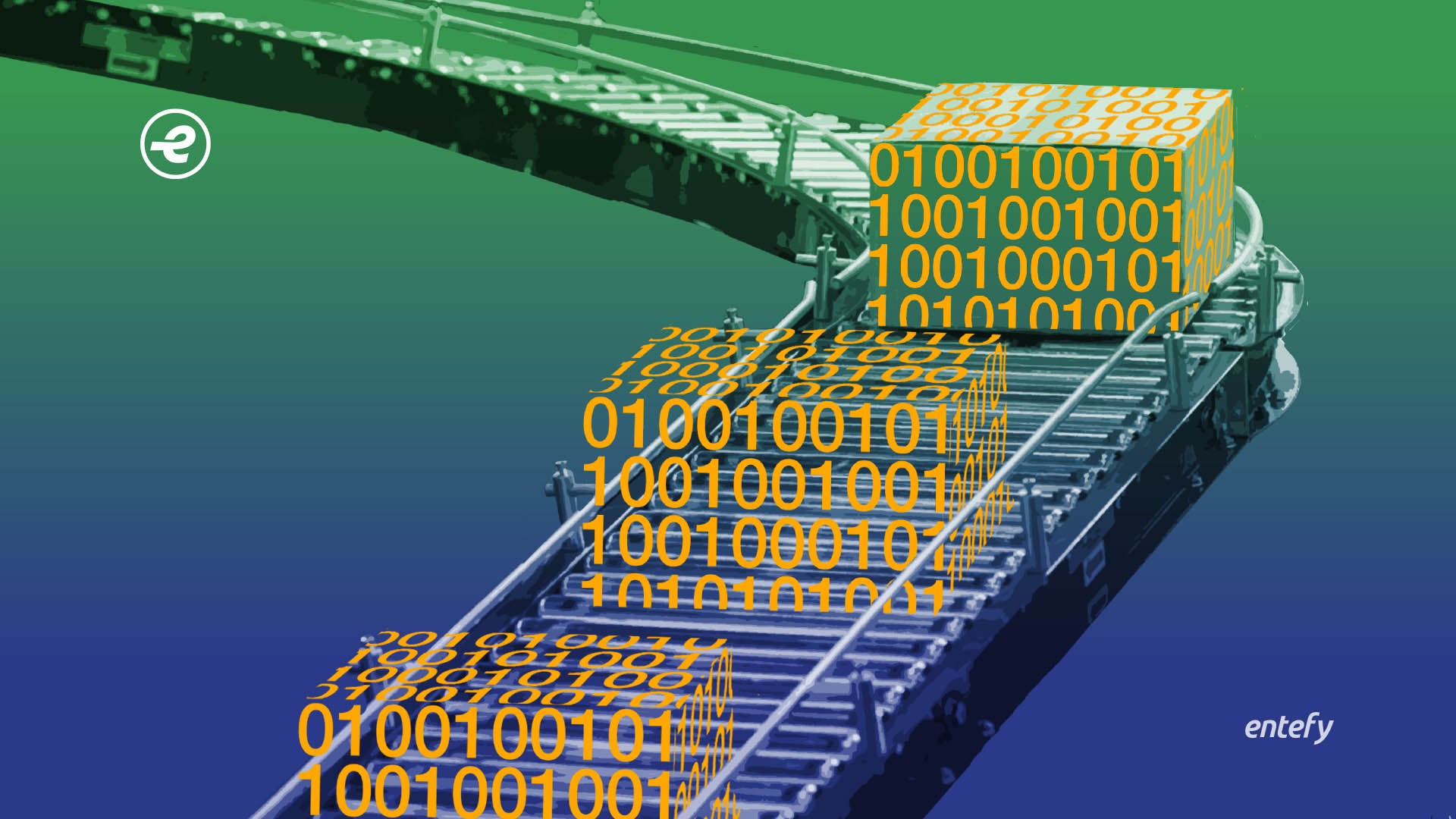
Collected, bundled, and sold: your sensitive private data

As a follow-up to our “Data trackers are watching your every (digital) move” article, we’re sharing 7 more instances where your sensitive private information and personally identifiable data are trackable, in many cases without your opt-in approval.

Why does it matter? Because once data is created, it lives on indefinitely and becomes a commodity that companies like data brokers convert into revenue streams. “These companies share just about everything. ‘It’s what Web pages we visit, where we’re shopping, who we’re interfacing with on social media — all of that information is available to be collected by entities that park themselves on the various websites,’” said one former Federal Trade Commission commissioner.

Another area where personal data is being monetized is referred to as “Telecom Data as a Service” or TDaaS, in which mobile service providers capture, bundle, and sell aggregate customer data to advertisers and other third-parties. This data “is seen as potentially more valuable than some other consumer data because it directly connects mobile phone interactions to individuals through actual billing information.”

Before you re-assure yourself that you’re protected by the anonymous nature of aggregate customer data, consider that two different research studies have demonstrated that individuals can be identified in large, anonymous data sets using as few as 4 data points—like, say, a public tweet that mentions a place you were visiting.

Given the threshold is so low for turning a few data points into a personally identifiable profile, the best defense may be simply limiting the data collection in the first place. With that in mind, here are some data tracking technologies to watch for:

1. Your ambient conversations aren’t believed to be recorded, but Alexa and Google Home listen to everything you say in order to activate each system. You can restore privacy by using the physical mute button on each device.

2. Uber is collecting location information for up to 5 minutes after rides end. Unless you opt out, Uber collects a rider’s location even after closing the app.

3. Some types of wearable devices record the movements of users’ hands. These devices can be hacked in real time to reveal ATM PIN numbers and other key-based security codes.

4. The conversations kids have with these cute toys through an app are being sent to a third-party server in the U.S. without asking for permission first.

5. Android apps that are downloaded outside of Google Play are not always secure. Hackers create lookalike apps that, when downloaded, can take over a device, spread ransomware, and steal data.

6. Headphones can be hacked into and used as listening devices.

7. Even when Shazam is turned off on a Mac, the microphone remains active. The stated purpose is to create a better user experience, but it leaves the app vulnerable to hacking.

NO

Say “yes” to “no”

Getting to Yes is a very old idea. We’ve all said something like, “Let’s find some common ground where we can both be successful.” This social inclination to collaborate is a shared strength, but it comes with all sorts of potential challenges. Just as the Internet has flooded us with information, constant connectedness has opened us up to over-scheduling and over-commitment. We want to participate—but when and how should we be involved?

Think about daily life 25 years ago: Wake up, make coffee, drive to work, talk to your boss, call a customer, grab lunch, meet a colleague, make some notes, file some papers, drive home, dinner with family, watch a sitcom, go to bed. In the morning, rinse and repeat.

Think about daily life today: Wake up, make coffee, check email, delete some emails, respond to other emails, check texts, scan your social feeds, like a post or two… or 30, read your news feeds, open an app, close an app, share a selfie of you and your cat, message your family abroad… And that’s just the first hour of the day in this hyper-connected world.

Demands on our time are, for practical purposes, infinite. Yet time is limited. No is your front-line weapon in the constant struggle against overload. No lets you set boundaries and define your limits. No is how you can maintain focus in the moment, and conserve the time you need to keep moving forward towards your personal goals.

What happens when you’re told No? The word carries power in our lives beginning in early childhood, where our specific experiences being prohibited from doing something influences the formation of our neurobiology and the long-term development of emotion regulation and social skills. In fact, No produces specific and measurable brain responses, independent of the context. In past studies it was shown that “no was negatively valenced, produced slower response times, and evoked a negative signal in the right lateral orbitofrontal cortex (OFC).”

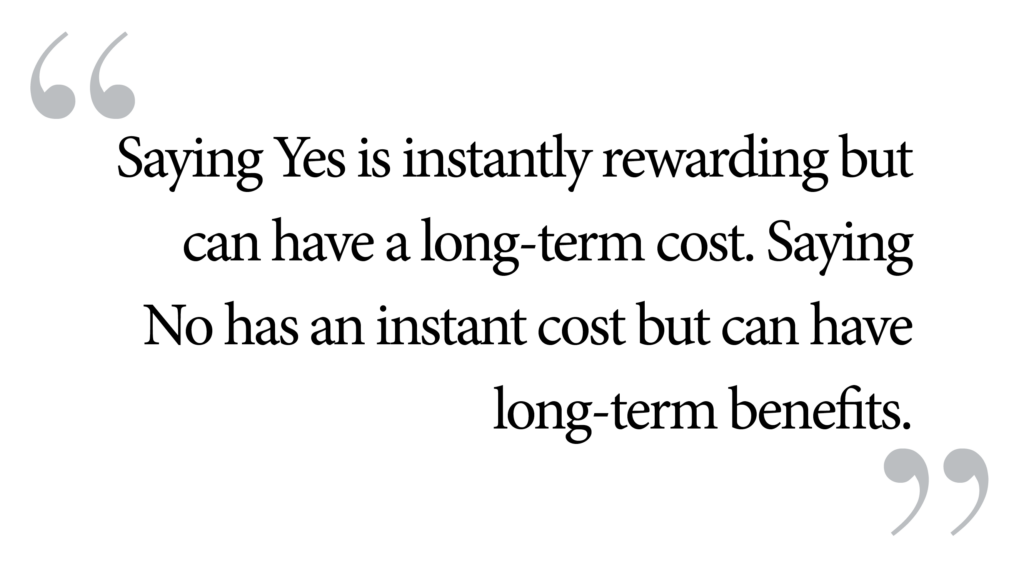
This helps explain why we don’t say No more often. There are risks and costs associated with saying No. Partnerships threatened, colleagues frustrated, plans undermined, bosses puzzled, customers disappointed. Saying Yes is instantly rewarding but can have a long-term cost. Saying No has an instant cost but can have long-term benefits.

The discipline of constructively saying No is rarely taught in people’s lives and careers. Sometimes you pick it up from mentors, sometimes you can observe and mimic the behavior in individuals you admire, occasionally you come across a book or article. Saying No is an important skill, and it is worth calling attention to it much more explicitly than we usually do.

We’ve all experienced times when saying No was difficult. No closes the door in the requester’s face, and they’re unlikely to appreciate that. Steeling yourself for a No can take practice and preparation. There’s the fear of conflict. Not wanting to disappoint. Then there’s the desire to please. Because rarely does No lead to smiles and thanks. Research shows that processing No responses requires more effort than Yes responses, reflecting a fundamental human bias towards cooperation.

Integrity requires us to say No when a Yes would lead to over-complication, overload, and the potential to under-deliver on commitments. So the next time you’re invited to two events on the same day and think “maybe I can make that work,” remember that the power of No is on your side.

Infographic

Oops, I forgot

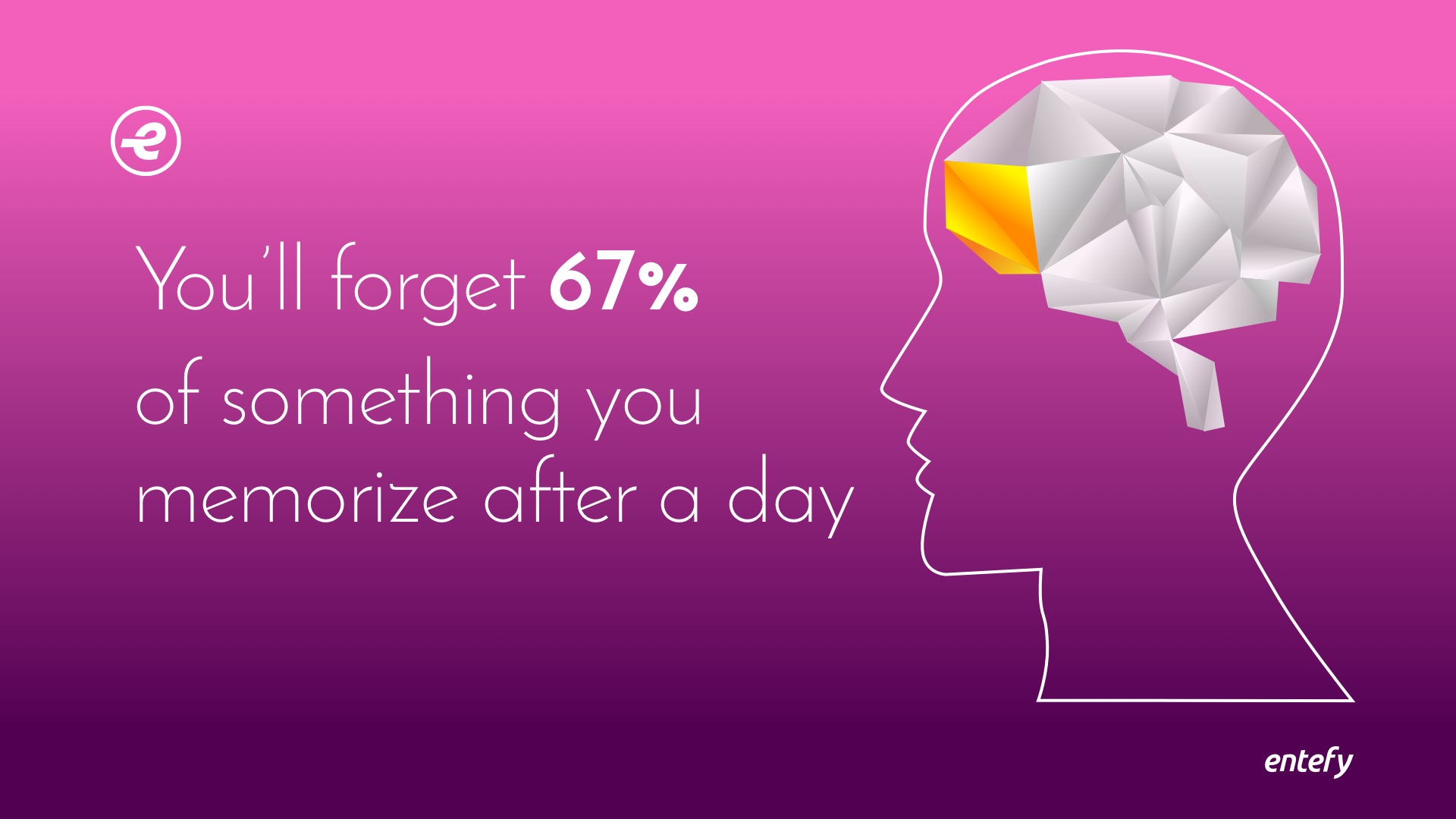
Research confirms the findings of the 19th century psychologist Hermann Ebbinghaus, which describe a predictable rate of forgetting after learning something new. The so-called Ebbinghaus curve maps a person’s decline of memory retention after learning new information.

While the absolute percentages can vary by individual and the circumstances of how something was learned, the forgetting curve follows the form: You can remember about 60% of memorized items the same day, 33% after a day, 25% after a week, and 20% after a month.

Watch the video version of this enFact here.

Check out our enFact describing how the brain uses “chunking” to make forming memories more effective.

Flyes

Nature’s Morse code: fireflies

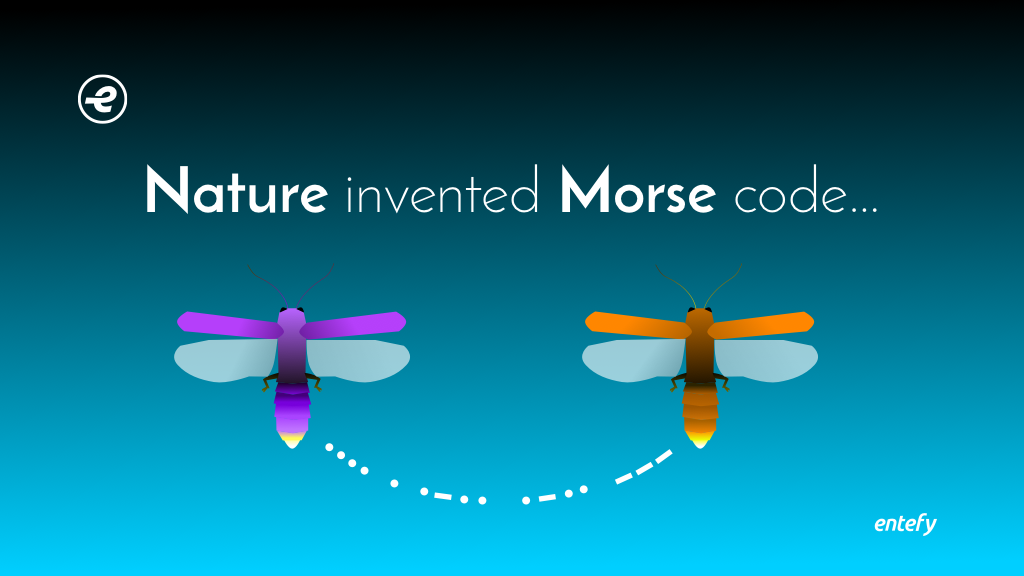
Morse code enabled humans to communicate over great distances. All those dots and dashes told stories across miles, mountains, deserts, and oceans.

But nature had already invented a Morse-like communication standard, the flash of a firefly. Fireflies are full of surprises: they are actually beetles and there are 2,000 distinct species of them. Each species has its own distinct flash fingerprint. The combinations of number of flashes, the timing and sequencing, and the pattern of flight differ uniquely among the 2,000 varieties. A trained entomologist can count the number of species in a field at nightfall, simply from the pattern of flashes.

Infographic

AI system out-predicts pollsters in U.S. presidential elections

Would you trust AI to predict the next election? Perhaps you should. The AI system that accurately predicted Trump’s win well before the U.S. 2016 general election has correctly picked the winners of the last four presidential races. Developed by Sanjiv Rai, MoglA evaluates 20 million data points from popular social media platforms to generate its predictions.

But AI systems aren’t only effective at picking presidents. They also pick the right Oscar winnersturn $20 into $10,842 at the Kentucky Derbybeat traffic tickets, and augment human capabilities like never before.

Entefy’s smart communication platform uses advanced AI to help you do more in less time and make better decisions more often.

44

Data in the digital universe doubles in size every 2 years

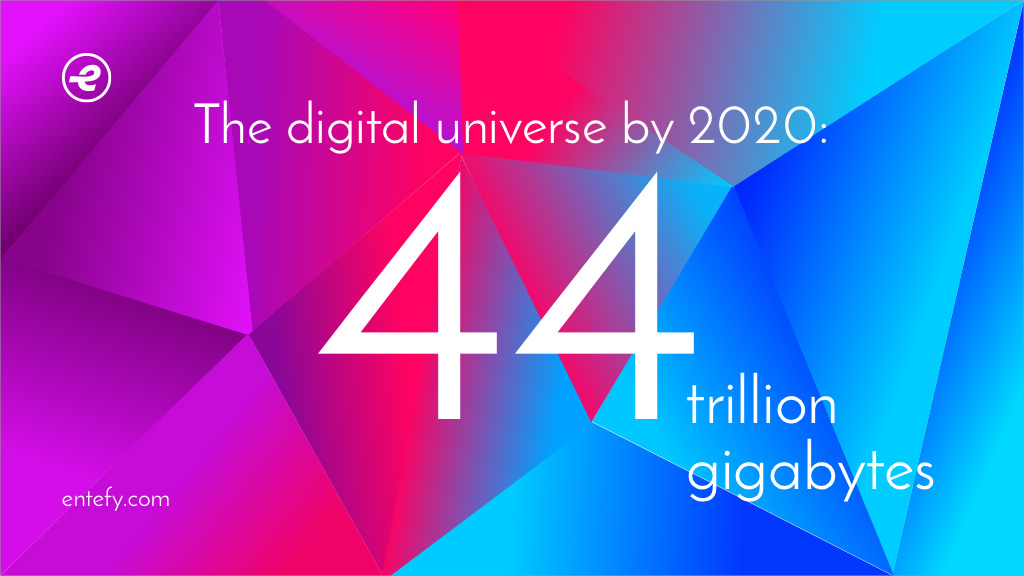
From 2013 to 2020, the digital universe will grow by a factor of 10, from 4.4 trillion gigabytes to 44 trillion. Information available online more than doubles every two years. If you stored all of that information on ordinary data DVD’s and then stacked up all those DVD’s, the stack would reach to the moon and back nearly fifteen times. Or wrap around the earth 280 times.

Finding what you need right when you need it is increasingly like finding a needle in a haystack. Entefy’s AI magic gives you tools to shrink the digital universe to just the information that you find valuable, making accessing your data easy and instantaneous.

Watch the video version of this enFact here.

Infographic

The speed of “thinking on your feet”

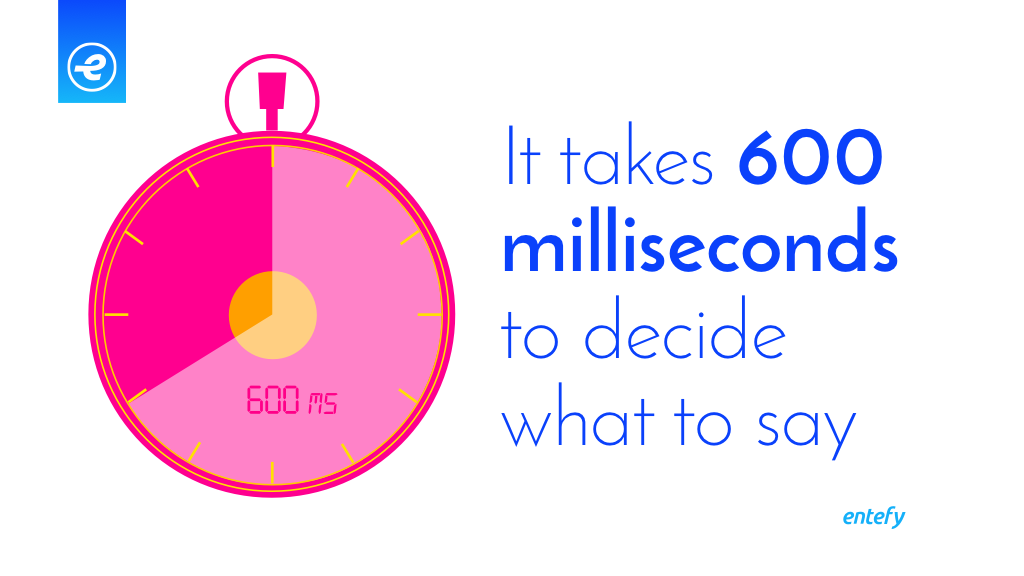
It takes the average person at least 600 milliseconds to call a word from memory and prepare to say it. If you came across a snake, however, and needed to shout a warning, 600 milliseconds won’t do you much good because it only takes a snake 100 milliseconds to strike. Human evolution has made special adaptations to keep us safe from snakes. On average we’ll accurately spot a snake 90% of the time even when there is only 40% visibility.

Now, how fast is Entefy’s communication platform? Faster than the human’s 600 milliseconds and faster even than the snake’s 100 millisecond strike. Faster than the blink of an eye. Our speed is your added productivity and effectiveness.