
NO

Say “yes” to “no”

Getting to Yes is a very old idea. We’ve all said something like, “Let’s find some common ground where we can both be successful.” This social inclination to collaborate is a shared strength, but it comes with all sorts of potential challenges. Just as the Internet has flooded us with information, constant connectedness has opened us up to over-scheduling and over-commitment. We want to participate—but when and how should we be involved?

Think about daily life 25 years ago: Wake up, make coffee, drive to work, talk to your boss, call a customer, grab lunch, meet a colleague, make some notes, file some papers, drive home, dinner with family, watch a sitcom, go to bed. In the morning, rinse and repeat.

Think about daily life today: Wake up, make coffee, check email, delete some emails, respond to other emails, check texts, scan your social feeds, like a post or two… or 30, read your news feeds, open an app, close an app, share a selfie of you and your cat, message your family abroad… And that’s just the first hour of the day in this hyper-connected world.

Demands on our time are, for practical purposes, infinite. Yet time is limited. No is your front-line weapon in the constant struggle against overload. No lets you set boundaries and define your limits. No is how you can maintain focus in the moment, and conserve the time you need to keep moving forward towards your personal goals.

What happens when you’re told No? The word carries power in our lives beginning in early childhood, where our specific experiences being prohibited from doing something influences the formation of our neurobiology and the long-term development of emotion regulation and social skills. In fact, No produces specific and measurable brain responses, independent of the context. In past studies it was shown that “no was negatively valenced, produced slower response times, and evoked a negative signal in the right lateral orbitofrontal cortex (OFC).”

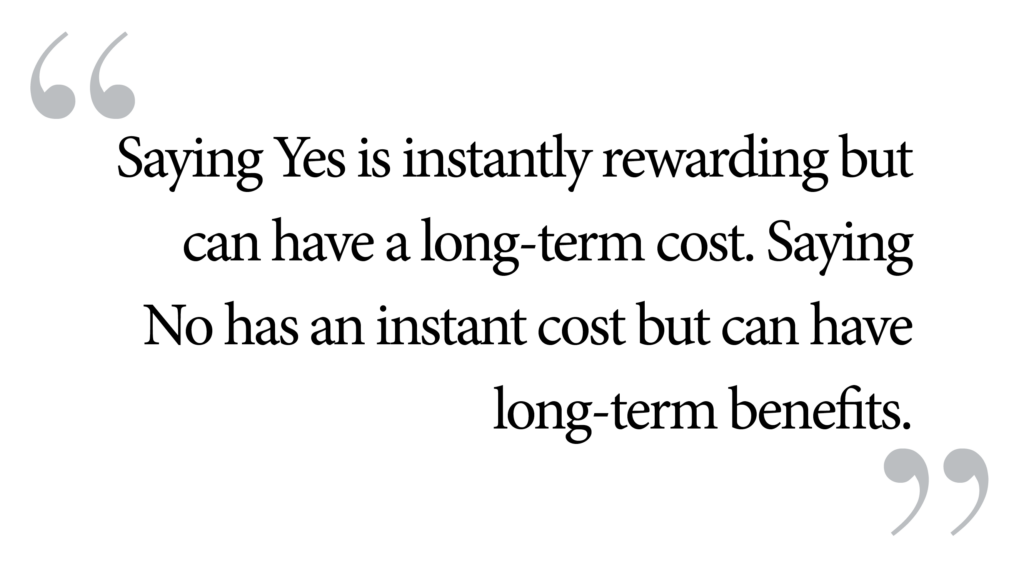
This helps explain why we don’t say No more often. There are risks and costs associated with saying No. Partnerships threatened, colleagues frustrated, plans undermined, bosses puzzled, customers disappointed. Saying Yes is instantly rewarding but can have a long-term cost. Saying No has an instant cost but can have long-term benefits.
The discipline of constructively saying No is rarely taught in people’s lives and careers. Sometimes you pick it up from mentors, sometimes you can observe and mimic the behavior in individuals you admire, occasionally you come across a book or article. Saying No is an important skill, and it is worth calling attention to it much more explicitly than we usually do.

We’ve all experienced times when saying No was difficult. No closes the door in the requester’s face, and they’re unlikely to appreciate that. Steeling yourself for a No can take practice and preparation. There’s the fear of conflict. Not wanting to disappoint. Then there’s the desire to please. Because rarely does No lead to smiles and thanks. Research shows that processing No responses requires more effort than Yes responses, reflecting a fundamental human bias towards cooperation.

Integrity requires us to say No when a Yes would lead to over-complication, overload, and the potential to under-deliver on commitments. So the next time you’re invited to two events on the same day and think “maybe I can make that work,” remember that the power of No is on your side.
Infographic

Oops, I forgot

Research confirms the findings of the 19th century psychologist Hermann Ebbinghaus, which describe a predictable rate of forgetting after learning something new. The so-called Ebbinghaus curve maps a person’s decline of memory retention after learning new information.

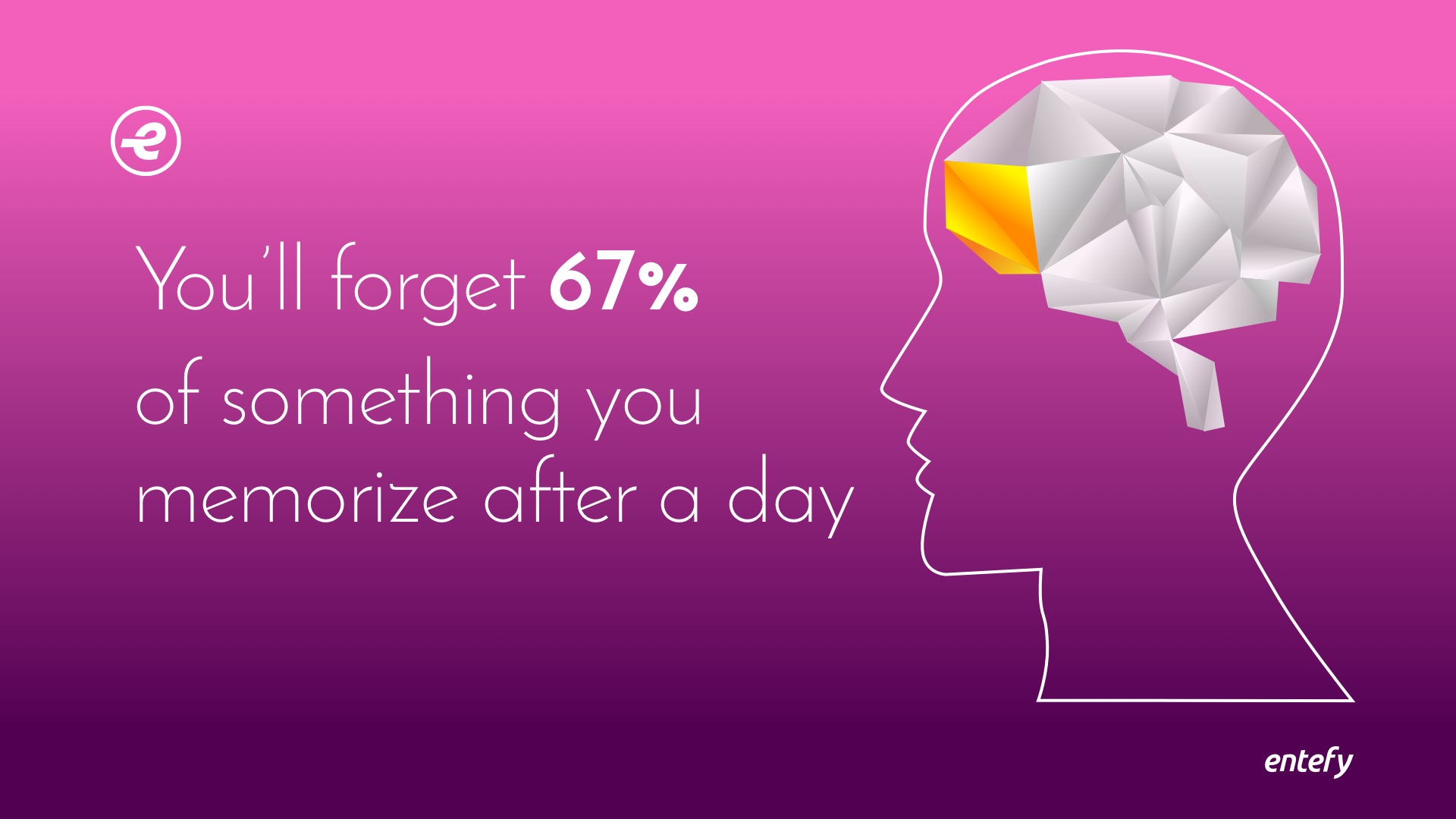
While the absolute percentages can vary by individual and the circumstances of how something was learned, the forgetting curve follows the form: You can remember about 60% of memorized items the same day, 33% after a day, 25% after a week, and 20% after a month.

Watch the video version of this enFact here.

Check out our enFact describing how the brain uses “chunking” to make forming memories more effective.

Flyes

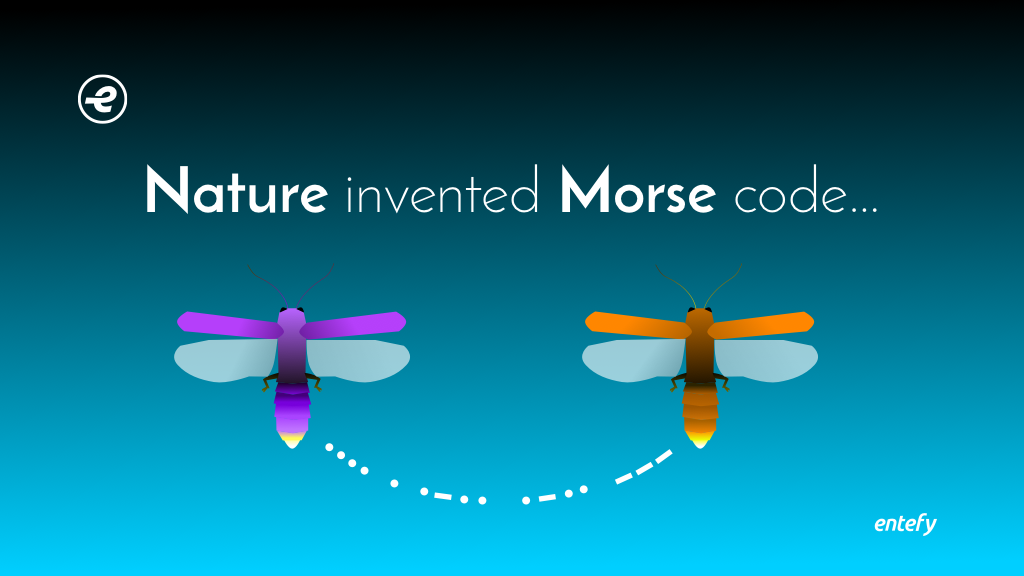
Nature’s Morse code: fireflies

Morse code enabled humans to communicate over great distances. All those dots and dashes told stories across miles, mountains, deserts, and oceans.

But nature had already invented a Morse-like communication standard, the flash of a firefly. Fireflies are full of surprises: they are actually beetles and there are 2,000 distinct species of them. Each species has its own distinct flash fingerprint. The combinations of number of flashes, the timing and sequencing, and the pattern of flight differ uniquely among the 2,000 varieties. A trained entomologist can count the number of species in a field at nightfall, simply from the pattern of flashes.

Infographic

AI system out-predicts pollsters in U.S. presidential elections

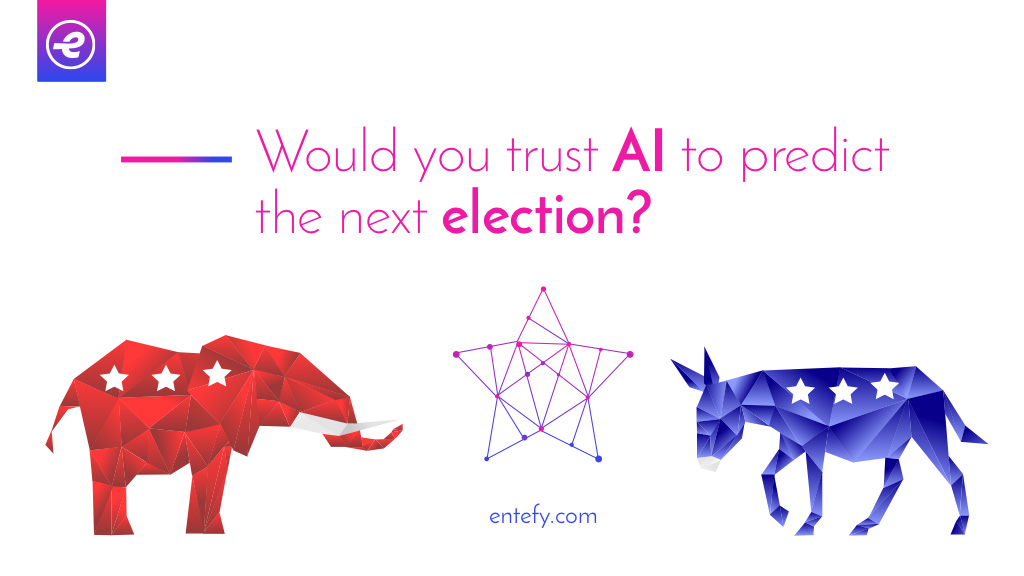
Would you trust AI to predict the next election? Perhaps you should. The AI system that accurately predicted Trump’s win well before the U.S. 2016 general election has correctly picked the winners of the last four presidential races. Developed by Sanjiv Rai, MoglA evaluates 20 million data points from popular social media platforms to generate its predictions.

But AI systems aren’t only effective at picking presidents. They also pick the right Oscar winnersturn $20 into $10,842 at the Kentucky Derbybeat traffic tickets, and augment human capabilities like never before.

Entefy’s smart communication platform uses advanced AI to help you do more in less time and make better decisions more often.

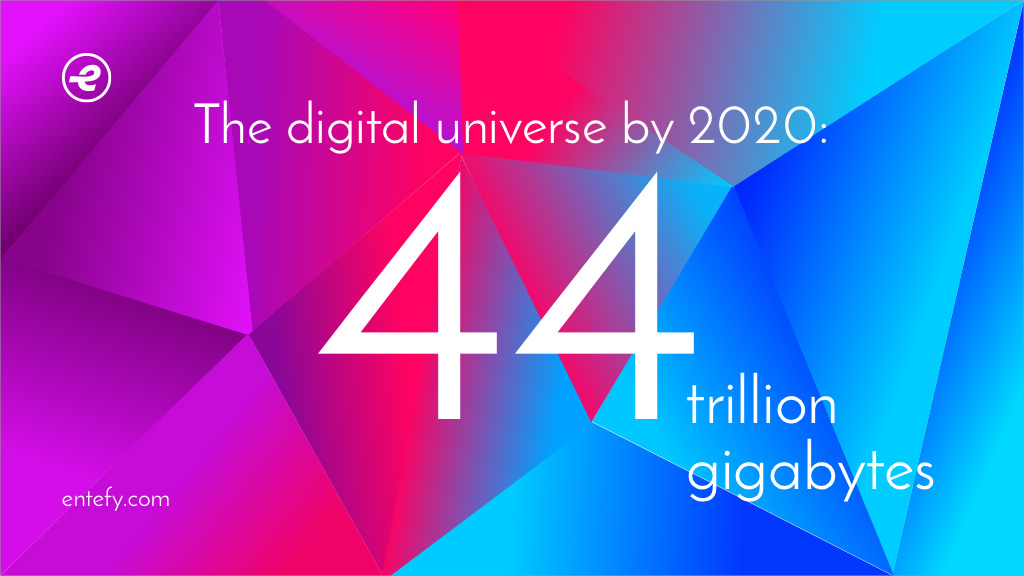
44

Data in the digital universe doubles in size every 2 years

From 2013 to 2020, the digital universe will grow by a factor of 10, from 4.4 trillion gigabytes to 44 trillion. Information available online more than doubles every two years. If you stored all of that information on ordinary data DVD’s and then stacked up all those DVD’s, the stack would reach to the moon and back nearly fifteen times. Or wrap around the earth 280 times.

Finding what you need right when you need it is increasingly like finding a needle in a haystack. Entefy’s AI magic gives you tools to shrink the digital universe to just the information that you find valuable, making accessing your data easy and instantaneous.

Watch the video version of this enFact here.

Infographic

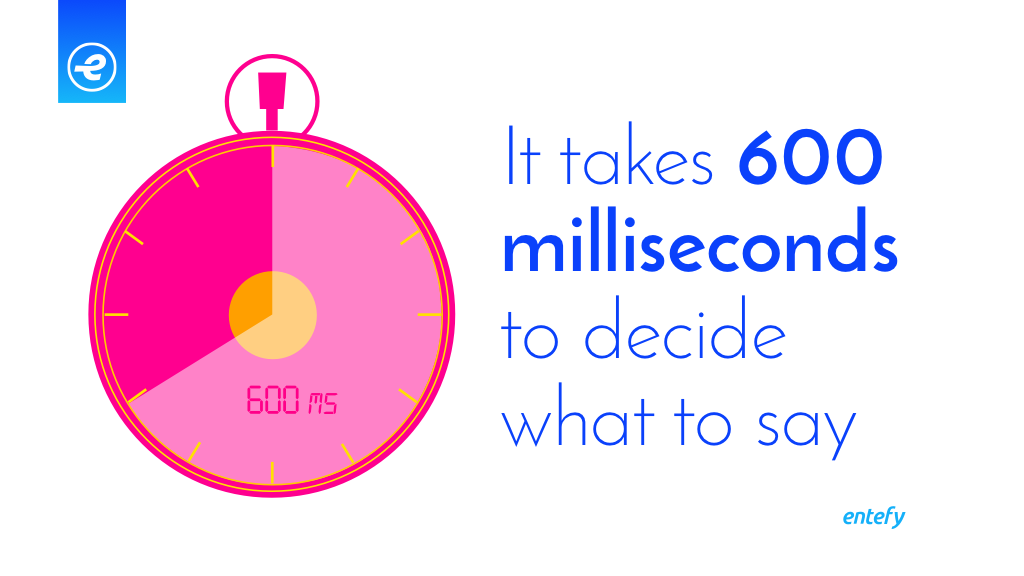
The speed of “thinking on your feet”

It takes the average person at least 600 milliseconds to call a word from memory and prepare to say it. If you came across a snake, however, and needed to shout a warning, 600 milliseconds won’t do you much good because it only takes a snake 100 milliseconds to strike. Human evolution has made special adaptations to keep us safe from snakes. On average we’ll accurately spot a snake 90% of the time even when there is only 40% visibility.

Now, how fast is Entefy’s communication platform? Faster than the human’s 600 milliseconds and faster even than the snake’s 100 millisecond strike. Faster than the blink of an eye. Our speed is your added productivity and effectiveness.

Entefyers Wanted

Entefyers wanted

ENTEFYERS WANTED for a journey through uncharted terrain to reach the top of technology’s Mount Everest, the AI interaction platform for everyone and everything. Only the bold need apply.

It takes tenacity, grit, and unswerving focus to climb towards the world’s first universal communicator. The trek isn’t easy. What keeps Entefyers going is the possibility of accomplishing something so audacious that only few have the stamina to even try.

Which means we plan every step forward carefully, knowing we have just one shot to leave our mark. It means relentlessly creating, iterating, revising, repairing, redeploying. Again and again until it’s perfect. Whatever problem we’re solving we solve before we move on to the next. Because when we do get it right, the way the world communicates and interacts digitally will change forever.

This trek is not for everyone. We’re dedicating blood, sweat, and tears to build core technology that gives people precious hours back in their days. As people, we’ve been handed a world defined by digital chaos and complexity. Trillions of messages. Billions of smart machines. Millions of apps. Zillions of pings and dings. Noise so loud it can at times drown out what’s important in our lives. For us Entefyers, this trek is not a job but a mission. A mission to redefine digital interaction.

Entefyers are becoming better and stronger every day because we’re pushing ourselves to do the best work we’ve done in our careers. To us, craftsmanship is not a luxury, it’s a necessity. We strive for excellence, courageous innovation, and magic. That’s right: magic.

Got your climbing gear ready? Because we’re hiring.

Infographic

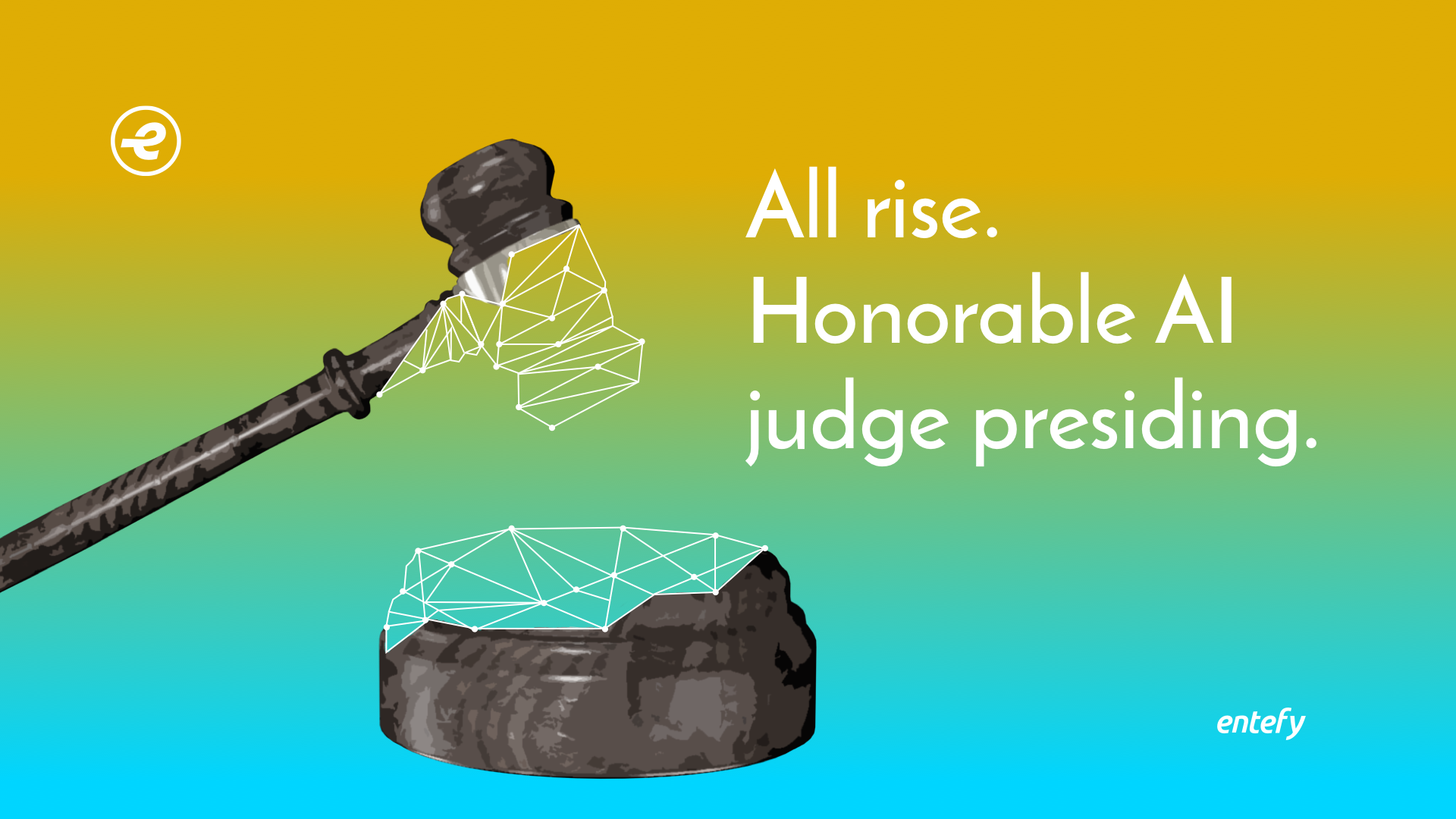
Trial by AI: artificial intelligence now in session

The Sixth Amendment to the U.S. Constitution guarantees “the right to a speedy and public trial, by an impartial jury.” It cannot, however, guarantee a perfectly fair trial, or an effective jury, or an infallible judge. Humans make mistakes, and the courtroom is no exception: juries make the wrong decision approximately 1 in 8 times. Those mistakes have a tremendous impact on defendants’ lives, made explicit by data that suggests 1 in every 25 people sentenced to death in the United States are innocent of the crime they were found guilty of committing.

In the abstract, a trial involves the evaluation of a set of facts, the comparison of those facts to a set of rules, and a decision on whether a violation has occurred. Which sounds like a system that an intelligent machine could manage. A properly designed artificial intelligence could in theory speed up trials and increase consistency in court decisions, which in turn could lead to increased accuracy and fairness. This is not entirely speculative. Meet ROSS: an artificially intelligent attorney hired by one of the largest law firms in the U.S. In the UK, researchers are working on an AI that can replace the need for a judge by examining evidence and deciding right and wrong to predict the outcome of trials. “The AI ‘judge’ has reached the same verdicts as judges at the European court of human rights in almost four in five cases.”

Forming an opinion on whether AI should have a role in the justice process can be complex. A defendant’s right to a trial by a jury of their peers is a cornerstone of American jurisprudence. Yet humans are fallible, and swayed by emotion. Artificial intelligence agents could conceivably provide accuracy and impartially, but the jury is still out on whether they can become capable of moral and ethical reasoning.

If you stood accused of a­­ crime, would you want an AI to be your judge, jury, or lawyer?

Check out our article on AI that has accurately predicted the past 4 presidential elections.

Infographic

Fun facts: Turkeys and Thanksgiving

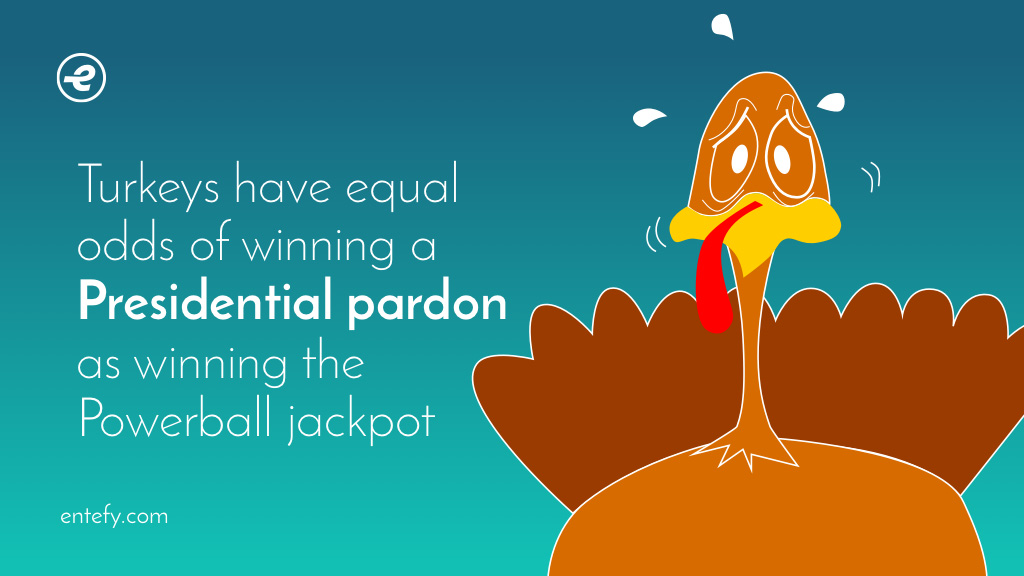
There are as many as 270 million turkeys raised in the U.S. each year. In an annual Thanksgiving tradition, one of those lucky turkeys is selected to receive a Presidential pardon and spared from becoming the centerpiece of a White House dinner. The chance of a turkey being pardoned by the President is a longshot on par with the chance of any of us winning the Powerball jackpot.

Here are few more turkey fun facts: Domesticated turkeys cannot fly, but wild turkeys can, at least for short distances. When astronauts Neil Armstrong and “Buzz” Aldrin ate their first meal on the moon, it was roasted turkey. And though often cited as fact, Benjamin Franklin did not actually propose the turkey as the national bird over the bald eagle.

Bread

On gratitude and the breaking of bread this Thanksgiving

As we prepare for the Thanksgiving holiday, we couldn’t help but to reflect on the meaning of companionship and the feeling of fellowship. The word companion found its roots in Latin: com (together) + panis (bread), breaking bread together. Which seems fitting, as the feelings you have for a dear friend—warmth, closeness, joy—are magnified by the simple act of sharing a meal around the table.

Companionship strengthens the work that we do, making one-of-a-kind technology designed around people and their connections. We’re excited about what lies ahead when more and more of the world become connected: where the face-to-face feelings of friendship can happen over any distance.

Like holiday dinner plates, our hearts are filled with gratitude for the many amazing individuals who’ve broken bread at our table. It’s you—our colleagues, investors, advisors, and friends around the world—who’ve become our extended family and inspire in us a deep sense of camaraderie and fulfillment.

We wish you a bountiful holiday season and hope these words of gratitude find you well.

The Entefyers