
Infographic

Data trackers are watching your every (digital) move

A U.S. data security company recently discovered that a manufacturer of prepaid phones had designed its firmware to automatically send contacts, messages, and call logs to a Chinese server every 72 hours. Whatever the motivation behind this security backdoor, the functionality was not disclosed to users.

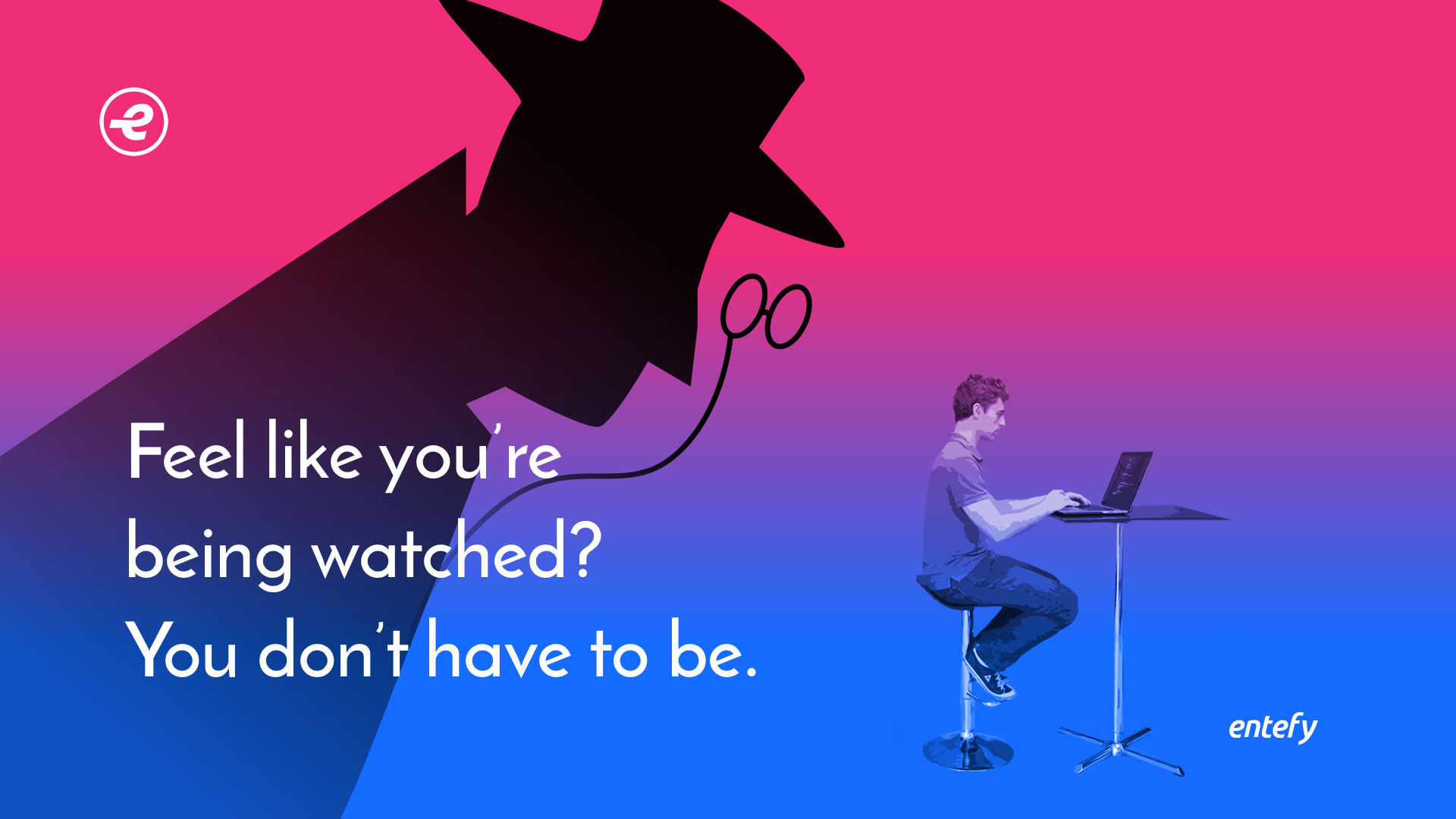
Knowingly or not, we’re handing over valuable personal data in exchange for using applications and devices—whether they’re free or not. This data collection enables services that can be useful, like location-based recommendations and personalized news content. But your personal information can also be turned into a product that is sold without you knowing anything about it, or used in identify theft and cyber stalking.

The important thing here is making informed decisions about allowing your information to be used. Which starts with knowing what data is being collected, and how it is being used. To help you better safeguard your digital life, here’s a list of data-trackers that you might not be aware of:

1. Ultrasonic cross-device tracking uses high frequency audio signals—that you can’t hear—to track your online and offline behavior.

2. Individuals can install software that informs them when you open their emails without you being notified.

3. Phone metadata created by calls and texts can reveal private information about you, like the status of your health.

4. If you download popular free apps on your Android or iPhone, it’s respectively 73% and 47% likely that your personal information has been shared with third parties.

5. Your browser settings and battery levels are “fingerprinting” that is personally identifiable and trackable across devices.

6. Frequent Locations on your iPhone records your every move unless you turn it off.

7. There’s a database of all of your search activity.

8. Hackers can follow you in real-time while you’re using a traffic app.

9. Major toy companies breached the U.S. Children’s Online Privacy Protection Act and collected data about children for third parties.

Digital trackers can be unnerving, especially when they are designed to be easy to overlook. Entefy is working towards a world where your digital communications and personal data are secure and private.

Bringing Silicon Valley high tech to the Mannequin Challenge

The Mannequin Challenge is an Internet video trend where people remain motionless, like mannequins. This trend has been wildly popular and has already found its way to the White House and Paul McCartney’s heart, to name a few.

Standing still this long is much harder than it looks, especially for a high-energy tech team like Entefy’s. Entefyers took on the Mannequin Challenge and if you ask us, it’s the best video so far. Why? Special effects and “Easter eggs” sprinkled throughout the video. See if you can find them all.

Oh, and tell us what you think we should name our robot.

Infographic

Communication speed test: speaking vs. reading

The optimal rate of speaking intelligibly has been identified as 150-160 words per minute. On the other hand, the average reader reads at about 230 words per minute. Humans have multiple senses that serve as channels of communication, each with its own strengths and weaknesses. We may be able to read faster than we speak, but speed is only one dimension of communication. Anyone who has read a Shakespeare play or the transcript of a speech knows how much more meaning can be conveyed by the spoken word over the printed word.

Modern technology has similarly given us multiple means of communication through different combinations of platforms, protocols, services, and devices. Each one has its strengths and weaknesses. Entefy’s universal communicator works seamlessly with multiple channels of communication to optimize your digital experience.

Infographic

To adopt or not to adopt? That’s the (tech) question.

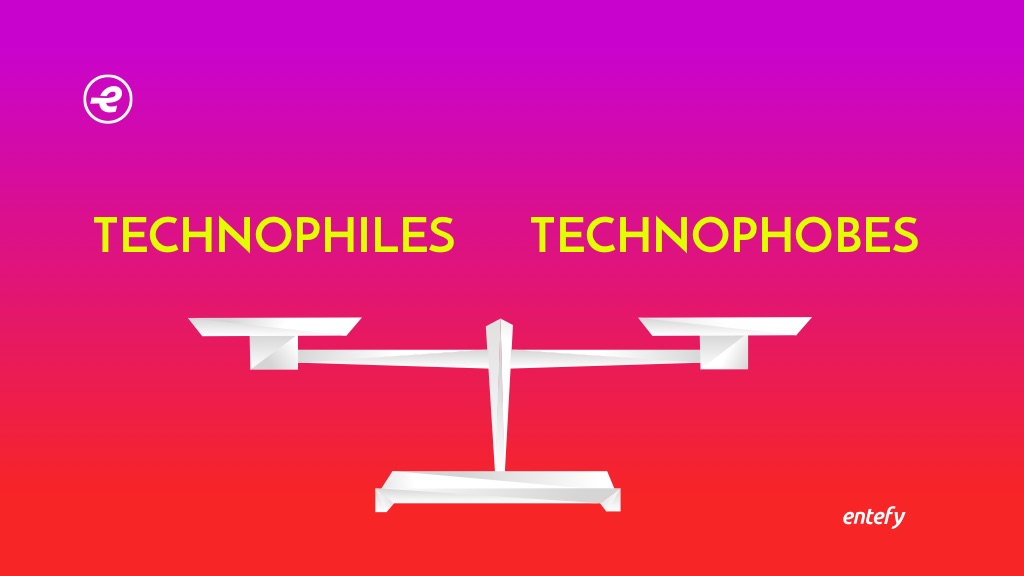
In a recent survey, Americans were asked about their ownership and use of 12 categories of devices including smartphones, tablets, laptops, e-readers, DVD players, and gaming consoles. 31% of Americans fall into a group called Super Tech Adopters “who report broad ownership of the major computing and entertainment devices on the market.” Interestingly, a nearly equal-sized group of Tech-Averse Olders (28%) prefer to use only the basics.

Whether a super adopter, tech-averse, or someone in between, we believe technology should be all about efficiency, simplicity, and convenience. Which is why Entefy’s universal communicator is designed to adapt to everyone’s digital needs and preferences.

Infographic

The Antikythera mechanical computer

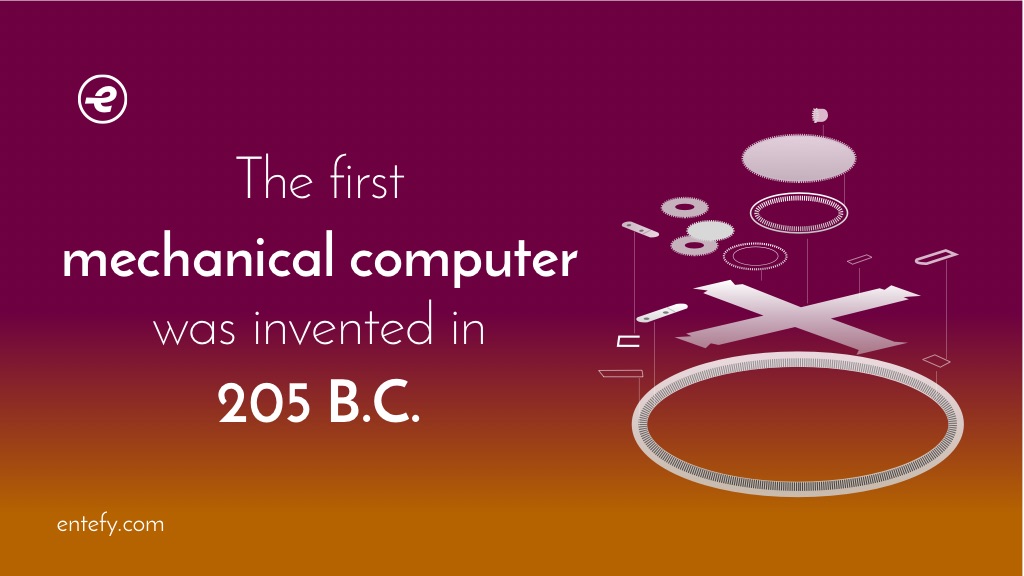
Built around 205 B.C., the Antikythera mechanism is the first known mechanical computer for forecasting astronomical positions and eclipses. It was discovered in 1901 after being lost at sea for nearly 2,000 years. The device consists of 37 bronze gears and “predates other known examples of similar technology by more than 1,000 years.”

Today, technology looks very different but our need for better computing and forecasting remains the same. Whether at home, at work, or in education, Entefy’s AI-powered communication technology helps you get more done in less time.

Infographic

English, Mandarin…Emojis?

There are 6,909 languages spoken around the globe and three quarters of children worldwide speak two or three of them. Every country has become multilingual. But these days, when you add in new digital modes of expression like emojis, chatspeak, memes, and photo messaging, communication begins to look even more fragmented.

Spoken language might not be universal, but the way we communicate digitally can be. Whether you speak one language or many, digital or otherwise, Entefy’s platform is built to streamline communication in amazing new ways.

Infographic

Digital assistants on the march to mainstream

Users of virtual digital assistants will grow from 390 million in 2015 to 1.8 billion worldwide by the end of 2021. These digital assistants are automated applications or platforms that provide assistance in response to written or spoken natural language commands. While most people think of digital assistants as a smartphone feature, they are being embedded in many other devices including computers, smart home systems, cars, and wearables.

Entefy takes virtual digital assistance to an entirely new level. Our artificial intelligence capabilities, including computer vision and natural language processing, bring a universe of services to make your life easier and more productive. Entefy’s AI-powered technology takes care of your everyday digital tasks, from the straightforward to the complex, so that you can focus on the big picture.

Infographic

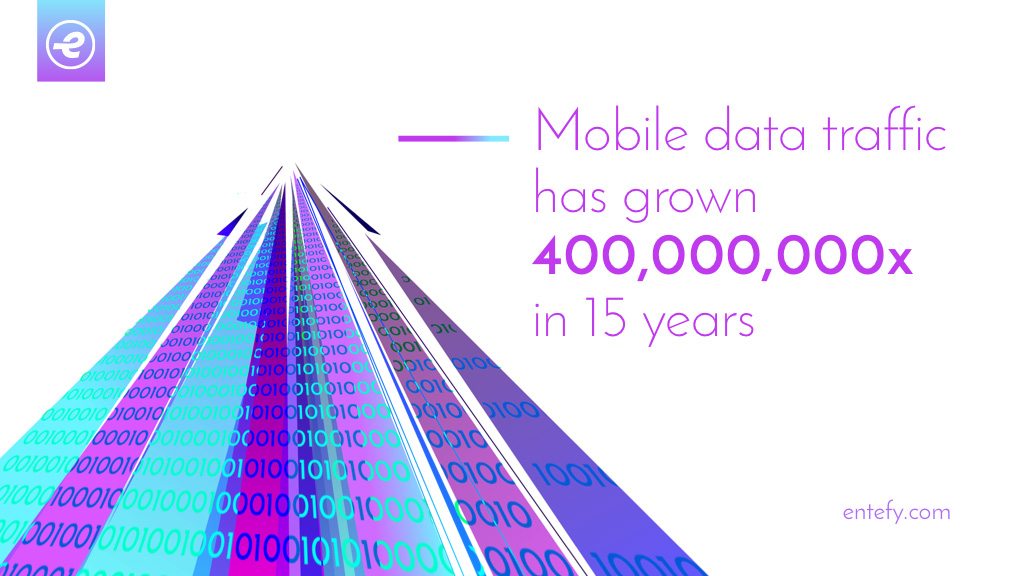
Mobile data traffic has grown 400-million-fold since 2000

Over the last decade, mobile data traffic has increased 4,000-fold and has skyrocketed 400-million-fold since 2000. And traffic continues to grow. By 2020 monthly global mobile data traffic is expected to reach 30.6 exabytes. An exabyte is one quintillion (1018) bytes, or one billion gigabytes.

There are a lot of factors at work here. More users worldwide are using their devices more often and consuming more data with each use. The growth in mobile video is a major part of this. And when you talk about big increases in data, you’re talking about big increases in complexity. Entefy’s AI-enabled technologies help you master your slice of big data.

Infographic

The surprising fertility rate of mobile devices

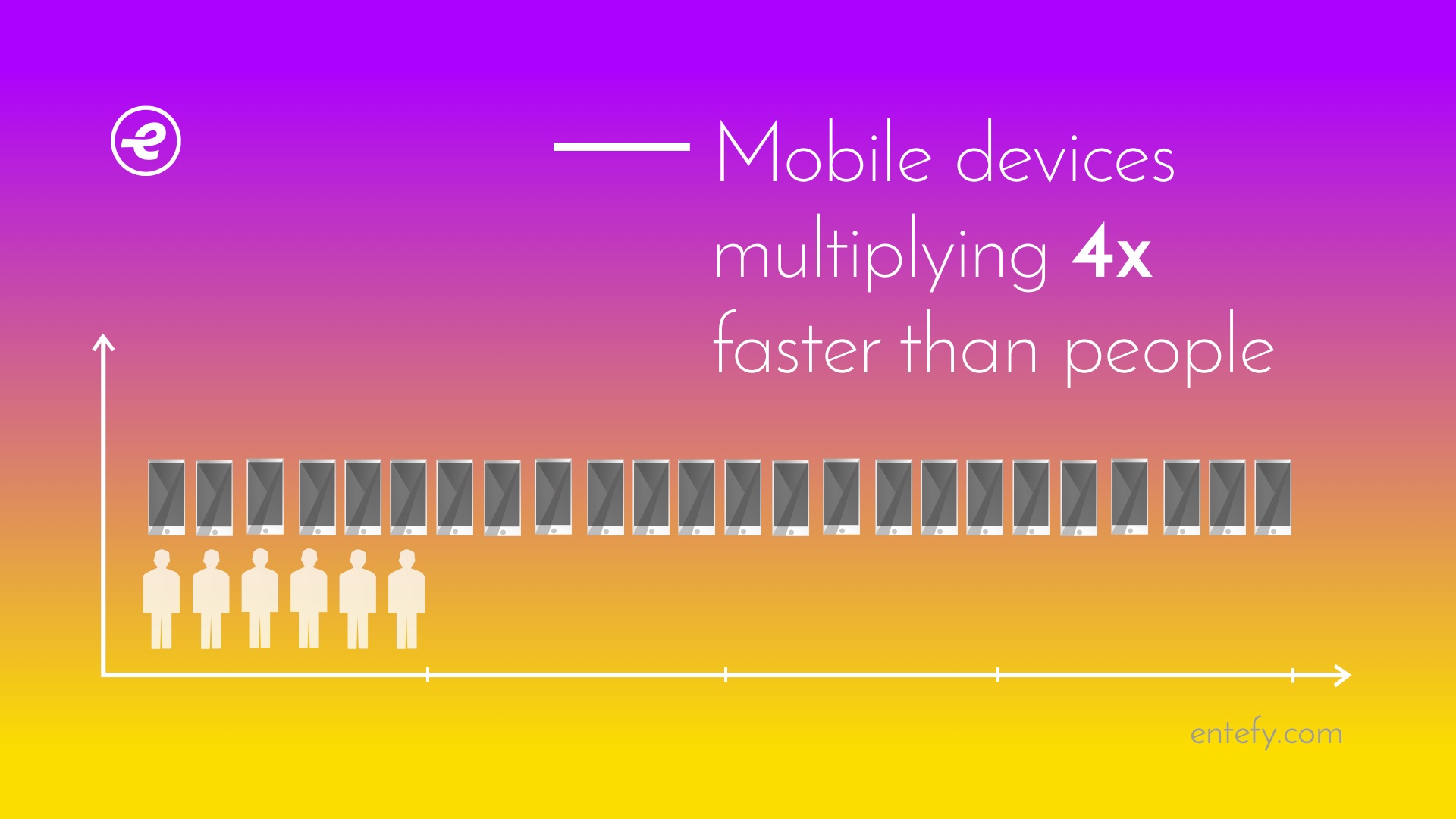
There are now more mobile devices than people on the planet. That’s a lot of smartphones, cell phones, tablets and other connected devices. Even more interesting is that new mobile devices are appearing at about 4x the global birth rate. But to be fair, it doesn’t take 9 months to deliver a smartphone.

Mobile devices are digital windows to the world, but their utility comes at a price. With more devices come more apps and services, and with more apps and services come more complexity.

And as the trend continues, we’ll need robust technology like Entefy to master this complexity by streamlining your hyper-connected digital world.

Watch the video version of this enFact here.

Entefyers

Fostering company culture one hug at a time

Innovation at technology companies doesn’t need to be limited to the technology itself. My experience interviewing with Entefy reveals how the company is redefining the talent paradigm one hire at a time, carefully crafting company culture along the way.

Before Entefy, I had been interviewing with other technology companies from startups to established industry leaders. Those companies shared the same approach to hiring: a series of increasingly technical interviews offered to a decreasingly smaller pool of candidates. There was little difference from company to company in the content of the interviews and I reached the point where I could activate mental autopilot giving the same well-rehearsed responses.

Entefy’s approach to hiring is different

Then I began interviewing with Entefy. From the first call, I was answering informed, technical questions about my field and describing specific examples of troubleshooting and problem-solving throughout my career.

The first three interviews with the company came in close succession, a contrast to the sometimes weeks between interviews at other companies. This signaled that they were taking me and the process seriously. Each interviewer was clearly familiar with my CV, so the hour-long meetings called on me to provide thoughtful, substantive answers to thoughtful, substantive questions. With sufficient time at the end for friendly, natural conversation (as I learned later, this, too, was by design).

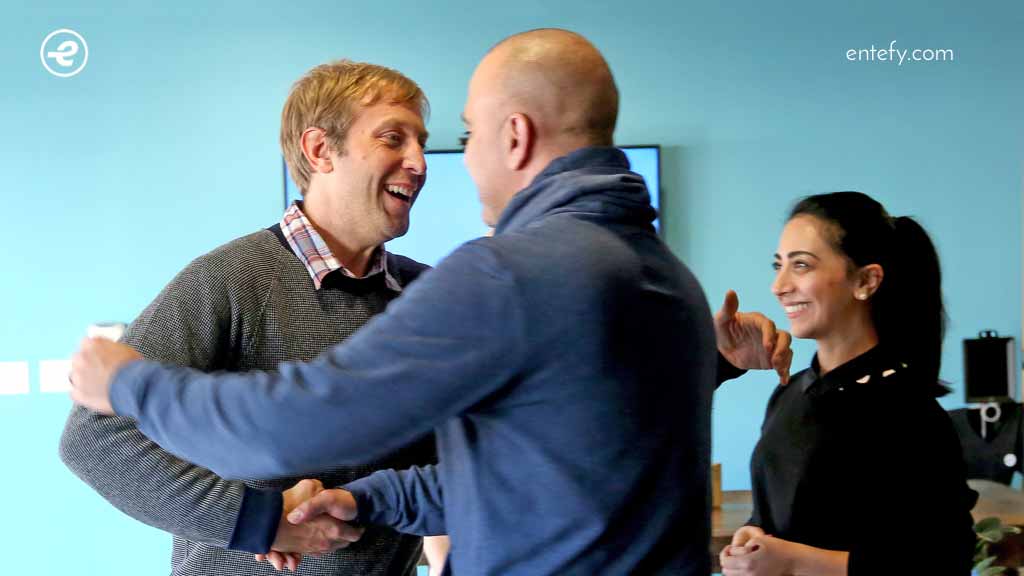
By the 4th interview it was clear something different was going on. It started with four back-to-back meetings with a mix of people from different teams. While the questions remained challenging and focused on demonstrating problem-solving aptitude, I also found myself swapping tales of humorous jury duty service and sharing favorite lines from Woody Allen films. As I left that afternoon, the team gathered to give me hugs and handshakes on my way out the door. I didn’t have an offer yet, but felt like I had found a home.

Company culture reimagined

Business leaders and researchers talk about company culture as a critical X-factor for company success, especially as startups mature into high-growth companies. But hiring complimentary people can still be pretty technical, and few companies report that they have a surefire approach.

Entefy has the right approach. We have observed that there are a lot of talented people for any given role, and marginal differences in experience or education do not make much functional difference in employee performance. So our insight is that for two candidates of comparable skill profiles, the one that “gets” all the jokes, communicates well, and has empathy is the better fit, and the candidate better suited to make substantial impact.

Of the many ways Entefy is pioneering the processes for building a company, culture really stands out. Yes, there are literal family connections—the company’s co-founders are brother and sister—but the entire company is run like a close-knit, high-performance family. This creates a foundation of familiarity that frees the team to pursue big goals and major impact.