Happy Holidays 2016

Warm holiday wishes for all

As 2016 comes to a close, we’d like to express our thanks to those who support us on our amazing journey. It’s this support that inspires us to continue doing the work that we do. We look forward to an exciting year ahead!

Wishing you and yours all the warmth, wonder, and joy during this season and beyond.

With gratitude and cheer,
The Entefyers

Happy Holidays 2017

Warm holiday wishes from everyone at Entefy

As 2017 winds down, we wanted to thank all of the amazing people who inspire our work at Entefy. It’s been a hugely productive year for us, and we can’t wait for everything that’s ahead in 2018. 

Wishing you warmth, wonder, and joy for the holidays and beyond.

The Entefyers

Medical

Medical records fetch a premium on the black market. Then along comes blockchain.

Cybercriminals have a number of options for purchasing the personal data they need to really ruin someone’s financial life. Obviously, they need a social security number. Date of birth, current address, and a credit card number or two are no brainers. Many novice identity thieves make a common mistake when they’re starting out, buying this data piecemeal on the black market. But there’s a better way! They can get all of the data they need bundled together in one convenient package: medical records.

Medical records have been called the “holy grail” for cybercriminals because they contain a person’s name, address, date of birth, and Social Security number in a single record, making identity theft far easier than any of us would like to realize. So it’s not surprising that medical records fetch 10x the price of credit card numbers. The illicit demand for stolen medical data is on the rise, with the situation likely to get worse before it gets better. 

Data security is already a mess in the U.S., as the Equifax breach demonstrated in 2017. That attack left more than 145 million Americans vulnerable to identity theft after their Social Security numbers were exposed in the breach. Those 10 digits have become the keys to our financial identities, but 81 years since the first SSNs were issued, their utility in the digital age has become questionable. We need a more secure way to protect our digital data, and blockchain technology may well provide the answer.

Why the premium on medical data? 

Medical data is a lucrative haul for would-be criminals, particularly because the theft goes undetected for longer periods than in other crimes. People check their credit card balances more often than they review their medical files and insurance records, so they’re likely to spot a suspicious purchase much quicker than a false insurance claim. This buys hackers time to not only sell the data but use it to schedule medical procedures, purchase prescription drugs, or exploit the information in other ways. 

Once victims realize what’s happened, coping with the theft can be arduous. With credit card theft, they can simply call and cancel the card, and they’ll have a new one within a few days. But the damage from medical data theft is more sinister, as criminals can use the information included to file false tax returns as well. Although careful, consistent monitoring of your accounts can help you protect your identity and catch suspicious activity early, there’s not a lot you can do to prevent the types of widespread hacks that have plagued hospitals and medical providers in recent years. 

A substantial shift in how both governments and healthcare providers use cybersecurity defense technologies is long overdue, as evidenced by the WannaCry ransomware attack that struck the U.K.’s National Health Service, an attack the country’s own National Audit Office said could have been prevented if it had followed standard security best practices. The fact that a leading national health system could be crippled by what experts described as a “relatively unsophisticated attack” indicates just how fragile our most important data systems are around the globe. 

When electronic isn’t everything  

Security isn’t the only challenge when it comes to electronic medical records. Tom Price, the former U.S. Secretary of Health and Human Services, lamented earlier this year that, “We’ve turned physicians into data entry clerks.” Some doctors say that having to navigate electronic health records systems detracts from the quality of their patient interactions. Rather than having conversations about a patient’s symptoms, they’re concerned with whether they’re documenting the visit properly, which weakens the doctor-patient relationship and leads to inferior care. A 2016 study showed that physicians spend half their time consumed with desk work and electronic health records and only 27 percent actually attending to patients. The Mayo Clinic even found that the work burdens created by electronic records systems contributed to increased risk of physician burnout

Accessing your medical records as a patient isn’t exactly a walk in the park, either. Once you submit a request to your doctor, it can take 30 days to receive the information, and you may have to provide a written statement asking for the records. If you want to change incorrect information, the provider may charge you. While we want some level of security when it comes to accessing medical records, submitting a written request and waiting 30 days to see our own information seems a bit outdated, to say the least, especially in an era in which we can transfer money, book flights, and even schedule doctor appointments directly from our phones. 

Online portals allow a bit more flexibility and immediacy when we want to review test results or physician’s notes, but it’s cumbersome to have to log into different portals for every provider we visit. Someone who sees several specialists is often tasked with obtaining their medical records to ensure that each doctor has access to the same information, and even then, there is no guarantee of a cohesive care plan. There’s also little transparency as to who can see sensitive medical data, leaving patients disempowered. 

What would a blockchain health record solution look like?

Blockchain could be a potent antidote to what ails existing electronic health record (EHR) systems. Medical data stored on a specially designed blockchain could be encrypted using a patient’s private key for access. This would make medical data less vulnerable to cyberattacks, as does the distributed structure of the blockchain. Because the data blocks in the chain are linked together, cyber attackers can’t simply try to hack one aspect or hide what they’re doing. 

A blockchain-based EHR system would also put power in the hands of the patients, something demonstrated by researchers at Beth Israel Deaconess Medical Center in Boston. Their team engineered a proof-of-concept system that showed promising results. Writing in Harvard Business Review about the power of blockchain to transform EHR, the team outlined how their system works:

Imagine that every EHR sent updates about medications, problems, and allergy lists to an open-source, community-wide trusted ledger, so additions and subtractions to the medical record were well understood and auditable across organizations. Instead of just displaying data from a single database, the EHR could display data from every database referenced in the ledger. The end result would be perfectly reconciled community-wide information about you, with guaranteed integrity from the point of data generation to the point of use, without manual human intervention.

Importantly, the system shifts the control of medical records from institutions to the patients themselves: 

It stores a signature of the record on a blockchain and notifies the patient, who is ultimately in control of where that record can travel. The signature assures that an unaltered copy of the record is obtained.

Under this scenario, all of a patient’s doctors and caregivers would access the same, up-to-date information. With less recordkeeping burden, doctors would spend more time engaging with patients, ostensibly leading to an increase in the quality of care. 

Improving cybersecurity in general, and medical data in particular, is an urgent concern. With advances in artificial intelligence giving hackers better tools to commit cybercrimes, the future is one of more and more cyberattack attempts around the globe. We can’t stop hackers from pursuing valuable data like medical records, but we can make it harder for them to steal them—and blockchain could be an important tool in that fight. 

Bitcoin and gold

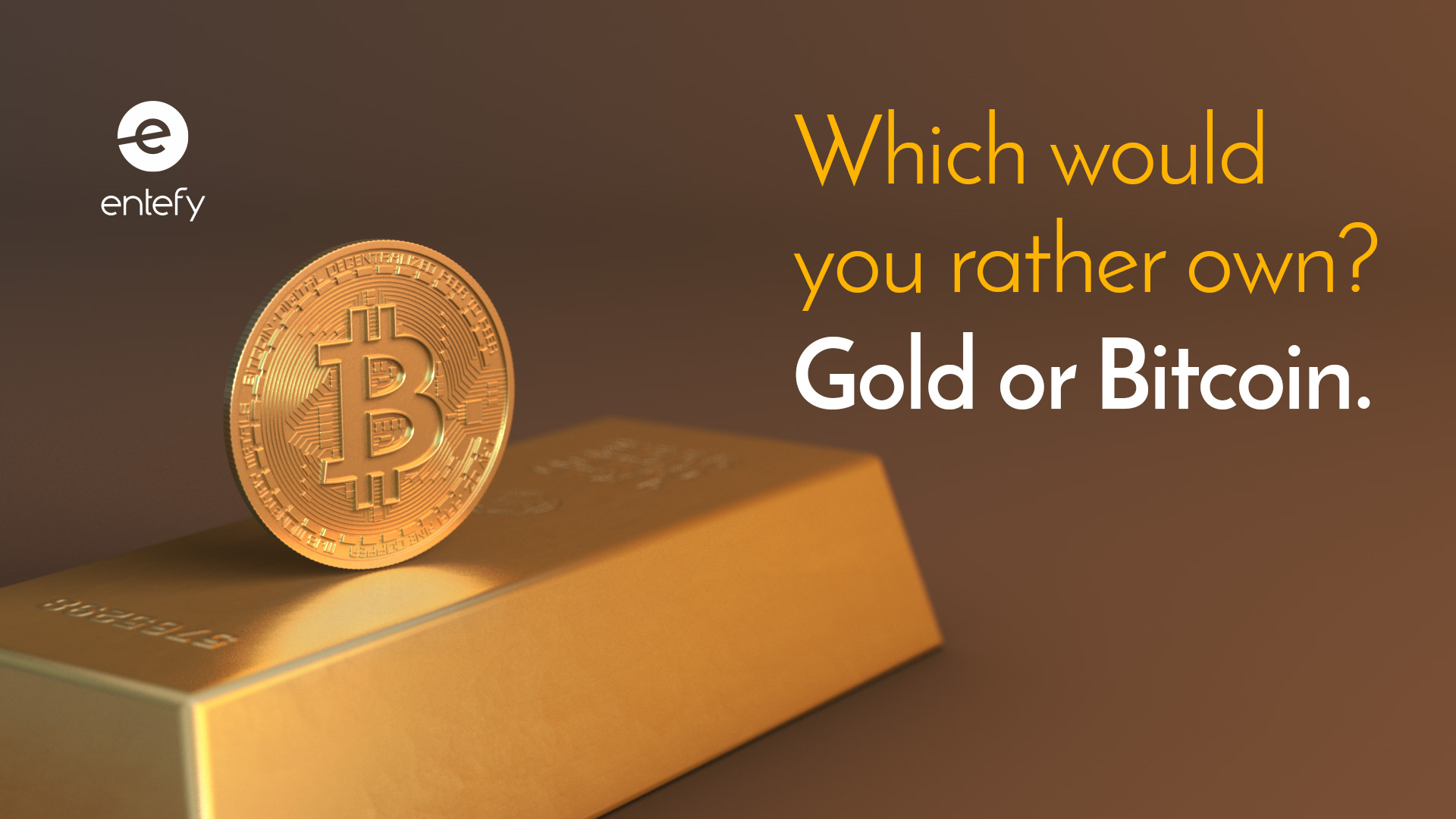
Comparing gold and Bitcoin: 1 surprising similarity

Gold has been mined from the Earth for around 6,000 years, serving as a repository of value ever since in the form of coins, the bejeweled headgear of pharaohs, and the gold bullion in Fort Knox. But recent predictions from economists suggest that in 2015 the world may have passed “peak gold,” with global gold mine production expected to decline annually until the last accessible gold is extracted around 2035

That date has an interesting parallel with Bitcoin, the world’s most popular cryptocurrency. Just as there’s a fixed amount of gold on Earth, the design for Bitcoin restricts the total number of Bitcoins that can ever be mined to 21 million tokens. To date, 16 million have been mined but the rate at which new Bitcoins are being created slows each year as mining becomes more computationally complex and expensive. It’s been estimated that the last Bitcoin will be mined in 2040.  

A fixed supply of gold and Bitcoin may be where their parallels end. Gold’s value is determined on market exchanges where an ounce of gold sold at around $1,283 today whereas a single Bitcoin was valued at nearly $17,000. 
Entefy’s enFacts are illuminating nuggets of information about the intersection of communications, artificial intelligence, security and cyber privacy, and the Internet of Things. Have an idea for an enFact? We would love to hear from you.

Dream

Are we witnessing the end of remote work?

For the past two decades, remote work seemed to represent the way of the future. As of 2016, 43% of Americans surveyed worked from home at least some of the time, signaling the growing demand for flexible work arrangements and work-life balance. Technologies such as smartphones, email, video conferencing platforms, messaging tools, and project management software made it increasingly easy to collaborate with colleagues around the globe. 

These technologies also gave rise to a new generation of digital nomads and solopreneurs, professionals who could consult, contribute, and create for clients regardless of location. The effects of the economic downturn combined with tech advancements inspired millions of people to strike out on their own, which is why 35% of the workforce is now comprised of freelancers and 44 million Americans operate side hustles in addition to their day jobs. 

Companies embraced remote work policies for employees and contractors as a means of keeping workers satisfied and reducing their overhead expenses. After all, happy employees are productive employees. What difference does it make where they’re located? 

Turns out, quite a lot, and the remote work trend now appears to be headed in reverse. Marissa Mayer’s decision to end Yahoo’s work-from-home policy in 2013 drew considerable criticism, but it also seems to have opened the gates for other companies to follow suit. IBM announced earlier this year that thousands of remote workers would need to report to an office, and Reddit and Bank of America have scaled back their teleworking programs as well. 

Why the change of course on remote work?

Up to 90% of workers desire the flexibility of remote work policies, which give them more autonomy over their schedules and working habits. In theory, remote workers are happier and more productive because they can maintain their careers without sacrificing precious time with their children and loved ones. Remote work allows working parents in particular greater flexibility in how they balance their professional responsibilities with their familial obligations. 

But from an employer’s perspective, remote work simply doesn’t add up – at least not for all employees. While it might make sense to work virtually with contractors and other outsourcing vendors, companies such as Yahoo and IBM decided that digital communication is simply no substitute for in-person collaboration. Tech companies that thrive on innovation to stay competitive must move quickly on new ideas, and many leaders have found that the best ideas stem from spontaneous, face-to-face conversations. A chance encounter around the water cooler (or the ping-pong table or nap pods) can spark discussions and problem-solving sessions that lead to the company’s next big idea.

Some companies have found that remote work arrangements afford employees a little too much flexibility. One business owner discontinued his company’s work-from-home policy after some workers became difficult to reach during work hours or refused to come into the office due to personal priorities. Remote work only works if people are actually working, and you can lose hours just trying to track down a colleague who’s gone MIA or who takes an entire workday to respond to emails. 

The remote work trend isn’t dead

Given that most workers value work-life fulfillment and personal autonomy, employers know that demanding that everyone work the traditional 9-5 schedule is unappealing, not to mention impractical. Employees who need little coworker interaction to get their work done, as is the case with client-facing employees or certain writing jobs, will gain little from being in the office every day. But those who regularly collaborate with team members or are integral to product and strategy development are likely less productive working from home than they would be in the office. 

Employers recognize that workers fall on a spectrum, which may explain why many companies are taking a hybrid approach to workplace flexibility. They might require employees to be in-house three days of the week but allow them to work remotely on the remaining two. Some create flexibility by allowing employees to set their own schedules. Letting employees determine their work hours accommodates their need for autonomy and enables them to structure their days around their professional and personal priorities. 

Codifying work-from-home rules seems to be the best way to find the happy medium. Companies that allow some degree of flexibility in people’s working habits benefit from laying out clear expectations for availability, responsiveness, and output when they’re out of the office. Because in-house employees’ productivity can suffer if the work environment feels like a ghost town, employers may also want to establish set days when different departments can work from home so as to maintain a vibrant office atmosphere. 

What does the decline in remote work mean for freelancers and solopreneurs?

Working from home (or a co-working space or a coffee shop) is inherent to how freelancers and solopreneurs operate, but they need clients to make a living. Independent workers who are worried about a shift in their client relationships can accommodate the trend by offering to travel for in-person meetings and project launches. They might also consider building on-site work into their arrangements. Those who have especially flexible circumstances could work in clients’ offices a few days a week or for the duration of a several months-long project. At the very least, a willingness to travel for meetings and events may assuage clients’ fears about lost productivity and innovation opportunities. 

Remote work is evolving. For the first time in history, millions of people were able to build their careers outside standard office environments, and both employees and employers alike rushed to embrace that opportunity. Now we’re seeing that a more nuanced approach is needed and that the right way to work depends on your role and your circumstances. But it’s clear that tech has allowed us to expand our concept of work beyond traditional paradigms, and whether you’re in the office or teleconferencing from your house, that is real progress. 

Network cables

If you love the Internet, you’ll hate what the FCC just did to net neutrality today

What is net neutrality?

According to the Public Knowledge, “net neutrality is the principle that individuals should be free to access all content and applications equally, regardless of the source, without Internet Service Providers discriminating against specific online services or websites. In other words, it is the principle that the company that connects you to the internet does not get to control what you do on the internet.”

What happened at the FCC today?

The FCC voted today to repeal net neutrality as we know it.

A landmark 2015 FCC ruling prohibited cable and telecommunication companies from manipulating Internet traffic. Under those rules, Internet Service Providers (ISP) like AT&T or Comcast could not unilaterally show favoritism to one website over another through preferential access, variable download speeds, or even blocking certain sites altogether. That’s what ended today.

Under the new rules, ISPs no longer have to provide open, equal access to the Internet. In fact, these providers can now block specific sites, charge higher fees, and prioritize some content over others, including advertising. “The federal government will also no longer regulate high-speed internet delivery as if it were a utility, like phone services.”

The FCC received millions of comments on its public comment page on the issue. Despite evidence from the New York Attorney General that 2 million comments were fake, today the FCC voted to overturn the 2015 rules.

Why is net neutrality important? 3 big reasons.

Net neutrality impacts you as an individual, our society at large, and the economy. Net neutrality:

  1. Provides protection against unfair data discrimination. According to the Electronic Frontier Foundation,the FCC’s action repeals net neutrality, allowing “ISPs to block or throttle lawful content, or give the highest-paying websites and apps a better ability to reach customers’ devices, or to favor Internet traffic from the ISPs’ own subsidiaries and business partners, all without any legal repercussions.”
  2. Preserves free speech online. By reversing 2015 net neutrality rules, free speech online suffers: “The Internet was built on the simple but powerful idea that while you may need to pay a service provider for Internet access, that provider doesn’t get to shape what you access – or who has access to you… Users, in turn, can make their own choices about which services they want to use.”
  3. Fosters entrepreneurship and innovation. In a time when a handful of tech platforms dominate the Internet, the end of net neutrality can greatly damage entrepreneurship and innovation. The MIT Technology Review summed it up succinctly: “Entrepreneurs are rightly concerned that large companies will spend heavily to dominate fast-lane access, making it harder for some startups, such as bandwidth-hungry mobile video companies, to challenge them… Milliseconds of difference can leave you at a disadvantage when potential customers are evaluating your product.”

How can you take action to democratize the Internet?

In protest, many have taken the fight online, especially since Big Tech has remained somewhat silent on the issue.

Congress has the power to enact legislation that would overturn today’s FCC ruling.

You can express your opinion on net neutrality to Congress. The website BattleForTheNet.com provides an easy-to-use form letter that you can send to your Congressional representatives.

Data privacy

Seven new assaults on data privacy [SLIDES]

Digital trackers can be unnerving when every day seems to bring headlines of some data security hack or another company accused of misusing customer data. All of which means that protecting your personal data is an ongoing effort—and that effort starts with awareness. With that in mind, these slides highlight 7 recent developments that you may have missed about privacy and security in popular apps and services.You can read an in-depth look at these data trackers in Entefy’s article, Seven new assaults on data privacy.

Broken email icon

If “check email” is on your to-do list, tear up that list

With the possible exception of social media, email is the ultimate time-suck. What once seemed like a marvel of the modern age has become a constant irritant, one our society seems to have accepted as a given. 

Go out for after-work drinks or coffee, and you’re almost guaranteed to hear someone grumble about how stressed they are. In the same breath, they’ll also tell you they “just need to reply to a work email really quick.” That same person will skim their messages while “unwinding” at home later that night, shooting off responses while they catch up with their roommates or spouse, and again before they go to sleep. If this sounds familiar, you may be that person. But you’re not alone. 

The email epidemic is pervasive. One study found that 78% of people interviewed checked email continuously throughout the day, and 66% turned to their inboxes first thing in the morning. In Entefy’s research, professionals are sending and receiving 110 emails per day, plus another 114 instant messages and texts for good measure. Yet only a fraction of the emails most people receive are truly urgent. Think about your own inbox. What’s the ratio of important messages to promotions, newsletters you never read, and messages you send directly to the trash? Probably not a very favorable one. 

Why we can’t quit email 

Most people will spend 47,000 hours checking email throughout their careers, which is a lot of time to waste in your inbox instead of actually producing a valuable body of work. We all know email is a time-waster, yet we persist in checking it constantly. But why? 

Irritating as it is, email is addictive. We know that most messages are likely to be irrelevant or uninteresting, but once in a while, we receive a gem in the form of a note from an old friend or a great new professional opportunity sent to us out of the blue. Knowing that there’s potential for new messages to be exciting, our brains get stuck in a “random rewards” pattern. There’s no rhyme or reason to when we’ll receive those exciting emails, so we become wired to check all the time. 

This neurological drive is exacerbated by our always-on culture. We often feel that we need to respond to every message at all times, whether they’re from friends, relatives, or bosses and co-workers. No one wants to seem like a slacker, and we think we’re more productive (at least, we seem more productive) if we respond to emails 24/7. 

In fact, the opposite is true. For one thing, how often we check email directly influences how stressed we are. Research shows that decreasing the frequency with which we check email can be as beneficial as deep breathing and peaceful visualization strategies for lowering stress levels. When we’re not opening our inboxes every five minutes, we focus on a single task without allowing interruptions to break our concentration – a far less stressful scenario than trying to do two things at once. 

Earlier this year, Entefy explored the cognitive costs of multitasking, which was once the gold standard of professional performance. Recent evidence suggests, however, that multitasking makes us less productive and less capable of high-value work. Every time we switch tasks or become distracted, it takes at least 23 minutes to regain our focus. Multiply that by the number of times you check email while writing a report or preparing a presentation, and you’ll understand why it feels so difficult to get anything done throughout the day. 

Not only do you lose time when you multitask, you also deplete your brain’s resources. Our brains cannot actually carry out three tasks at once. To write a report, carry on a chat conversation with a co-worker, and check email, the brain’s executive system must rapidly switch focus between the three, often doing this many times throughout the entire workday. We only add to the load when we continue to check email while also scrolling through our social media feeds and texting with friends during lunch. It’s no wonder we feel exhausted by the end of the day. Humans simply aren’t wired to multitask, which is why the email addiction is such a dangerous trap. 

A saner approach to email  

Despite its drawbacks, email is here to stay – at least for now. While professional chat and project management services are useful for taking workplace collaboration outside the inbox and into a more real-time forum, email is still the preferred mode of communication among teammates, clients, and probably all of your friends and family as well. That’s not necessarily a bad thing. Email isn’t evil. It’s a useful tool that most of us mismanage. 

Here’s how to reclaim email’s efficacy and thousands of hours of your time: 

Stop chasing inbox zero 

In the days before smartphones and the 24-hour news cycle, achieving inbox zero was a useful productivity tip. Clearing your messages each day meant you could shut down for the evening without feeling like there were loose ends that needed tying off, and you avoided the crushing sense of doom as you let your unread emails pile up. But Jocelyn K. Glei, author of “Unsubscribe: How to Kill Email Anxiety, Avoid Distractions, and Get Real Work Done,” suggests that inbox zero is no longer realistic, nor is it a worthwhile pursuit. 

Striving toward inbox zero is seductive because our brains crave the dopamine hit that comes with completing a task. Answering email is seductive because it’s easy to do and easy to repeat. We feel like we’re accomplishing something, and that surge of dopamine inspires us to go for that reward again the next day.  

But if you’re like most people, you receive emails at all hours, often from people you barely know or have never met. Does it really make sense to spend your time sifting through and replying to these messages when you could be brainstorming new ideas with your team, wrapping up work early so you can get in a few extra hours with your kids, or simply enjoying a few minutes of peace outside your inbox? Even if you’re ruthless with the delete button and spend as few seconds as possible on non-urgent messages, you’re still investing a significant amount of time in low-value tasks. Instead, answer the important emails, shut it down, and get back to the truly important work. 

Don’t check email first thing in the morning 

You may have heard this advice already, particularly if you’ve ever sought tips for improving your productivity and time-management habits. But it bears repeating, because checking your email as soon as you wake up can derail the rest of your day. 

Saying “no” can be hard, but remember that emails from other people represent their priorities, not yours. This goes for both professional and personal emails. A colleague requesting that you help out with a project or your mom asking you to help her research new laptops may be sincere and valid requests. You may even be glad to help out when you have time. However, as soon as you see them, they become your concerns, too, and you might spend your whole commute mentally rearranging your day to accommodate those requests instead of rehearsing the presentation you’re about to give. Our concentration reserves are finite, so guard yours carefully. Start the day clear on your priorities and attend to those first before taking care of other people’s needs. 

Flooding your brain with information before you’re fully awake also creates unnecessary stress. Instead of allowing your mind to come online naturally, you go from zero to 100 in about two seconds. Now you’re worried about your boss’s request to see you as soon as you get in or about the concerning news story someone sent you in the middle of the night. 

But here’s the thing: your boss will find you whether or not you respond to her email. Any news that’s truly important or relevant will make its way into your consciousness eventually. And knowing about these concerns as soon as you wake up doesn’t give you any more control over them. You’re better off starting your morning with meditation, exercise, or a mindful breakfast with your family. Then you’ll be prepared to meet any crisis or concern with a calm, centered, and refreshed mind. 

Don’t let your inbox be the last thing you see at night 

Contrary to what our always-on culture suggests, human beings need down time. Just because you’re checking email from your couch instead of your desk doesn’t make it any less stressful, especially when you do it while you’re supposed to be relaxing. Multitasking taxes our brains even when we’re doing fun things, like watching TV or playing games. We need time to unwind, particularly if we want to get a good night’s sleep. And sleep should be a priority, considering that it impacts our mood, ability to heal, and overall resilience to a wide range of serious health conditions. 

No matter how tired you are, looking at a screen right before bed makes it very hard to follow your body’s natural sleep cues. The blue light emitted from your smartphone or laptop screen signals to your brain that it’s time to wake up, not conk out for the next eight hours. Blue light suppresses production of melatonin, the chemical that helps us sleep and regulates our circadian rhythms. That’s why even if you do get a full eight hours sleep, you may wake up feeling less than rested. 

If you can’t cut the email cord entirely after leaving the office, stop checking at least an hour before you go to bed. You may event want to leave the phone in another room to help you avoid the impulse to give it one last glance before you get some shut-eye. Checking email before bed once again makes us hostage to other people’s priorities, and you can lose hours of rest because you chose to respond to messages instead of letting them wait until the morning. Even if you read your emails but don’t respond, there’s a good chance you’ll lie awake thinking about what you’ll write back tomorrow. 

Set and communicate email boundaries 

Curbing the email-checking habit is easier said than done. That’s why it helps to set specific times when you’ll check email each day. You might check once in the morning and once in the afternoon, just once before you leave work, or more or less frequently depending on the nature of your job. Some people can check in once a week while others need to be more responsive to their teams. Whichever camp you fall into, email boundaries will help you be more productive.  

Assess your typical workday and decide how often you plan to check email. Once in the morning and once in the afternoon provides a nice balance between staying in the loop and giving yourself plenty of time to focus on more pressing priorities. But you can decide what will work for you. 

Then commit to it. If you need help sticking to the plan, write your email schedule on a post-it note or print it out and hang it near your desk. The visual reminder will help keep you on the straight and narrow, at least in the beginning. After a few weeks, you’ll have broken the cycle of continual checking and will likely find that you’re much more focused and productive. So much so that you won’t want to waste time on email anymore. 

Let other people know what to expect from you in terms of responsiveness. You can set up an auto-responder for the first few weeks of the new regimen to make sure everyone you interact with gets the message. Or you can include a simple note in your email signature stating when you check email and leaving a phone number people can call if they need to reach you urgently. They will very rarely use it, and most will wait for your written reply. 

If you’ve always been an instant-responder, it may take time for people to get used to your new way of doing business. But when they see your mood and productivity soar, they’ll be happy to accommodate your boundaries.  

Embrace in-person conversations 

Everyone has been on an email thread that never seems to end. It starts out reasonably enough, but the back-and-forth over details ends up eating up hours of your day. Sometimes writing out replies is the way to go, since you have time to collect your thoughts and avoid sending overly emotional responses. But oftentimes, email conversations go on far longer than a short, face-to-face chat would. 

As soon as a thread seems to spiral out of hand or you find yourself spending an hour on a conversation that could take place in five minutes, close your email app. Walk over to the other person’s desk and ask if they want to grab a conference room to hash out the details or work through any miscommunication. 

If an in-person chat isn’t feasible, pick up the phone. You’ll be amazed at how much faster problems get solved when people aren’t composing opuses in their inboxes or reading into everyone’s tone before deciding how to reply. 

Email is a double-edged sword, and we need to wield it more carefully. At its best, email helps us connect with professional and personal contacts, work efficiently, and stay on top of what’s happening in the world. At its worst, it drains our energy reserves, kills our productivity, and prevents us from achieving our goals. Fortunately, we can choose to use email for our own good. 

Broken glass

The Equifax breach exposed dangerous levels of apathy

Your stomach knots as you notice the shimmering glass on the concrete beside your car. With a sinking feeling that gets worse with each step, you know what you’ll find. You were only in the store for a few minutes—how could this happen!? And sure enough as you step up to the car, you confirm what you already knew: shattered glass on the passenger-side seat where just moments before your backpack had been. And inside it your laptop, wallet, and smartphone. Gone are thousands of dollars’ worth of electronics…and signed-in access to your email, bank accounts, credit cards, medical records, and who knows what else. 

You immediately run into the store to call the police.

As more and more of our lives are stored on smartphones and laptops, the prospect of being without them can be frightening. They represent convenience, privacy, security, organization, even offloaded memories. All weightlessly and effortlessly digitized and available on demand. Their loss can be stressful, traumatic to the point of “smartphone separation anxiety.” 

So it’s interesting to contrast our collective reaction to the Equifax data breach, in which at least 145 million Americans had their names, Social Security numbers, birth dates, addresses, and, in some cases, driver’s license numbers stolen en masse. That data is no doubt making its way around the dark web, being sold in whole and in parts, today, tomorrow, and forever. After all, data has no expiration date.

The Equifax breach was in the headlines for weeks, covered in-depth by practically every major media outlet. You couldn’t have missed the news. As the scope of the theft became known, there was extensive coverage of what to do and how to check your credit accounts for signs of identity theft. Yet in a post-breach survey of 1,000 Americans, only 22% had initiated a credit freeze on their accounts, one of the key steps recommended by experts. If 145 million of us had our smartphones stolen, would 78% of us decide to stick our heads in the sand?

Comparing these two thefts reveals something really important about where we’re at with privacy and data security today. People just don’t value digital data in the same way we do physical access to our information. But we should. In fact, there’s reason to believe we should be even more concerned about our online information being stolen. According to the Bureau of Justice Statistics, 7% of Americans above the age of 16 were identity theft victims in 2014. There were 1,091 reported data breaches in the U.S. in 2016, and experts predict that this number will jump by 37% to 1,500 by the end of 2017. The odds that you or someone you know has or will be victimized are high. One expert grimly assessed the situation by saying, “It’s a safe assumption that everyone’s Social Security number has been compromised and their identity data has been stolen. While it may not be explicitly true, we have to operate under that assumption now.” 

The identity theft threat 

Identity theft impacts many areas of our lives. Hackers and analog fraudsters use stolen data to steal federal tax refunds, open credit lines and bank accounts, steal money from existing bank accounts, and even use their victims’ insurance policies to receive medical treatment. Even more alarmingly, there seem to be new ways for cybercriminals to steal personal data all the time. High-profile cases like Equifax occur due to database hacks, but phishing and text scams, malware, and “evil twin” Wi-Fi attacks (in which hackers set up malicious connections that mirror legitimate hotspots) are also used to steal information. If you unwittingly log into your bank account through a corrupt connection, you’ve just handed hackers the keys to your financial life. 

Digital hacks are becoming increasingly sophisticated and increasingly worrisome. A series of recent cyberattacks on hospitals and medical organizations highlights the growing problem. In one case, an 85-year-old woman received benefits documentation for a nose job she had never had – someone stole her information to receive the cosmetic surgery under her insurance plan. A Los Angeles hospital shelled out $17,000 in Bitcoin to hackers who were holding its electronic medical records ransom. Such hacks are extremely dangerous because they provide criminals with key pieces of data needed to successfully pull off an identity theft scam. Once you have someone’s name, birthday, and Social Security number, it’s not terribly difficult to begin opening accounts in their name. 

Americans aren’t unaware of cybersecurity risks. The Pew Research Center found that 64% of people surveyed in the U.S. had personally experienced a significant data breach. Roughly 50% expressed a lack of confidence in the federal government’s and major social media sites’ abilities to keep their data secure. With those kinds of numbers, you’d think we’d be more nervous about digital theft than physical break-ins. 

But it seems that the opposite is true. The same Pew study indicated that despite people’s awareness of cyber threats, most practice rather poor digital hygiene. Only 12% used a password management system, which is a best practice cybersecurity experts often recommend. Many simply memorize their passwords or write them down with pen and paper, and they often used the same passwords for multiple accounts – all of which experts advise against. Pew also found that many people are lax in their smartphone security, leaving their phones unlocked or failing to install system updates that contain important security patches. 

Rethinking cybersecurity 

So, what gives? We know that cyberattacks pose substantial threats to our data, yet we consistently fail to protect our digital security in the same way we protect our physical property. One reason for this might be the “free” nature of online content. We’ve become so accustomed to consuming digital content for low or no cost that perhaps we undervalue what’s online. Whether or not we’re conscious of it, we make the calculation that our online information is more disposable, or at least less valuable, than hard copies of our data. 

While that mentality might have made sense 20 years ago, it doesn’t work today. More and more, we share and save important data online, from photos and videos to deeply private data about ourselves. Not being able to hold that data in our hands doesn’t make it less valuable than the property we keep in our homes. As more of our financial, medical, and other personal records are digitized, we should be just as concerned – if not more so – about our online data as we are about information in “real life.”  

Identity theft

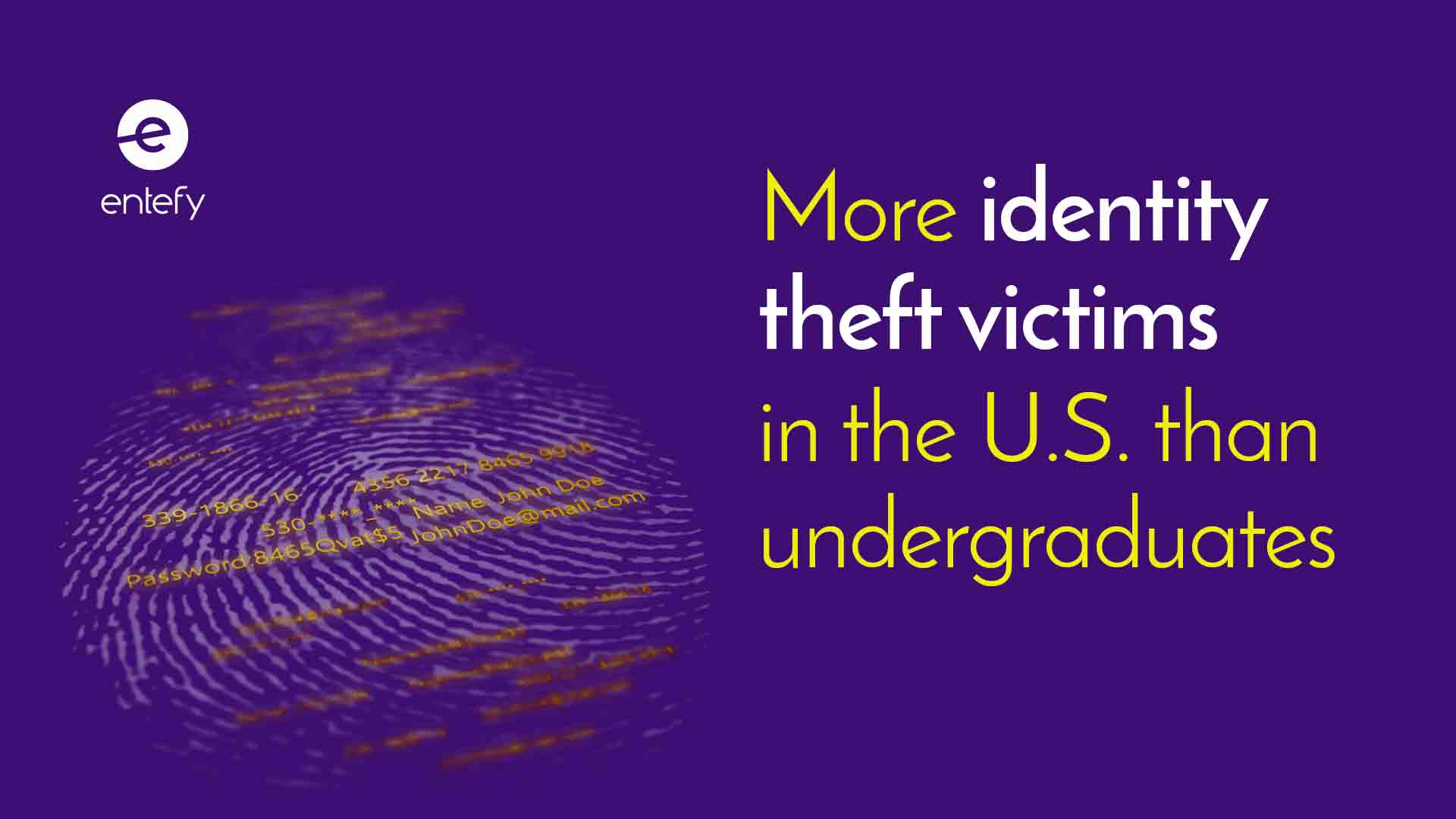
More identity theft victims in the U.S. than undergraduates

There is a war being fought online between people, corporations, governments, and other organizations defending against every “black hat” hacker determined to steal data, profit from ransomware, or any other nefarious act. You could say that victims of identity theft are a casualty of this war, paying a steep financial price when fraudsters use stolen credentials like Social Security numbers and credit card accounts to create false identities. 

If you haven’t been the victim of identity theft, or known someone who was, you’re fortunate because the problem has become widespread and all-too-common. In 2014, the latest year for which there’s data, 17.6 million U.S. residents above the age of 16 reported being identity theft victims. That’s 7% of the population aged 16 or older, according to the Bureau of Justice Statistics’ data. 64% of those victims experienced direct financial loss that averaged $7,761 each.

To get a sense of just how big a number that is, consider this. In 2015, there were 17 million undergraduate students enrolled at a university in the U.S., a number that’s actually 600,000 smaller than the total number of identity theft victims. That’s a grim reminder of the importance of cybersecurity in the modern digital world.

Entefy’s enFacts are illuminating nuggets of information about the intersection of communications, artificial intelligence, security and cyber privacy, and the Internet of Things. Have an idea for an enFact? We would love to hear from you.